
Looking for a Contractor?

Alchatek Blog

What Does a Failing Residential Seawall Actually Cost?

Posted by Clinton Holmes on Aug 26, 2026, 10:00:02 AM

Banner - What Does a Failing Residential Seawall Actually Cost


Body - What Does a Failing Residential Seawall Actually Cost-2A seawall rarely fails all at once. It starts small, a hairline crack near the waterline, a soft spot in the yard, a slight lean nobody notices until the pavers start pulling apart. The price of the fix grows every day you wait, because the damage behind the wall keeps progressing even when the surface looks stable. 

What a Failing Seawall Actually Costs

There's no single number that fits every seawall repair, but the relative cost structure is predictable, and it's worth understanding before you call anyone.

Targeted repair, filling the voids and stabilizing the soil behind the wall, is by far the least expensive path when caught early. Patch-and-repeat cosmetic fixes look cheap on any single invoice, but they don't stop the underlying erosion, so the cost adds up every time you have to call someone back. Full demolition and replacement sits well above both, often by a wide margin, because it involves permitting, heavy equipment, and rebuilding the structure from the ground up rather than restoring what's already there.

That gap between options is significant enough to change how a homeowner should think about a small crack today: fixing it now, while it's still a targeted repair, is not a close call against waiting until it becomes a replacement.

Exact costs vary by region, wall material, soil conditions, and severity. A trained contractor can give you an accurate number after a site evaluation.

The Root Cause: Why Seawalls Fail From the Inside Out

Most seawall problems don't start at the wall. They start behind it.

As water levels rise and fall against the wall, whether from tides, wave action, storm surge, or seasonal water table changes, water pushes through cracks, joints, and defects on the way in and pulls sand and soil out with it on the way out. Over time, this cycle hollows out voids behind the wall that nobody can see from the surface. Heavy rain speeds it up. Clogged weep holes and vents make it worse, trapping pressure that has nowhere to go except through the wall itself.

By the time a sinkhole appears in the yard or a section of wall visibly leans, the soil loss behind it is usually already extensive. Wall age, soil type, drainage, and storm exposure all affect how fast this moves, which is why two similar-looking walls can be at very different stages of failure.

Do Nothing, Patch It, Replace It, or Repair It Right

The instinct with a small crack or minor void is often to wait. But seawall damage compounds. A problem that starts as a localized void becomes a larger stability issue as soil continues to migrate.

Approach What It Typically Involves Long-Term Outcome
Do nothing No action while cracks and settling continue Soil loss accelerates, raising the risk of collapse and property damage
Patch-and-repeat Surface-level cosmetic repairs without addressing voids behind the wall Appearance improves temporarily; underlying erosion continues
Full replacement Demolish and rebuild the wall Solves the visible structure but not necessarily the drainage or soil issues that caused the failure, and carries the highest cost and disruption
Targeted repair Fill voids, stabilize soil, and seal points of water intrusion Restores structural support without full demolition, when site conditions allow

The right path depends on how far the damage has progressed and whether the wall itself is still structurally sound. A proper site evaluation, not a guess from the yard, should always come first.

Why the Right Contractor and the Right Material Matter

Not every repair method is right for every wall, and this is where a lot of homeowners get burned. Some contractors default to aggressive, rigid two-component foams because they're fast and inexpensive to install. On the wrong wall, especially one with limited structural capacity or a lot of existing movement, that rigidity and expansion force can do more harm than good. In some documented cases, an overly aggressive two-component fill has blown a wall completely out rather than stabilized it.

Alchatek factory-trained contractors are taught to match the material to the wall, using flexible, hydrophobic single-component resins for void fill and soil stabilization in most residential applications, reserving higher-density two-component products for situations where they're actually appropriate. Some of these resins are certified to NSF/ANSI 61 for contact with potable water, a specific, third-party-verified standard covering leaching and health effects, though that certification speaks to potable water contact and doesn't by itself confirm performance or safety in a saltwater or marine setting. Confirm the specific certification for any product on its technical data sheet.

This is exactly why the contractor matters as much as the product. Filling a void and sealing the points of soil loss is only part of the job. Choosing a resin that fits the wall's condition, the soil, and the water environment is the rest of it, and that judgment comes from training and experience, not from a price quote.

Find a Trained Contractor Before You Have a Bigger Problem

Small cracks, soft spots in the yard, or a wall section that's slightly out of alignment are worth a professional look now, not after the next storm. An Alchatek factory-trained contractor can evaluate the site and recommend a repair matched to your wall's condition, rather than a one-size-fits-all fix.

Continue Reading

Seeing Signs of Trouble?

Small cracks, soft spots in the yard, or a wall section that's slightly out of alignment are worth a professional look now, not after the next storm. Talk to an Alchatek specialist at (404) 618-0438, or find a trained contractor near you.

 Want more information on geotech products and equipment?

Download the Info-Packed Geotech Product Catalog!

Topics: Repair Seawalls, All Posts, Fill Voids

Polyurethane Concrete Repair Presentations for Engineers

Posted by David Park on Sep 15, 2022, 10:00:00 AM

Banner - Polyurethane Concrete Repair Presentations for Engineers

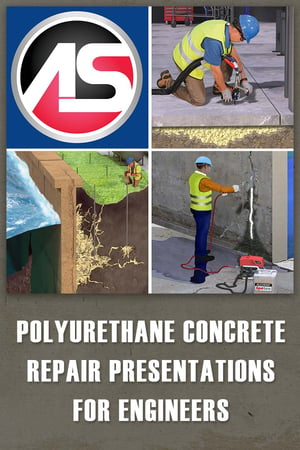
Body - Polyurethane Concrete Repair Presentations for EngineerAlchemy-Spetec offers one-hour CE/PDH accredited presentations on polyurethane concrete repair. Presentation topics offered include Leak Seal, Geotech, and Seawall Repair. Here is a detailed overview... 

Leak Seal Presentation

The Specialty Waterproofing with Chemical Grouts presentation covers sealing leaks in structures with the use of polyurethane chemical grout injection materials and techniques. 

  • Chemical Grouting Primer
    • History
    • Safety
    • Characteristics
  • Utilization & Applications
    • Identifying Applications
    • Selecting a Chemical Grout
    • Epoxy & Hydraulic Cement
  • Installation Techniques
    • Crack and Joint Injection
    • Curtain Grouting
    • Oakum Soakum
    • Equipment Overview

Alchemy-Spetec's one-hour CE/PDH accredited Leak Seal presentation is perfect for engineers looking for information on innovative and proven leak seal repair methods for sealing leaks in structures, inflow/infiltration mitigation, and more.

Geotech Presentation

The Geotechnical Applications for Polyurethane presentation explains three types of concrete leveling and soil stabilization materials and applications. 

  • Single Component Polyurethane Grout Applications
  • Two-Component Polyurethane Grout Applications
  • Acrylic Grout Applications

Alchemy-Spetec's one-hour CE/PDH accredited Geotech presentation is perfect for engineers looking for information on innovative and proven geotechnical repair methods for lifting concrete, soil stabilization, excavation support, controlling erosion, and more. 

Seawall Repair Network Presentation

The Seawall Stabilization and Preservation through Permeation Presentation explains and demonstrates how Seawall Repair Network contractors use polyurethane injection resin and surface-applied preservation solutions to stabilize and preserve seawalls and bulkheads. (Seawall Repair Network is a division of Alchemy-Spetec.)

  • The Causes of Seawall Failure
  • Stabilizing a Seawall
  • Preserving a Seawall
  • Stabilization & Preservation Through Permeation

Alchemy-Spetec's one-hour CE/PDH accredited Seawall Repair Network presentation is ideal for engineers who are interested in designing superior seawall/bulkhead rehabilitation and preservation solutions. This type of environmentally friendly permanent soil stabilization and seawall preservation can be applied to all types of waterfront infrastructure.

Want info on scheduling a presentation?

Request a Presentation

Topics: Repair Seawalls, All Posts, Lift Slabs, Seal Leaks, Business Tips, Engineer Resources

Introducing the PolyShark Version 2.0

Posted by Kreg Thornley on May 19, 2022, 10:00:00 AM

Banner - Introducing the PolyShark Version 2.0

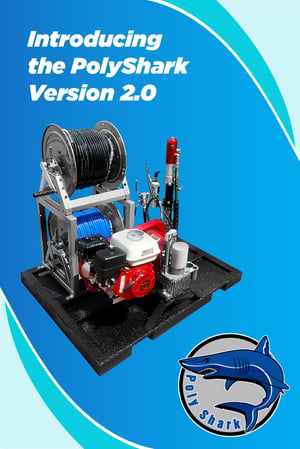
Body - Introducing the PolyShark Version 2.0The new and improved PolyShark 2.0 is here! 

Features

  • Stacked hose reels.
  • Smaller footprint.
  • More portable.

Benefits

  • Easy access to hose reels.
  • Can be shipped on a standard 40" x 46" pallet.
  • Easily fits on a barge, van, or trailer.

A Geotech Pump System Like No Other

The PolyShark system includes injection hoses, suction lines, flow meters, a custom solid steel frame, a skid-mounted setup, and top-of-the-line components. It is a complete turnkey unit, ready to go upon arrival. Let's take a closer look...

  • Two 350 feet injection hose reels are included, allowing an exceptional amount of additional reach for limited access and/or remote location jobs.
  • Suction lines make it easy to pump material from totes, drums, or even pails if needed. This type of flexibility is not common to all geotech pumps.
  • Flow meters make it easy to accurately track the amount of material pumped.
  • The custom solid steel frame, polyurea coated for excellent chemical resistance, is built to last and weather all types of environments.
  • The skid-mounted setup keeps all system components together, allowing for easy transfer from truck to trailer to the ground on a job site if necessary.
  • The Honda gas motor, Titan hydraulic pump, and Titan hydraulic fluid ram are top-of-the-line, tried, and true components. This means less maintenance and downtime when compared to competing systems.

Want more information on the PolyShark?

Download an Info-Packed PolyShark System Brochure!

Topics: Repair Seawalls, Equipment & Accessories, All Posts, Stabilize Soil

What Makes the PolyShark® Unique?

Posted by Colt Hullander on Sep 7, 2021, 10:00:00 AM

Banner - What Makes the PolyShark Unique-1

Body - What Makes the PolyShark Unique-1It's not an exaggeration to say that that the PolyShark® soil stabilization and seawall repair pump system is unmatched in the marketplace. What makes it so unique?

A Geotech Pump System Like No Other

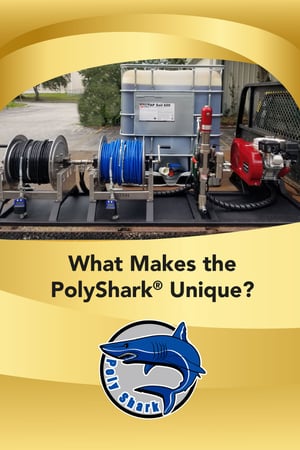
The PolyShark® system includes injection hoses, suction lines, flow meters, a custom solid steel frame, a skid-mounted setup, and top-of-the-line components. It is a complete turnkey unit, ready to go upon arrival. Let's take a closer look...

  • Two 350 feet injection hose reels are included, allowing an exceptional amount of additional reach for limited access and/or remote location jobs.
  • Suction lines make it easy to pump material from totes, drums, or even pails if needed. This type of flexibility is not common to all geotech pumps.
  • Flow meters make it easy to accurately track the amount of material pumped.
  • The custom solid steel frame, polyurea coated for excellent chemical resistance, is built to last and weather all types of environments.
  • The skid-mounted setup keeps all system components together, allowing for easy transfer from truck to trailer to the ground on a job site if necessary.
  • The Honda gas motor, Titan hydraulic pump, and Titan hydraulic fluid ram are top-of-the-line, tried, and true components. This means less maintenance and downtime when compared to competing systems.

Want more information on the PolyShark®?

Download an Info-Packed PolyShark System Brochure!

Topics: Repair Seawalls, All Posts, Stabilize Soil

Case Study: Protecting Drinking Water from Potential Flood Contamination

Posted by Kreg Thornley on Jun 22, 2021, 10:00:00 AM

Banner - Protecting Drinking Water from Flood

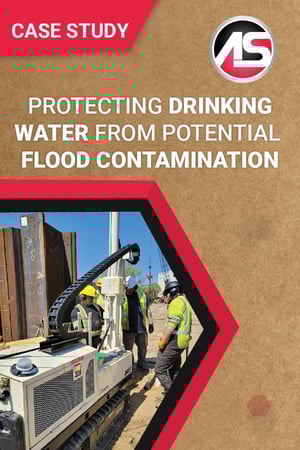
Body - Protecting Drinking Water from FloodPlanners at Washington D.C.’s water utility, D.C. Water, decided to take proactive measures against potential flooding of their facility. Located right next to the Potomac, their facility could’ve been at risk in the event of an out-of-the-ordinary natural disaster. Determining that the main risk to the water supply in such a case would be permeation through sub-surface soil, they began installing a metal sheet pile wall deep into the substrate between the riverbank and the facility. However, in some spots they were not able to drive a sheet pile panel into the ground because of underground utility lines or rocky substrate. The planners called in LJS Waterproofing to create sub-surface grout walls in those spots to fill in the gaps.

Powerful Polymer

The LJS crew “constructed” these sections of the underground wall by injecting AP Fill 700. This is a single component, water-activated, hydrophobic, low viscosity, closed-cell polyurethane injection resin. This grout was used because it permeates the soil, fills small voids in the soil, and cuts off water flow.

Painless Procedure

LJS professionals used a Geoprobe to drive injection pipes into the ground (up to 33 feet in some locations). They then injected one gallon per foot using upward staging. The next injection point was 18 inches away from the first one. This process was repeated until a grout wall formed, filling the gap between the two adjacent underground sheet piles. For a large-scale job like this, LJS used the PolyShark single component grout pump.

Rapid Results

With solid, impermeable grout walls filling in the gaps, a sub-surface barrier between the riverbank and the drinking water facility was now in place. The planners at D.C. Water were very satisfied with this solution. LJS Waterproofing came through exactly in the way they had promised.

Want more information on Alchemy-Spetec products?

Download the Info-Packed Geotech Product Catalog!

Download the Info-Packed Leak Seal Product Catalog!

Topics: Repair Seawalls, All Posts, Seal Leaks, Stabilize Soil

A Competitive Edge for Contractors

Posted by Kreg Thornley on Apr 15, 2021, 10:00:00 AM

Banner - A Competitive Edge for Contractors

Body - A Competitive Edge for ContractorsEditor's Note: An earlier version of this article was published under the title Develop Your Competitive Edge. 

In today's fast-paced infrastructure repair market, you need every advantage you can get. At Alchemy-Spetec, the success of your business is our top priority. You gain a significant competitive edge over your competition with access to the widest selection of premium materials and equipment, plus rock-solid reliable technical and marketing support. Our entire company culture is built around ensuring your success in this industry.

Polyurethane – Quality and Selection

Alchemy-Spetec offers one of the most technologically advanced grout product lines currently on the market, We offer a wide variety of leak seal materials, including injection resins for sealing water leaks in cracks, curtain grouting foams for sealing challenging/gushing leaks, acrylic injection resins that penetrate thin cracks and saturate soil, epoxy resins for structural repair and preventative waterstop products. We also offer a wide variety of geotech materials, including slab lifting foams, deep-soil lifting foams, soil stabilization foams,. The superior quality of these materials guarantees fewer callbacks from your customers. Many of these products are also certified for contact with potable water, making them safer for the environment.

Equipment and Accessories Selection

We’re a one-stop-shop for all things polyurethane concrete repair, with one of the most versatile equipment and accessory product lines in the industry. Once you’ve picked out the product that best fits your needs, we can provide it all: pumps, hoses, packers/ports, and specialty accessories.

Tech Support – Experience and Dedication

Do you need technical support? You’re in luck—we’re home to the industry’s premier technical support squad. Averaging decades of experience, we also pride ourselves on being incredibly responsive. For example, our team was once called on to assist with a large metro project in the Western United States. The customer informed us at 4 pm on Monday evening that assistance was needed at 9 am the very next day! Our Technical Services Director, Vice President, and Western Regional Sales Manager traveled to the site Monday evening to help diagnose the location of the leaks and develop an action plan. Our Technical Services Manager remained on site for two more days to ensure that the project was successful. Depending on the size and scope of the project, response time and participating team members may vary, but this story serves to illustrate the lengths we will go to assist customers.

Training and Education

We offer the industry's most thorough training and education for both leak seal and geotech polyurethane infrastructure repair. This includes job site training/consulting, online educational content, and training workshops at distributor locations - not to mention one of the most educational blogs in the industry.

Marketing Support

Our marketing department provides qualified customers with product application illustrations and photos for use on websites, customized brochure PDFs for printing, and truck signage graphics. We also offer the use of our educational videos and animations. Lastly, we’re available for guidance on everything from online lead capture strategies to internet advertising, and more.

We’re Committed to Your Success

The overriding theme here is our commitment to your success. Obviously, this is not totally altruistic in nature.  The more successful you are, the more materials and equipment you buy.  But it is 100% genuine.  Our entire team understands the relationship between YOUR success and OUR success.  This point of view is thoroughly ingrained in our company culture.

Want more information on Alchemy-Spetec products?

Download the Info-Packed Leak Seal Product Catalog!

Download the Info-Packed Geotech Product Catalog!

Topics: Repair Seawalls, Equipment & Accessories, All Posts, Lift Slabs, NSF Certification, Seal Leaks, Stabilize Soil, Business Tips, Repair Cracks, Waterstop, Deep Lift, Floor Repair, Fill Voids

Geotech Equipment - Slab Lifting, Soil Stabilization, Seawall Repair

Posted by Colt Hullander on Apr 8, 2021, 10:00:00 AM

Banner - Geotech Equipment

Body - Geotech Equipment

Rigs & Pumps for Polyurethane Slab Lifting

Entry-Level Rig

This rig features a hydraulic PH-2 proportioner. It's in a 16' v-nose trailer and has a gas powered air compressor and generator. We have many contractors with this set up doing everything from residential to D.O.T work.

Mid-Level Rig

This rig can either be a 18' or 20' trailer that happens to be built around the PH-2 proportioner. This setup is made for the contractor who wants stellar results in an affordable price range. This package boasts a 22 KW diesel powered generator and an electric air compressor.

Advanced Level Rig

This rig is similar to the mid-level rig with a larger PH-40 proportioner. These rigs come in 20'-plus size trailers and box trucks. They and are powered by 35 KW Stateline Diesel (John Deere) generator sets and also include electric air compressors. This setup is ideal for larger jobs.

PolyBadger Mobile Lifting Unit

The PolyBadger lifting system is tough and compact. This system is an affordable entry-level option for new contractors, as well as an extremely portable addition to the experienced contractor’s arsenal. The PolyBadger is a lot less expensive than your standard 20 foot trailer rig. The set up is simple and requires minimal equipment. The entire system can easily fit in the back of a pickup truck!

Polyurethane Soil Stabilization & Seawall Repair Pumps

PolyShark Pump for Larger Jobs

Single-Component Geotech Pump Skid
The PolyShark system is a custom pump skid for installation of single-component polyurethane geotech resins. This world-class skid set up is essential for large scale seawall repair, soil stabilization, and void fill projects. The PolyShark includes a gas-powered high-pressure injection pump, two hose reels, and flow meters.

Gas-Powered High-Pressure Injection Pump
A step up for projects that require greater power and output, this custom modified pump is our best-selling gas over hydraulic piston machine, favored by contractors who want to complete large application jobs in record time with high profit margins. The hydraulic ram fluid section is moved front and center in the configuration for easier maintenance and control.

High-Pressure Hose Reels with Stainless Steel Ball Bearings
High-pressure design guarantees durability when used with the high-pressure single-component pump. The construction is completely corrosion resistant and the stainless steel ball bearings, hardware, and manifolds are stronger than the aluminum parts on standard hose reels. The ball bearing-driven hose reels operate smoothly because they contain no bushings. (Bushings easily wear out.)

Flow Meters
Two high-pressure flow meters are capable of recording the exact amount of product pushed through the hose lines. This allows for precision material-use tracking.

Titan 440 Pump for Smaller Jobs

Pumps like the modified Titan IMPACT 440 electric injection pump are ideally suited for residential, property maintenance and small commercial applications.

MixMaster Pro Slab Lifting Gun

The MixMaster Pro was designed based on years of feedback from slab lifting contractors working in the field. Every known point of frustration and difficulty has been addressed in this sturdy, single-purpose gun. Further benefits include a lower cost of consumables (you can reuse ports with this gun), beefy check valves designed to handle the back pressure, and a short 10-minute breakdown/cleaning session at the end of each day. Not to mention the fact that this gun is a production BEAST - no leaky port connections, no fumbling with clamps. Watch your man hours on each project shrink accordingly. Did we mention you’ll have less replacement part orders? There are only a few inexpensive replacement parts on this gun - PERIOD.

Want more information on geotech equipment and products?

Download the Info-Packed Geotech Product Catalog!

Topics: Repair Seawalls, Equipment & Accessories, All Posts, Lift Slabs, Stabilize Soil

AP Pump Saver 195 - Lubricate and Protect Single Component Pumps

Posted by Colt Hullander on Mar 16, 2021, 10:00:00 AM

Banner - AP Pump Saver 195 - Lubricate and Protect Single-Component Pumps

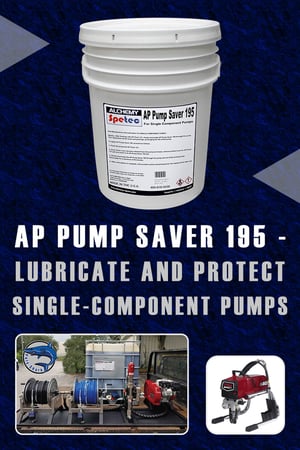
Body - AP Pump Saver 195 - Lubricate and Protect Single-Component PumpsAP Pump Saver 195 is a specially formulated oil-based lubricant and protectant. It was designed for use in single-component polyurethane pumps. 

Applications

  • Lubricating and protecting oil cup section of Poly Shark pumps.
  • Lubricating and protecting packings and seals on other single component pumps.

Advantages

  • Greatly extends the life of the pump packings.
  • Rejuvenates old, worn seals. 
  • Decreases the amount of resin leaking into the oil cup.

After single component pumps have been thoroughly flushed with AP Flush 121, circulate AP Pump Saver through the system for at least 20 minutes.  AP Pump Saver 195 is supplied in 5 Gallon Pails (18.9 Liter Pails) with a removable lid.

Want more information on Alchemy-Spetec Geotech products?

Download the Info-Packed Geotech Product Catalog!

Topics: Repair Seawalls, Equipment & Accessories, All Posts, Stabilize Soil

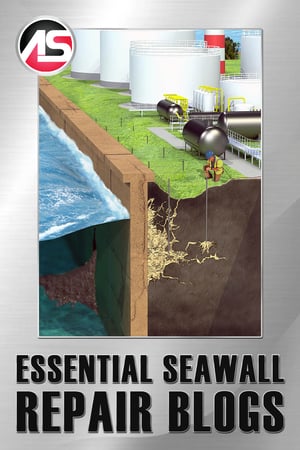
Essential Seawall Repair Blogs

Posted by Kreg Thornley on Jan 28, 2021, 10:00:00 AM

Banner - Essential Seawall Repair Blogs

Body - Essential Seawall Repair BlogsThis article features intros and links to our top 5 most popular seawall repair blogs:

Get up to speed quickly with these blog posts.  You may also want to visit the seawall repair application page for an animated explainer video, product info, and links to all seawall repair blog posts.

Stop Erosion Through Your Seawall with Polyurethane

A seawall is like a living, breathing thing: especially in the way that it is designed to function. But like all living breathing things, seawalls have a finite lifespan. For many of them, it's a mere 20 – 30 years. Depending on where you live, replacing a seawall can cost anywhere from $150 to $500 per foot. That's enough for some homeowners to choose to move instead of rebuilding their seawalls. Today however, signs of seawall distress can be solved before they get too bad through the application of polyurethane grouts to seal leaks, fill voids, and stabilize the surrounding soils. Click here to read more...

An In-Depth Look at Polyurethane Seawall Repair

In this blog post we’ll look at an innovative way to repair seawalls instead of replacing them by stopping high flow leaks, filling the voids behind concrete structures and binding loose soil with polyurethane foam. As tidal flows rise and fall, water pushes its way in through cracks, joints, and defects in seawalls. The water pushes in on incoming tides and flows out on outgoing tides. As the water flows out, it carries sand and soil with it which causes undermining of the structure. Click here to read more...

Residential Seawall Repair

If you love the ocean, then living near the water can be an ideal situation most of the time. You can enjoy scenic views of the sea, easy access to the water, and gentle ocean breezes as you sit out on your deck. But one challenge many oceanfront home owners eventually find themselves facing is leaking seawalls. You depend on seawalls to keep water on the outside and the the soil that supports your property on the inside. The seawall protecting your property is vulnerable to many degrading factors. Click here to read more...

Signs a Seawall is in Need of Repair

Salt corrosion, tidal action, currents, boat wakes, storm surges and sometimes hurricanes all deliver a constant beating on the seawall. Contrary to popular opinion, many of the forces also come from the side of the wall facing the land. Did you realize that rainfall/storm events create more hydrostatic pressure than rising and falling tides? Every time it rains or the irrigation system runs, and every time the tide goes out; all of the groundwater above the waterline needs a place to vent or equalize. Massive pressure can build up if that water is trapped, making it impossible for it to drain into the sea or storm water system. That is a recipe for disaster which can easily be avoided with proper surveillance. Let's take a look at some of the external signs a seawall is in need of repair. Click here to read more...

Polyurethane Foam for Seawall Repair - Technical Details

Repair sea walls instead of replacing them by stopping high flow leaks, filling the voids behind concrete structures and binding loose soil with AP Fill 720 & AP Fill 700 — innovative, cost effective, water activated, low viscosity, simple to use closed cell polyurethane injection resins. Click here to read more...

Want more information on seawall repair with polyurethane?

Download an Info-Packed Seawall Repair Brochure!

Topics: Repair Seawalls, All Posts

How to Tow a Trailer: 8 Basic Safety Tips

Posted by Erik Prinzing on Jan 26, 2021, 10:00:00 AM

Banner - How to Tow a Trailer

Body - How to Tow a TrailerWhether it’s your first time or you’re a seasoned veteran, this guide can serve as a simple checklist to keep your equipment and 16-20 foot trailer safe as you travel to your next project.

Give Yourself Plenty of Room to Stop and Turn

When towing a trailer, the distance required to stop is more than most people realize. The amount of space between you and the vehicle in front of you must be doubled if not more compared to driving without a trailer. The same is true with turns. Allow more space than you think you may need between you and any curbs or other vehicles. And don't jackknife the trailer (a turn so sharp that it touches your bumper) as this can cause damage.

Keep Your Trailer Grounded

Winds, downhill grades, and momentum can all lead to trailer swaying. We recommend utilizing a hitch stabilization device to negate some of these effects. You can also release the gas pedal and manually apply the trailer brakes with a brake controller as needed. Your trailer can start swinging back and forth behind you if you are not monitoring your surroundings and speed.

Look Twice While Changing Lanes

Your blind spots significantly increase with a trailer and it’s much harder to make quick lane changes. Give yourself plenty of space and move slowly from one lane to the other after double-checking your blind spots and the positions of surrounding vehicles.

Patience is Key with Passing

You also have to allow more distance and time when passing other vehicles. Give yourself plenty of room to get your vehicle safely up to speed with the trailer in tow. Be patient and remain calm at all times, even when other drivers may impatiently speed up and pass you.

Avoid Blocking Yourself In

Just because you can get in doesn’t mean you can get out. It’s a lot easier to get stuck or blocked in with a trailer than most people realize. Make sure there's plenty of space to make a complete turnaround or choose a spot where you can exit straightaway.

Practice Backing Up with the Trailer

Backing up with a trailer can be counter-intuitive for newbies. New trailer drivers should take some time in a parking lot or other spacious area to practice slowly driving in reverse. You’ll find that you have to turn the steering wheel left in order to move the trailer towards the right and vice versa. For most people it doesn’t feel right at first, so it’s definitely worth practicing in a safe environment.

Perform Regular Maintenance and Carry a Spare Tire

If you have electric brakes on the trailer, be sure to calibrate them so they are receiving the correct amount power. Follow the calibration procedures in your brake controller manual. Check the lug nuts with a lug wrench periodically to make sure they aren't coming loose. Grease the bearings on the axels every 10,000 miles or once a year, whichever comes first. Carry a spare tire, a lug wrench, and a jack that is strong enough to lift your trailer. It's tough to change a tire without the proper equipment.

Stay Alert

The #1 reason people get into accidents is because they are not paying attention, driving faster than they should, or simply lacking foresight. Look further down the road than you normally would because it takes longer to speed up, brake, change lanes, and turn with a trailer. This way you can spot and anticipate problems from a mile away.

Want more information on geotech products and equipment?

Download the Info-Packed Geotech Product Catalog!

Topics: Repair Seawalls, Equipment & Accessories, All Posts, Lift Slabs, Deep Lift