Looking for a Contractor?

Alchatek Blog

MixMaster Pro Series Part 2

Posted by Andy Powell on Jan 8, 2018, 10:45:52 AM
slab lifting gun mixmaster pro alchemy-spetec
 

MixMaster Pro – The Production Beast!

In part one of our MixMaster series leading up to the World of Concrete, we highlighted the fact that contractors don’t have to worry about tripping over pre-positioned injection ports when using this gun.  With the MixMaster Pro system, the port travels with the gun and isn’t left in the hole.  So there's less to trip over or have your hoses and cords get caught on.

slab lifting gun mixmaster pro alchemy-spetec

If you have a system where you are clamping the gun to the port, then frankly, I am sorry for you.  I have seen first-hand how tedious it is to keep that connection clean and how much fun it is (NOT) to scrape cured foam off the vise grips and mixing module face of the gun.  This is a time waster for sure.  With the MixMaster Pro, you are able to move quickly from point to point, which saves time and money.

When I train installers in the field and we switch them from their spray foam style guns to a gun designed just for slab lifting, you can see their eyes light up once they realize how much easier it’s going to be.  The elimination of a port required for every hole not only eliminates a tripping hazard, but also maximizes production and reduces the cost of consumables.

On a typical job with traditional impingement guns, you have to place an injection port in every hole.  It’s a 5/8” hole to start with as opposed to a 3/8” hole with the MixMaster gun system.  3/8” holes take less time to drill, include less expensive drill bits, and reduce the percentages of hitting rebar or wire when drilling through a slab because of the drill bits having a smaller diameter.

Once our 3/8” holes are drilled it’s as simple as inject, monitor, and move to the next point when it’s time.  The other systems require: drilling 5/8” holes, hammering in the port and tightening with a wrench to anchor it into the slab, connecting the gun to the port with an overpriced, modified vise grip, then injecting until it’s time to move.  I have been on many jobs where this system is implemented and it is a LOT slower.

Increasing production is a way for you to realize the most savings, but you also can’t discount the savings on the consumables like the ports themselves.  MixMaster ports are 3/8” diameter and they cost less than larger 5/8” diameter sleeved ports.  So even if you used the same number of ports, the MixMaster system would be more cost effective.  Now factor in that you can do a typical residential job with one or two ports compared to 10-20 for the other guys, and those numbers will add up over time.  I consulted with one of our customers on a residential stabilization job a few weeks ago and the guys drilled a grid pattern with at least 50 holes.  They used two ports with our MixMaster Pro system.  A week earlier they would have used 50 ports.  That saved them over $50 on materials for that job; not a huge number but it adds up over a week, or a year.  That’s the cherry on top of all the money you can save on labor with our system.

Stay tuned for part 3 of 4 coming in a few days, in which I will continue to illustrate the low operating cost of the MixMaster Pro slab lifting system. If you are currently struggling with the cost of cleaning, maintaining, and buying parts for your impingement guns, you will want to read this next one.

I look forward to seeing you all at the World of Concrete, booth O40551.  Click here for an automatic discount on World of Concrete registration!

Want more information on the MixMaster Pro?

Download an Info-Packed MixMaster Pro Brochure!

Topics: Equipment & Accessories, All Posts, Lift Slabs

Polyurethanes vs. Epoxies

Posted by Charlie Lerman on Jan 5, 2018, 10:56:50 AM

Polyurethanes vs. Epoxies

Polyurethanes vs. Epoxies

When repairing cracks in concrete, which material is better to use? Polyurethane or epoxy?  Well the real answer is both products will work, but there are some rules that apply.

Polyurethanes Vs. Epoxies

If the crack is leaking, polyurethane chemical grout would be the better choice because epoxies do not perform well where moisture is present. Polyurethane is a fast setting foam product that can stop leaks in as little as 5 seconds. It can also fix hairline cracks and cracks that are a few inches wide. 

Epoxy can be used for cracks in need of structural repair because of the high compressive strengths they have. Some epoxies even have higher strength ratings than concrete. This is why they are the best choice for non-leaking structural cracks.

A few years back I was asked by an engineer to look at a parking garage that had many leaking cracks. It turned out that those cracks were previously repaired with epoxy grout. This is a perfect example of why grouters should not use epoxy in leaking cracks.  As I mentioned earlier, epoxy does not do well in cracks that have moisture in them.  The other mistakes they made were: using a very rigid epoxy without flexibility, and failing to bridge the crack for movement. This is what caused the cracks to leak again.

My recommendation for this problem was a simple. Because the cracks already had epoxy in them, I had the contractor drill through the wall and into the soil. I then had the contractor pump polyurethane chemical grout behind the wall and build a curtain wall of grout behind each crack.  Problem fixed!

Products we have for crack injection:
Spetec PUR F400
AP Seal 500 
Products we have for curtain wall grouting:
Spetec PUR H100
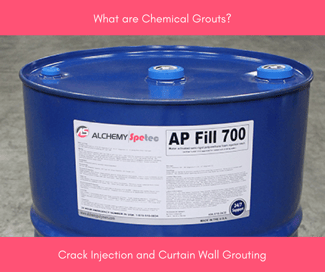
AP Fill 700   
Product we have for structural crack repair:
Epicol INJ LV

Want more information on Alchemy-Spetec products?

Download the Info-Packed Geotech Product Catalog!

Download the Info-Packed Leak Seal Product Catalog!

Topics: All Posts, Seal Leaks, Repair Cracks

MixMaster Pro Series Part 1

Posted by Andy Powell on Jan 3, 2018, 1:47:12 PM
part 1.png
 
part 1 (1).png

At Alchemy-Spetec we manufacture first class polyurethane and acrylic resins for Sealing Leaks, Stabilizing Soil, and Lifting Slabs. We also provide the delivery systems and training for using our products in the field.  Although I enjoy talking about all of our products and working with them in the field, I find that lifting concrete slabs and structures is the most rewarding and interesting to me.

One of the greatest public safety benefits a slab lifting contractor can provide for their workers is the elimination of tripping hazards on the job. I give talks to different building management associations like BOMA and IFMA, pointing out eye opening statistics about the costs of neglecting tripping hazards. A lost time accident for one of your workers is one of the most expensive costs to bear.

Last week I was training some slab lifting technicians on using our MixMaster Pro slab lifting gun. They really liked it and pointed out a number of advantages over the air and mechanical purge guns they were used to. I have heard these points made many times, but when the tech said he liked it because they weren't tripping over ports, I was caught off guard.

When I asked him to explain, he said that their old system required them to set injection ports in every hole. When they would then move back and forth injecting various holes to bring the slabs up, they would invariably trip over the pre-positioned ports. He mentioned that they were getting orange colored ports at one time in order to help address the problem.

A week prior, I experienced this myself on a curtain wall grouting job under a containment area. We had the same problem, and there were a LOT of ports to watch out for. At the end of the day,  we had to put up safety tape around the area to keep other workers from entering and possibly tripping over an injection port. To have that same situation brought up the following week, on a slab lifting job, was eye opening.

Indeed the MixMaster Pro gun does eliminate those types of tripping hazards for the crew. A port in every injection hole is a place to trip or have a hose or extension cord hang up. With the MixMaster Pro system, the injection port moves with the gun, leaving the area free of ports while your crew works. In fact it's not uncommon to use only one or two ports over the course of an entire residential job. 

Give us a call at Alchemy-Spetec and let one of our sales experts or field techs explain the advantages of the MixMaster Pro. If you want to start a business fixing tripping hazards by lifting slabs, we can help you out. If you already lift slabs, there may be different kind of tripping hazard we can help you resolve.

Stay tuned for part 2 of 4 coming in a few days and I look forward to seeing you all at the World of Concrete, booth O40551.  Click here for an automatic discount on World of Concrete registration!

Want more information on the MixMaster Pro?

Download an Info-Packed MixMaster Pro Brochure!

Topics: Equipment & Accessories, All Posts, Lift Slabs

Best of 2017 Blog Posts: Part 2

Posted by Kreg Thornley on Dec 29, 2017, 11:30:00 AM

Copy of best-banner.png

We round out this year with a look back at some of the best blog articles from 2017.  Today's post is part two of a two-part series.  Enjoy!

benefits of buying through distribution

Benefits of Buying through distribution

It is much more convenient to buy from a distributor that can deliver product directly to your job site, as opposed to depending on a freight company to deliver it from the manufacturer.

To make it simple: a distributor already knows the local job site, the area, the traffic patterns, and the key people to make seamless drop offs.  We have experienced first hand the frustration of trying to get materials to a project address. The logistics, the timing, the limitations of a freight carrier's route and schedule can drive someone mad. Having someone else handle that can be a no brainer. 

Read more

Alchemy-Spetec's NSF Certification Spells Environmental Protection

Alchemy-Spetec's NSF Certification Spells Environmental Protection

The Safe Drinking Water Act (SDWA) gives the EPA latitude to impose criminal and civil penalties on industries not in compliance. In 2014 enforcement efforts policing clean water netted $163 million in penalties and fines, 155 combined years of incarceration for sentenced defendants, and $16 million in court-ordered project clean-ups.

Having products that may come into contact with drinking water certified to NSF 61-5 (approved for contact with drinking water), ensures compliance with the SDWA and guarantees peace of mind for stakeholders on construction projects where this could be an issue. 

Read more

Sealing Leaks with Spetec F400 - Underneath the St Lawrence Seaway

Sealing Leaks with Spetec F400 - Underneath the St Lawrence SeawayOne of our regional managers recently had the opportunity to train a crew on a very interesting job inside an underwater utility tunnel beneath a lock and dam in the St. Lawrence Seaway. This seaway connects the Great Lakes to the Atlantic Ocean. This tunnel is underneath a giant concrete deck, so the walls have taken a lot of pressure over time. 

The soil also shifts and settles underneath the tunnel as the years go by. Those factors, in addition to freeze/thaw cycles have caused cracks to appear in the walls. 

Read more

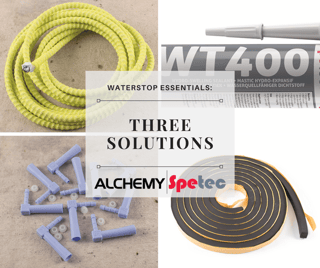
Waterstop Essentials: Three Solutions

Waterstop-social-1.png

While similar in function, there is a difference between leak seal products and waterstop products. Waterstop products are designed to prevent water leaks from occurring, while leak seal products are designed to repair existing leaks.  

This article contains an overview of the following Alchemy-Spetec waterstop products:

  • Spetec WT400
  • Spetec ITS Kit
  • Spetec SST500

Read more

Want more information on Alchemy-Spetec products mentioned above?

Download the Info-Packed Geotech Product Catalog!

Download the Info-Packed Leak Seal Product Catalog!

Topics: All Posts

Best of 2017 Blog Posts: Part 1

Posted by Kreg Thornley on Dec 27, 2017, 1:02:08 PM

Copy of best-banner.png

We round out this year with a look back at some of the best blog articles from 2017.  Today's post is part one of a two-part best of series.  Enjoy!

best (1).png

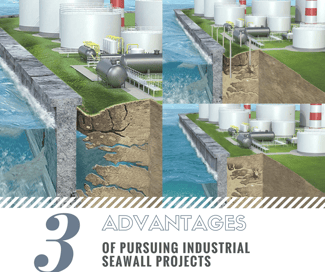
Seawwall-social-2.pngLet’s take a look at a few advantages of pursuing large industrial seawall projects over small residential projects.

These advantages include:

  • Projects with Higher Budgets
  • Owners with More Properties
  • More Bang for Your Marketing Buck

Read more

best-4.png

part-1-4.pngThis series of articles takes an in-depth look at crack injection and curtain wall grouting.  

Click here to read Part 1

Click here to read Part 2

Click here to read Part 3

Click here to read Part 4

3-4.png

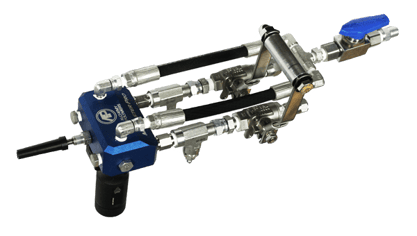
best3.pngIn case you missed it, we're pleased to announce that we've made significant improvements to our MixMaster slab lifting gun. Our new model, the MixMaster Pro, is now available! A large part of the market is still using old sprayfoam insulation guns to do heavy concrete lifting work. Let's take a look at some of the benefits of using a gun that's custom designed for slab lifting...

Read more

4.png

Copy of www.alchemypolmers.com (1).pngPursuing the dream of starting your own polyurethane slab lifting business is a big leap. But it's not nearly so intimidating when you're armed with the right information. In this post we cover:

  • Available Slab Lifting Markets
  • Marketing Your Slab Lifting Business
  • Estimating Materials for a Job

Read more


Want more information on Alchemy-Spetec products mentioned above?

Download the Info-Packed Geotech Product Catalog!

Download the Info-Packed Leak Seal Product Catalog!

Topics: All Posts

Alchemy-Spetec Announces Jim Spiegel as V.P. of Sales and Business Development

Posted by Stephen C. Barton on Dec 20, 2017, 11:00:00 AM

jim-banner.png

Jim-blog (1).pngWe are excited to welcome Jim Spiegel as the newest member of our team.  Jim comes on as the V.P. of Sales and Business Development for the growing Atlanta-based company.  Jim brings 12 years of chemical injection and concrete repair experience.

Alchemy-Spetec offers the industry a unique combination of technical support and products for geotechnical, waterproofing, and concrete repair applications.  With much of his experience coming from domestic sales management and international distribution, Jim offers a valuable piece in both Sales and Business Development across all product segments.

When asked about the outlook for the company, Jim said, “Looking closely at the Alchemy-Spetec team, you find many decades of collaborative experience representing the most well-known brands in the chemical grout industry.  We have relevant and professional experience in ownership, management, business intelligence, marketing, production, and sales.  It’s very clear that this company is committed to building a quality team, product line, and industry name.” 

Alchemy-Spetec President and CEO Stephen C. Barton added, "I am thrilled to welcome Jim Spiegel to the team as our V.P. of Sales and Business Development.  Jim's high energy and determined focus will help us as we continue to innovate and change the geotechnical and waterproofing landscapes.  Our strategic partners will benefit from Jim's ability to identify and promote new opportunities."

Please look for Alchemy-Spetec at the World of Concrete in the Silver Lot directly across from the entrance to the South Hall where we will be performing live slab lifting demos and showcasing both the geotechnical and waterproofing product lines.

Want more info on Alchemy-Spetec products?

Download the Info-Packed Geotech Product Catalog!

Download the Info-Packed Leak Seal Product Catalog!

Topics: All Posts

Pipe Penetration Leaks

Posted by Charlie Lerman on Dec 18, 2017, 3:35:08 PM

leaks-banner (1).png

leaks-blog.pngPipes that are fed through foundation walls are subject to leaking over time due to corrosion, pressure or cracks around the pipe.  This takes place because water essentially weakens the concrete around the pipe and creates leaks.


When these particular pipes are put in place, contractors usually drill a hole through the wall and insert pipe sleeves to hold the conduit, sewer pipe or water line.  Most of the time water will leak from the back of the wall where the soil has eroded and then through the sleeve and out on to the floor.

Qualified contractors can use Alchemy-Spetec polyurethane water activated chemical grouts and oakum to repair these pipe penetration leaks.  (Oakum is a oil-free natural fiber that is used for filling voids.)

Here's how it's done:

  1. Soak the oakum in chemical grout, and then quickly submerge it in water. 
  2. Immediately pack the oakum around the pipe that is sitting in the sleeve.  It will harden in minutes and become a tightly sealed gasket. 
  3. If needed, use an injection needle to fill area behind the oakum with chemical grout.

Alchemy-Spetec products that can be used include:

Want more information on Alchemy-Spetec leak seal products?

Download an Info-Packed Leak Seal Brochure!

Topics: All Posts, Seal Leaks

Parking Garage Leaks

Posted by Charlie Lerman on Dec 15, 2017, 10:58:11 AM

Parking Garage Leaks-banner.png

Parking Garage Leaks-blog.pngParking garage leaks can cause many issues for property managers when it comes to city code upkeep.  A major sign that a parking garage needs repair is evidence of water intrusion. The longer this evidence is ignored, the bigger the cost for the property owner in the long run.
One obvious sign of water intrusion is sudden ponding or free standing puddles on the concrete.  Another telltale sign is efflorescence on your walls and floor.  Efflorescence is the migration of salt to the surface of porous material where it forms a powdery white coating.  Efflorescence occurs when wall or floor cracks begin to leak water over a period of time.  If you see exposed rebar in a parking garage, it's a sign that water may be going through cracks, spalling the concrete and exposing the rebar.  Once this happens, the exposed rebar begins to rust and then has to be replaced soon after. Replacing rebar can be costly.

Alchemy-Spetec products are ideal for the Crack Injection or Curtain Wall Grouting procedures that are used to address these issues.  

Crack Injection Curtain Wall Grouting
Spetec PUR F400 Spetec PUR H100
AP Seal 500 AP Fill 700

When chemical grouts are injected into the floor or wall cracks, they provide a durable and lasting seal to prevent further leakage.  This can prevent concrete from spalling and exposing rebar, eliminate future puddles from forming and stop expansion joint leaks.

Want more information on leak seal products?

Download an Info-Packed Leak Seal Brochure!

Topics: All Posts, Seal Leaks

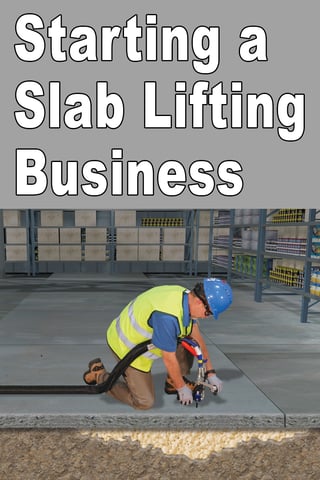
Starting a Slab Lifting Business

Posted by Andy Powell on Dec 13, 2017, 11:28:59 AM

Starting-a-Slab-Lifting-Business---Banner.png

Pursuing the Dream

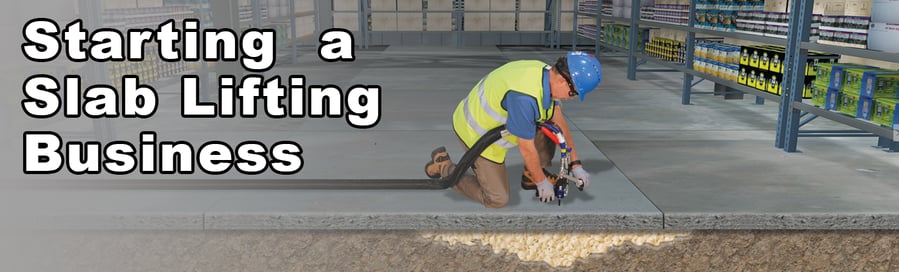
You can make a lot of money in the slab lifting business. There are many markets to take advantage of, including Residential, Commercial-Industrial and Transportation. Let’s take a quick look at all three...

Starting-a-Slab-Lifting-Business---Body.pngResidential Slab Jacking

The residential market offers tremendous opportunities for the slab lifting contractor. Obviously there are driveways, foundations, patios, pools, and porches. Don’t think residential only includes houses. There are countless opportunities in the apartment and condo sectors as well.

Commercial-Industrial Slab Jacking

Because scenarios for slab lifting are infinite in the non-residential category, let’s lump Commercial and Industrial together. Concrete parking lots, showroom floors, industrial park walkways and an endless supply of huge warehouse floors are just the tip of the iceberg in this extremely lucrative field of opportunity.

Slab Jacking for the Transportation Sector

Last but not least, take a look in the transportation sector. The world is covered with miles and miles of concrete roads, highways, bridge approach slabs, and railroad support slabs. A large percentage of them have settled in one spot or another (and the rest are vulnerable to future settling). There will NEVER be enough slab lifting contractors out there to address ALL of these current and future slab lifting needs. Your fortune awaits...IF you know what you’re doing.

Avoiding the Nightmares

It would be irresponsible to paint a completely rosy picture of the business and neglect to warn you of the pitfalls. Risk is an underlying factor in any new endeavor, and slab lifting is no different. Threats of failure can arise from problems with your Equipment, your Lifting Material and your Technical Knowldege.

Equipment Problems

You don’t want to wing it when you put your lifting rig together. Seek the advice of an experienced technician to make sure you have all the equipment you need, reliable machinery, and a trailer rig that was built to haul it all around. The last thing you need is a hose bursting, a generator failing or (and this has happened) a trailer axle breaking on the day of your first job!

Lifting Material Problems

How would you like to spend your time working on jobs that actually pay? Using reliable polymers will cut way back on the chances you’ll have to load up your rig and waste a day re-doing a job you were paid for long ago.

Technical Problems

Here’s where it’s critical to partner with a knowledgable polymer supplier that cares about your success. Some who have gone before you failed at their new venture because they weren’t prepared to overcome common challenges that arise on slab lifting jobs. How do you deal with a slab that has fused to a wall or another slab and stubbornly refuses to lift? What about very small structures that easily leak polymer from underneath all sides without raising an inch? Then there’s the fun surprise of realizing the wrong side of your slab is lifting. You can also accidentally crack slabs, damage your customer’s proprty and - in the the biggest nightmare of them all - permanently overlift the slab.

A Realistic Guide to Slab Lifting Success

We can start you on the journey of total preparation for success in slab lifting. Our experienced technical consultants can educate you on the causes of settled slabs, the process of repairing them, and critical facts about the polymer material on which your jobs will rely. You'll learn about trailer rig options, the MixMaster slab lifting gun, pump options and accessory equipment. We also offer tips on markering your business, estimating materials for jobs, and essential techniques for avoiding on-the-job problems. To get started, call us today at 404-618-0438.

Want info Alchemy-Spetec slab lifting products?

Download an Info-Packed Slab Lift Brochure!

Topics: All Posts, Lift Slabs, Business Tips

Alchemy Spetec – Behind the Scenes

Posted by Andy Powell on Dec 11, 2017, 12:26:01 PM

Behind the Scenes-banner (3).png

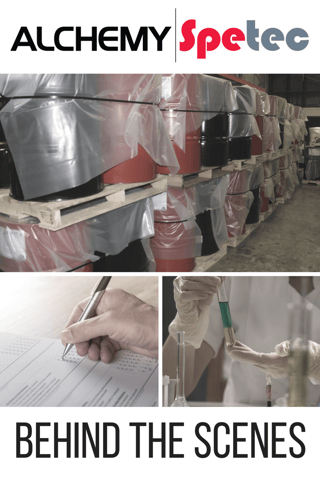
Many distributors and contractors are familiar with the Alchemy-Spetec brand.  One thing we are well known for is consistency of our products.  Let’s take a look behind the scenes at how we make this happen.

Behind the Scenes-blog-1.pngIn House QC

Alchemy-Spetec manufactures all of our polyurethane products as well as pump flush and parts cleaning solvents. Extensive quality control is in place to insure that we achieve the same results in spec every time.  QC is monitored from the moment we receive raw materials, continued throughout the production of finished goods, and completed when our finished products leave our dock.

Raw Materials – Receiving, Testing, and Storage

Incoming raw materials are checked against the open purchase order to make sure we are receiving what we ordered and in the right quantity.

Visual inspection is performed to make sure that raw materials are undamaged.  Once steps 1 and 2 are completed, the goods are signed for and the open purchase order is considered received.

All raw materials are weighed and compared against the stated net and gross weights.  All scales within our facility are certified per the required basis and duly recorded.

Certificates of Analysis (C of A) are checked to make sure material is stated to be in spec from the chemical manufacturer, then the C of A is filed in the C of A log book.

Certain raw materials have specifications for minimum allowable water content.  There are typically microscopic quantities of water in almost all chemicals, usually measurable in parts per million (PPM).  The C of A is checked and then we do an in-house titration of those specific chemicals to determine the amount of water present.  This is important because some of our polyurethanes are water activated and other polyurethanes we manufacture (slab lifting polys) use water as a blowing agent.  Once the materials pass this incoming QC titration they are put into storage for manufacturing.

Other raw materials we use are temperature sensitive.  Alchemy-Spetec has warm rooms and hot rooms for storing those specific raw materials to prevent them from crystallization.

Production of Finished Goods

Written Systems

There are written systems in place for the production of each finished product that we manufacture.  Production employees are all cross trained and tested on a monthly basis to ensure they understand the systems in place and can follow them accordingly.  A production manager is always on the floor supervising the batching of materials.  Raw material inventories are checked daily on the manufacturing computer system and also physically checked every Monday.  Any discrepancy in raw material weight can be back tracked to determine where it went into a batch. There are allowable tolerances for each ingredient in our finished products but we track it and record it accordingly. Our entire manufacturing process is recorded at all times by up to 12 high definition cameras.  Packaging is done on certified scales; materials are package accordingly into different containers depending on the product, including: Quart Cans,1 Gallon Cans, 5 Gallon Pails, 55 Gallon drums, and 250 Gallon totes.

QC Procedures for Finished Goods

It is the written policy of Alchemy-Spetec that no finished goods will leave our facility unless they pass stringent QC testing.

Testing

Samples are drawn from every batch of material and tested in a controlled 77° F environment.  There can be as many as 12 tests done depending on the product; here are a few of them:

  1. Rheology – materials tested for viscosity in centipoises at different temperatures
  2. Titration – finished goods tested for water content
  3. Reaction profile – materials reacted in the lab and tested for crème time, rise time, tack-free time
  4. Reacted materials are tested for compression strength, expansion, density, and permeation in sand for certain polymers

Documentation

A material testing worksheet is created for each finished goods batch.  That worksheet is filled out by hand during the testing, given a serial number, and then entered into our database.  The finished goods are given a Batch # which is printed on every label affixed to the packaged finished goods.

Retained Samples

A retained sample is collected from every batch of finished goods we produce.  That retained sample will be labeled with the corresponding batch number and then placed into controlled storage.  If there is ever a problem in the field, the contractor can read us the batch number from the package and we can look that up in our database, pull the retained sample, and test the sample in the lab again through the full QC process.

Conclusion

We also have to be experts on how our products are used in the field.  Preparing grouting plans and consulting on projects is part of our daily routine.

Want more information on Alchemy-Spetec products?

Download the Info-Packed Geotech Product Catalog!

Download the Info-Packed Leak Seal Product Catalog!

Topics: All Posts