
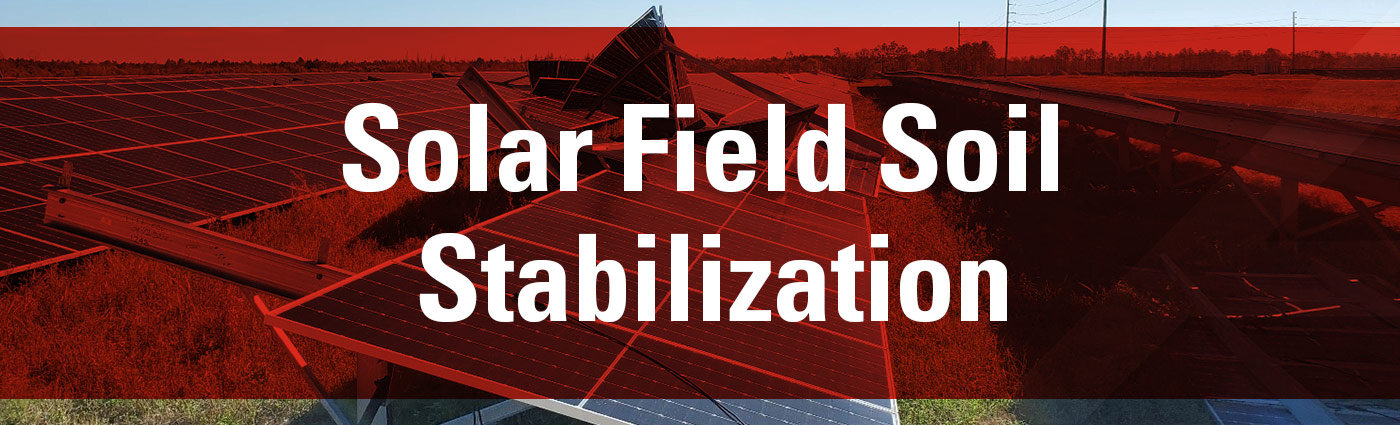
This is where it all started. At a new solar field installation in North Florida, there were areas of bad soil where the H piles were not passing the loading and pull testing. Solar panels lie at an angle, so a strong wind from one direction can try to “lift” the panel and pile. A strong wind from the opposite direction creates a downward force that can drive the supporting pile into the soil.
Powerful Polymers
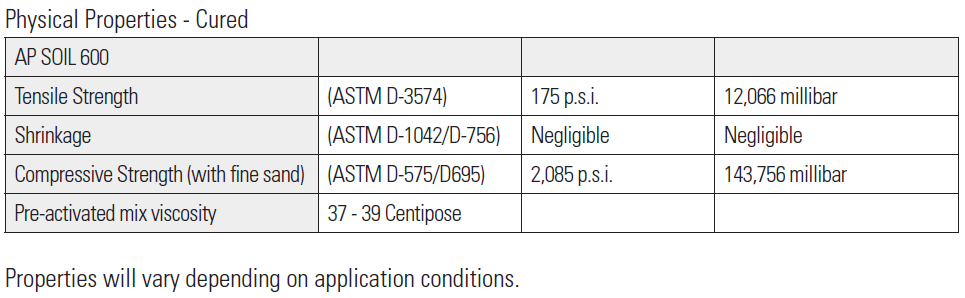
The general contractor, Stable Soils of Florida, contacted a local grouting specialist and asked if they could use cement grout to lock the piles into place. Because of the tight confines between rows of piles, the specialist suggested a chemical permeation grout: AP Soil 600 polyurethane grout. The equipment is more compact, and it is much cleaner to install than cement.
Painless Procedures
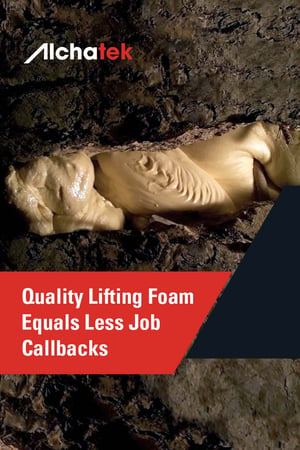
At the Alchatek plant where this resin is made, we set up a small demo (shown above). A steel C-channel was embedded in sand. AP Soil 600 was poured on top of the sand and allowed to soak in by gravity. AP Soil 600 is moisture activated (the same as Gorilla Glue), but it only takes about 5% moisture in the soil to make it react. In this case, we wet the sand slightly.
AP Soil 600 is heavier than water by design, and it is also hydrophobic. As it soaks in, it pushes through the moisture and displaces it. Once it cures, the sand is locked together.
Rapid Results
As AP Soil 600 soaks into the damp sand, it reacts and produces carbon dioxide. The CO₂ creates a swelling effect that drives the resin further into the sandy soil. In the image above, you can see the CO₂ starting to bubble.
Below is the finished result after the bucket was removed. We beat on the permeated sand with a 5 lb sledgehammer to see if we could break it off the C-channel. Because it is a resin, it is very tough, and we could not dislodge it from the steel.
Around 20 test piles were installed at the solar field. AP Soil 600 was injected right against the steel at a depth between 3 and 4 feet, with injection volumes varied across the test piles to establish the right rate for the site. All of the piles passed the pull testing and compression testing. The project was awarded, and around 4,000 piles were injected in total. It was a complete success.
Aerial view of the FPL Sunshine Gateway Energy Center after it was completed in 2018.
Fast forward to 2022 at a massive solar field installation in Ft. Green, Florida. Like many solar fields, it wasn’t built on the best land. The site was a filled-in phosphate mine, so the soil was layered with bands of clay, sand, and mine tailings. Once again, there were sections of the solar field where the piles were not passing the pull testing, load testing, and lateral testing.
Polyurethane grouting was proposed, but the manufacturer of the components (Sol Components from California) wanted the proposed polyurethane material to go through more vetting. Primarily, they wanted to know if the polyurethane grout would last for the 25-year service lifespan of the solar field. Job histories, accelerated testing results, and chemical resistance data were provided, to their satisfaction.
For this project, the owners wanted engineers involved in the grouting portion of the install. Mathers Engineering was in charge, and they contracted Madrid Engineering to handle the soil testing. Testing showed layers of clay and sand (referred to as zebra striping), so the grout was targeted in the sandy areas. The thinking was that the permeated sand would be locked in between layers of clay, improving both compression and pull strength.
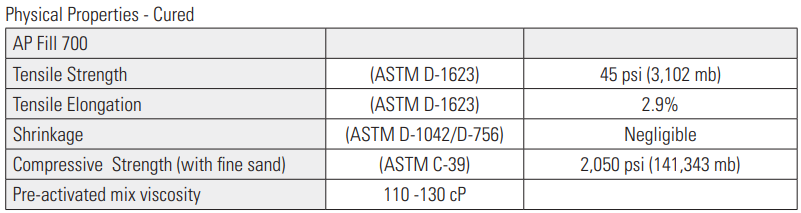
As on the first project, test piles were injected at a range of volumes, and the engineers confirmed the injection rate that consistently passed testing. That rate was used for production. 5,000 piles were injected on this project, about 90% of them with AP Soil 600. There were some areas of organic soils, and for those, AP Fill 700 was injected and tested successfully. AP Fill 700 has over 30X expansion and works well at improving organic soils. The work was completed in the spring of 2022, and the solar field went into service.
In the fall of 2022, disaster struck Ft. Green, a location unfortunately positioned directly in the path of a Category 3 hurricane. The storm left a trail of destruction in its wake. Trees were toppled, and the solar field, designed to endure winds exceeding 100 MPH, faced unprecedented damage. The wind from the hurricane’s eyewall drove the piles of solar panels into the ground. Many panels were shredded, and a significant number of piles suffered movement.
Out of 5,000 piles injected, only 9 showed any sign of movement. The polyurethane grout was put to the test and passed with flying colors. The repair method has already been tested: the embedded piles were jacked back up to level and then grouted in place with AP Soil 600, and all of them passed. The field is now waiting for the insurance process to be completed so the rest of the damaged piles can be locked back into place.
AP Soil 600 carries the NSF / ANSI 61 rating. It is safe for contact with potable water, and in this application, it will not leach any chemicals into the soil or groundwater.
Want more information on stabilizing soil with polyurethane?




 Manhole infiltration can pose serious risks to nearby structures. In a recent case, water infiltration pulled soil into a manhole, eroded the ground beneath a walkway in front of a residence, and threatened to compromise the home's foundation. Specialists from


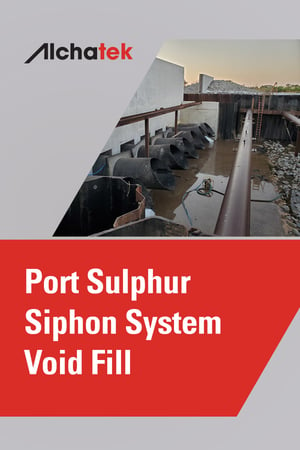 The Army Corp of Engineers (ACOE) builds and manages numerous projects along the rivers and waterways of the United States. On our mightiest river, the Mississippi, the ACOE was tasked with upgrading the large siphon systems that are used to draw down the river level during flood events. To prevent catastrophic flood damage, these siphons kick on if the river is going to crest over the top of the levees.
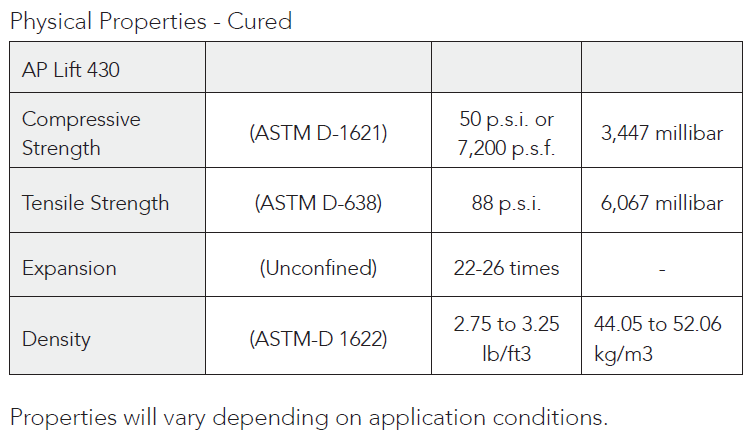


 Polyurethane foam can be used in a variety of new construction projects, from road widening to zero lot line excavation projects to a variety of complex excavation and foundation support scenarios. The use of polyurethane stabilization techniques provides clear advantages like cost-effectiveness, strength, and versatility across a wide range of situations. However, properly implementing them requires extensive technical expertise in assessing site conditions, selecting the right materials, and creating effective injection plans.

 In new construction projects, establishing a solid foundation for footings and slabs is crucial, especially in challenging soil conditions. Polyurethane foam offers a groundbreaking approach to improving soil stability, a key factor in the longevity and safety of new structures.
 As construction excavation projects continue to push the boundaries of complexity, innovative solutions are needed to ensure safety and stability. Polyurethane foam has emerged as an indispensable tool for these unique challenges. With a dual capability to stabilize soil and complement traditional retaining methods like sheet piling or secant walls, polyurethane foam provides robust support precisely when and where it is most needed. Whether plugging gaps to prevent infiltration, enhancing structural support, or sealing out soil in deep foundation pits, this versatile material enables advanced excavations that would otherwise be extremely risky if not impossible.

 Excavating near existing structures, particularly in zero lot line scenarios like building additions, poses unique challenges. Traditional methods like sheet piling, while effective, can cause issues such as adjacent structure disruption, soil settlement, and excessive noise, making them less ideal in dense, urban environments.
 Translate
