Looking for a Contractor?

Alchatek Blog

Sunken Slabs and the Cost of Neglect

Posted by Andy Powell on Oct 13, 2017 4:30:32 PM

hazard-banner.png

It was about 2 AM when the fire alarm when off in my hotel room.  I have never heard an alarm so loud in my life; all I wanted to do was get out of the room but it was so disorienting that I could barely throw some pants and a shirt on.  My instincts told me this was a false alarm as I trudged down 5 flights of stairs to the bottom level.  I was behind an elderly couple so it was slow going as we navigated our way out.

This particular stairwell brought us out on the side of the building and I noticed it was dimly lit.  This was a nice ocean front resort hotel and the lighting in my opinion should have been brighter.  About the time I noticed that, the elderly lady in front of me tripped and fell right on her face on the sidewalk.  She was about 5 yards in front of me and I was first to her side; she had fallen behind her family.  Fortunately a quick responding fire department rolled up right then and I ran over to get their help.  They got her up and into the paramedic truck. 

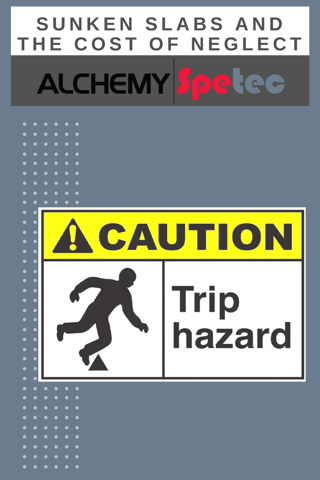
hazard-blog-1.pngIt looked like the lady was going to be okay but the point is that this was probably avoidable.  When I ran to her side I could see the sidewalk tripping hazard that had caused her to fall.  Combined with the dim lighting it was a case of dual premises liability.  I give talks to groups like IFMA and BOMA just on the topic of Tripping Hazards and Premises Liability.  The numbers are staggering when you look at the amount of incidents and the costs associated with them.  The toll is financial: lawsuits, settlements, workers comp, bad press.  And the toll is physical: injury and sometimes death.  This is the cost of not knowing that you may have tripping hazards on your property; or worse it is the case of knowing and not doing anything about it.  Those factors weigh heavily in court.

 
The ADA says a sidewalk more than a 1/4" out of level constitutes a tripping hazard and requires a ramp to be installed.  OSHA has falling as one of the leading (if not THE leading) cause of death in the workplace; with the majority being falls from ground level as opposed to falls from a height.  Finally, DOT studies show that people's feet clear the ground by a mere 1/8" while walking.  That's why it is so easy to trip over something you can't see.
 
It's also much easier to look up "slab lifting" on the internet and find Alchemy Spetec on page 1.  There you can learn how the Alchemy line of Slab Lifting and Soil Stabilizing products can solve your tripping hazards rapidly and permanently.  We've got your back! 

Want more information on slab lifting?

Download an Info-Packed Slab Lift Brochure!

Topics: All Posts, Lift Slabs, Stabilize Soil

Soil Stabilization for New Construction

Posted by Charlie "The Grout Geek" Lerman on Oct 4, 2017 1:25:24 PM

soil-banner.png

soil-blog.png

We talk a lot about soil stabilization underneath existing structures, but what about new construction? Before construction can begin on any new structure, stable ground underneath is obviously an essential prerequisite.

Unstable soil can be defined as soil that will not stay in place on its own, and therefore requires extra support. It should be noted that unstable soil can threaten the stability, security, and safety of any potential new construction projects, such as buildings, bridges, and roads. There are a variety of factors that can cause unstable soil including erosion, poor compaction, freeze/thaw cycles and decomposition.

Soil can be stabilized with AP Soil 600, Spetec H40, Spetec AG100 and Spetec AG200. Once the bearing capacity of the soil has been increased, then the new construction can begin.

Want more information on soil stabilization?

Download an Info-Packed Soil Stabilization Brochure!

Topics: All Posts, Stabilize Soil

Culvert Repair With AP 475

Posted by Andy Powell on Sep 8, 2017 5:05:53 PM

culvert repair- banner.pngThe Great Plains of Canada stretch from Manitoba, across Saskatchewan, and on into Alberta.  This predominantly agricultural region is the breadbasket of our neighbor to the North.  Small towns and villages are scattered across these thousands of square miles, serving as the small population bases for the farming communities.  These rural municipalities are faced with unique challenges when it comes to managing their water systems, roadways, and other infrastructure.  For example, if there is a road that needs a small amount of paving or some concrete that needs to be poured, there may only be one time per year when the mobile batch plants comes through town.  Combine this with some bitter cold, a very limited budget, and long distances to industrial centers, and you can see how it is hard on the small municipalities.  Small issues are major, and major issues can be catastrophic.

culvert repair- blog.pngIn central Saskatchewan we have a contractor, JACC Structures, that we have been working with going on our third year now.  The owner, Randy Serhan, purchased a slab lifting poly rig from our company and we helped him on his first big job, lifting all of the slabs in a cement plant that was being converted to a seed sorting facility. (Click here for the case study on that job.) Since that successful project, we have increased Randy and his crew's training to include crack injection, curtain wall grouting, and permeation grouting for soil stabilization.  With these skills he has found a lot of opportunities to stop leaks and stabilize soil for mines, agricultural facilities, and municipalities.  Many times a hero in his 22 years working as a Royal Canadian Mounted Police officer, he is now seen in that same light as he saves small communities thousands of dollars saving roads and infrastructure that otherwise might fail. 

Take the small community of Star City, Saskatchewan as a recent example.  They had a corrugated metal culvert that passed under a gravel road for about 60 feet.  Most of the roads there are gravel and this was one of the major routes used by farm combines and tractors.  The last several years Saskatchewan has been plagued by high water tables, often making some farmland unusable.  The culvert in Star City was subject to a good amount of water flow and over time, the water actually washed out the soils around the inlet of the pipe.  This progressed until there were actual streams of water flowing beside and beneath the pipe, rather than through it.  This is not unusual and in a lot of cases it is undetected; the erosion of the soil eventually washing out to the point that the the overburden collapses.  In this case the road would have caved in unless it was treated. 

For anyone who has ever installed large culverts made of plastic or corrugated steel, you know that it is the back fill around the pipe that provides a lot of the strength.  Trying to pack soils or rock underneath the lower areas of a pipe is difficult at best and that's often an area of weakness.  In this case the soils washed out and something needed to be done.  Star City and JACC knew of each other through tradeshows like the SWA conference in Saskatoon.  The municipality reached out to Randy and asked him to come take a look at the problem.  "You betcha" was the standard Canadian reply when they asked if he had a solution. 

As I mentioned, these types of problems with erosion around culverts are not unusual.  The town was already looking at a $65,000 outlay to have the road and culvert dug up and replaced, in addition to the $25,000 cost of the culvert itself.  Not to mention the downtime and inconvenience of having to go miles out of the way to get past the road closure.  Working from the inlet of the pipe and on through it, JACC injected two rows of structural AP Lift 475 through the wall of the pipe, to provide a bedding for the pipe and to fill up the erosion voids created by the water flow.  One row was at approximately the 5 o'clock position in the pipe and the other row mirrored at the 7 o'clock position.  This work was all completed without any excavation or road closure.  The end result was a total success with the water flow cut off, the pipe bedding stabilized and strengthened, and the voids filled.  It was completed in less than a day and at a cost to the city below 5 figures.

Want more information on Alchemy-Spetec products?

Download the Info-Packed Geotech Product Catalog!

Download the Info-Packed Leak Seal Product Catalog!

Topics: All Posts, Stabilize Soil

Hydrophobic vs Hydrophilic: Polyurethanes

Posted by Charlie "The Grout Geek" Lerman on Aug 14, 2017 3:31:25 PM

polyurethane-banner-2.png

The terms hydrophobic and hydrophilic may not mean anything to the average person. But, to a contractor, these terms can mean a world of a difference. Hydro means water while phobic means “to fear” and philic means “to love”.  Alchemy-Spetec offers both hydrophobic and hydrophilic polyurethanes, so it is important to be aware of the differences between the two types.  

Hydrophobic Polyurethanes

polyurethane-blog-4.pngHydrophobic polyurethanes naturally repel water (similar to the way oil would repel water and stay separate if you were trying to mix them in a glass). These products push water out of the area in question as they expand. Hydrophobics are used with catalysts which allow you to adjust the set time. They also have zero shrinkage after curing.

Check out these hydrophobic polyurethanes:

Hydrophilic Polyurethanes

Hydrophilic polyurethanes naturally mix with water before curing (similar to the way gin and tonic mix thoroughly in a glass). This characteristic allows for a very strong chemical and mechanical bond, as water helps pull the material into the pores of the concrete. These products do not require a catalyst. You can pump them straight out of the pail.

Check out these hydrophilic polyurethanes:

Don't Oversimplify These Concepts

Don't get caught in the trap of oversimplifying hydrophilic vs. hydrophobic.  There are varying degrees of each (see chart below for more information on how this is measured) .  

Hydrophilic vs Hydrophobic.png

Some hydrophilic materials will keep absorbing water (10-15 times their original volume).  Others (such as our AP Seal 500) only absorb as much water as is necessary for their reaction and then they reject the rest.  Yes, hydrophilic gels will shrink like crazy in the absence of water, but the AP Seal 500 won't.  It is completely safe to use in a dry environment.

Want more information on Alchemy-Spetec products?

Download the Info-Packed Geotech Product Catalog!

Download the Info-Packed Leak Seal Product Catalog!

Topics: All Posts, Lift Slabs, Seal Leaks, Stabilize Soil

Best of Recent Soil Stabilization Posts

Posted by Kreg Thornley on Aug 9, 2017 11:30:00 AM

best-banner (1).png

Continuing with this week's review of essential recent blog posts, we'll take a look at three articles on soil stabilization. The first post is a very informative case study on a sinkhole repair job. The next two posts profile key soil stabilization products that every contractor should be familiar with.

1-2.pngCase Study: Sink Hole Repair

By Anthony Sandone

Kiawah Island is located in Charleston, South Carolina. Due to the makeup of this area, water flows abundantly in every area naturally. In this post I'll discuss a sinkhole that appeared on one of the island's bike trails. This was caused by the soil eroding away under an asphalt sidewalk. This particular bike trail rested on and around a pond that contained fresh fish. The only acceptable route to fix this issue was to use Alchemy-Spetec's H100, which has been certified as safe for contact with drinking water.

Click here to read more...

Stabilize Soil with H40

By Thad Brown

Unstable soil can be defined as soil that will not stay in place on its own, and there­fore requires extra support. It should be noted that unstable soil can threaten the stability, security, and safety of infrastructure and can damage, degrade, and even destroy a number of structures, such as buildings, bridges, and roads. There are a variety of factors that can cause unstable soil including erosion, poor compaction, freeze/thaw cycles and decomposition.

Click here to read more...

Soil Stabilization with AP Soil 600

By Thad Brown

AP Soil 600 is used mainly for three types of applications: permeation grouting, the stabilization of loose sand and soil, and sinkhole remediation. This product does not require a catalyst. It's great for encapsulating and strengthening loose soil. AP Soil 600 provides excellent soil penetration due to its low viscosity.

Click here to read more...

Want more information on stabilizing soil with polyurethane?

Download an Info-Packed Soil Stabilization Brochure!

Topics: All Posts, Stabilize Soil

Alchemy-Spetec Acrylate Grouts

Posted by Charlie "The Grout Geek" Lerman on Jul 28, 2017 11:42:02 AM

acrylate grouts-banner.png

acrylate grouts-blog-1.pngAcrylates were introduced in the early 80s to the waterproofing industry as a less toxic alternative to acrylamide for repairing structures. Acrylamides are sold in powder form, while acrylates come ready for use in a liquid form.

Acrylate grouts are used to stabilize soil, seal leaks in concrete and brick walls, repair joints in sanitary sewer pipe laterals, and repair rock fissures. Due to their low viscosity ratings, these acrylates can be used in a variety of applications such as industrial, commercial, and municipal.

Here is a general overview of Alchemy-Spetec acrylate grouts:

Spetec AG100

  • Ideal for municipal applications.
  • Repair joints in sanitary sewer pipe laterals.
  • Curtain grouting and soil stabilization.
  • 20 cps mixed viscosity.

Spetec AG200

  • Consolidate soil and prevent erosion around floors, walls, etc.
  • Curtain grouting and soil stabilization.
  • Crack injection.
  • 40 cps mixed viscosity.

Want more information on acrylate grouts and other leak seal products?

Download the Info-Packed Leak Seal Product Catalog!

Topics: All Posts, Seal Leaks, Stabilize Soil

Stabilize Soil with H40

Posted by Charlie "The Grout Geek" Lerman on Jul 10, 2017 3:38:43 PM

h40-banner (1).png

h40-blog (2).pngUnstable soil can be defined as soil that will not stay in place on its own, and there­fore requires extra support. It should be noted that unstable soil can threaten the stability, security, and safety of infrastructure and can damage, degrade, and even destroy a number of structures, such as buildings, bridges, and roads. There are a variety of factors that can cause unstable soil including erosion, poor compaction, freeze/thaw cycles and decomposition.

Alchemy-Spetec's H40 is a solvent and phthalate free, water reactive, hydrophobic, one-component low viscosity polyurethane injection resin designed for soil stabilization. You can use this product to stabilize soil underneath bridge approach slabs, warehouse floors, side walks and many other concrete structures.

You can also use H40 for curtain wall grouting, the process of injecting water reactive resin behind a leaking wall in a grid pattern. The water on the other side mixes with the grout and cures to a solid mass covering the surface of the wall on the other side.

Want more information on soil stabilization products?

Download an Info-Packed Soil Stabilization Brochure!

Topics: All Posts, Stabilize Soil

Cut Off Water Leaks with GT 1100

Posted by Charlie "The Grout Geek" Lerman on Jun 30, 2017 11:35:39 AM

gt 1100-banner-1.png

gt 1100-blog.pngIt's time for another product profile. But THIS is unlike any of the others I've discussed in the past. How, you ask? It's a designed to be mixed with up to EIGHT parts water, so you can create large quantities of this gel from the pails or cartridges you buy from us.

What Is GT1100?

GT1100 is a water reactive, hydrophilic, one-component flexible polyurethane injection gel that is designed to cut off water leaks.

What are the applications & advantages?

GT1100 can be used in many applications. It can be used to shut off water leaks in concrete, brickwork, sewers, diaphragm walls, piling sheets, secant piles as well as curtain grouting behind tunnels, concrete, brickwork and sewer walls. This resin can be used to seal water-carrying cracks and joints in tunnel segments by injecting water-cut off membranes and liners. It's also used for curtain grouting and soil stabilization.

Depending on the amount of water you mix it with, this resin can be set to cure to a rubbery foam or a stable gel. Once cured, GT1100 is highly flexible. That's why, as I mentioned earlier, it's suited for structures that have a high degree of settlement and movement.

Packaging

GT1100 is available in 5 gallon pails and 10.5oz. cartridges (12 per case).

Want more information on Alchemy-Spetec products?

Download the Info-Packed Geotech Product Catalog!

Download the Info-Packed Leak Seal Product Catalog!

Topics: All Posts, Seal Leaks, Stabilize Soil

Concrete Repair Equipment

Posted by Charlie "The Grout Geek" Lerman on Jun 5, 2017 2:40:40 PM

equipment2.png

In this post I'll provide an overview of the concrete repair equipment that we offer, including slab lifting pumps, crack injection pumps, air compressors and accessories.

Hydraulic Proportioners Customized for Lifting  

PMC plural component proportioners are used to inject AP two-component structural polyurethane foams for slab lifting and soil stabilization.  Rugged and dependable, these pumps utilize relays and circuit breakers instead of circuit boards, vastly increasing reliability and preventing maintenance problems.  Read more...

Airless Sprayers Customized for Crack Injection  

Modified for injecting Alchemy-Spetec leak seal and soil stabilization resins, the world-class Titan pumps we offer are essential tools for sealing both small and gushing leaks as well as filling voids behind and below structures.  Read more...

Air Compressors

The FS Curtis series of air compressors we offer are the go to choice for powering your PMC drum pumps and air powered proportioners.  Dedicated to their customers, this brand name is synonymous with legendary reliability.  Read more...

Custom Slab Lifting Gun

We also manufacture an injection gun designed specifically for slab lifting. It is custom built to handle back-pressure. For detailed information, read this blog post: MixMaster Pro- The Reliable Slab lifting Gun.

Accessories

See the table below for an overview of additional acessories we offer...

Button Head Fittings

Designed for high volume flow of lubricant and provide a smooth working surface for easy coupler engagement & removal.

Flush Wand

Use this essential tool to flush concrete dust from the holes you have drilled for crack injection.

Packers

For injection of chemical grouts into stable or deteriorating concrete for a professional result.

Hammer In Ports

For injection of chemical grouts into new or stable concrete.      

Couplers

Provides an airtight seal when paired with packers or hammer-in ports.

Oakum

Seals cracks and slows down gushing water during leak repair. Oakum can be used alone or in combination with AP Seal 500.

High Pressure Crack Injection Valves

Control resin flow at the point of injection and turn an airless sprayer into an injection pump.


Want more detailed information on Alchemy-Spetec equipment?

Download the Info-Packed Geotech Product Catalog!

Download the Info-Packed Leak Seal Product Catalog!

Topics: Equipment & Accessories, All Posts, Lift Slabs, Seal Leaks, Stabilize Soil

Case Study: Sink Hole Repair

Posted by Charlie "The Grout Geek" Lerman on May 5, 2017 11:30:00 AM

sink hole repair.pngAs mentioned in the previous blog post, Kiawah Island is located in Charleston, South Carolina. Due to the makeup of this area, water flows abundantly in every area naturally. In this post I'll discuss a sinkhole that appeared on one of the island's bike trails. This was caused by the soil eroding away under an asphalt sidewalk. This particular bike trail rested on and around a pond that contained fresh fish. The only acceptable route to fix this issue was to use Alchemy-Spetecs’ H100, which has been certified as safe for contact with drinking water. (Other products often used for soil stabilization are AP Soil 600 and H40.)

We advised the contractor to slowly open up the sinkhole by chipping away the bad asphalt and driving probes down to the ground while simultaneously pumping H100. The contractor pumped in H100 until the grout reached a suitable level at the top of the void. The next day after the grout cured, the path was squared off and repaved using sand and stone.

Within 24 hours start to finish, they were able to eliminate the void and get the trail back in shape for public use - without harming the ecosystem of the pond and fresh water fish.

Want more information on sink hole repair and soil stabilization products?

 Download an Info-Packed Soil Stabilization Brochure!

Topics: All Posts, Stabilize Soil