

 This article is an excerpt from Episode 11 of The Injection Connection, featuring a highlight from the landmark conversation between retired industry legend Captain Grout (aka Paul Layman) and his number one protégé and unofficial successor, The Grout Geek (podcast host Charlie Lerman). If you'd rather view or listen, an audio/visual version of this excerpt is posted at the bottom of the article.
Charlie Lerman: Do you have a personal favorite grout? Not necessarily by name, but a type of grout - hydrophilic, flexible or just anything that you like?
Paul Layman: Well, yes, the old hydrophobics. They're probably the best because you can change them around depending on the temperatures and things of that nature. You can even mix the hydrophobics and hydrophilics. We've done that in the field by mistake and, boy, they were the cat’s meow at that time, the real tickets. So, just the old standard grouts work well. And again, it goes back to the manufacturer - if you're using a small manufacturer, those are just quality products and you could do a lot to change them in the field. You feel very comfortable. So, if you got in a situation where you needed a little faster reaction, you could do it. I've been out of the business now for three or four years but again, the old grouts had a lot of flexibility and you could actually mix and match different products in ways that weren't "in the books" and you could do some pretty neat stuff with them and stop some pretty good holes. In some situations, if you're down below in a dam, it's not a bad thing that if you can't get it, walk away for a day or two and think about it, don't just sit there and waste gallon after gallon after gallon. If it's not working. There are other ways to do it.
Charlie: Right. One of the issues I've seen and I actually struggle with some is using chemical grouts in dry conditions. So, say you're down in Arizona or Southern California and they know they have a leak but it only leaks once or twice a year. Or it only leaks during a rain storm and they're typically grouting when it's dry. Do you have any suggestions on how to overcome those kind of hurdles?
Paul: Yeah, a lot of times we try to push it to the rainy season but if you can't then just you use copious amounts of water to get that structure saturated. You want that structure, the surrounding concrete, and the surface saturated really wet in there. If you're doing an irrigation, again, get that surface wet even if you have to puddle it for a while. Get that structure really wet because then the grout really adheres and chases the cracks to its maximum extent. It can really lock itself in. Because if you don't do it right, it's just going to shrink away or it's not going to bond well and then when it's really needed, it may just blow itself out or leak around and finally break down and not work. Lots of water is your friend.
Charlie: Yes, indeed. I like to give the analogy to people that, if I hired you to come into my house and paint a room - and when you showed up to paint it, I turned all the lights off and closed the doors, it was pitch black in there, you could still paint the walls but it probably is not going to look good when you turn the lights back on. And I look at it the same way with waterproofing. If the water's not there, you don't know where you're going to move that leak to or whatnot. So, adding copious amounts of water is very important.
Paul: That's very important because you may stop it here but then when the water comes up, it's going to find a hole somewhere else that you didn't grout because it wasn't wet. Yeah, absolutely.
View the video version of this excerpt...
Want some information on Alchemy-Spetec products?



 This article is an excerpt from
 Precision Concrete Leveling

 Alchemy-Spetec is excited to welcome Brian Oeder as Vice President of Sales and Marketing. Brian brings with him over 25 years of experience in manufacturing and growth-oriented companies. He has extensive business experience in over 30 countries across 6 continents, due to his leadership positions at two internationally based companies. He has served a wide variety of clients in industries such as petrochemical, oil & gas, mining, and automotive. His diverse background includes management of marketing and sales teams, service, internal support, and training. He especially enjoys on-site technical support and managing technical support professionals. Brian holds degrees in International Business and Marketing from Ohio State University, and a Master of Business Administration from Xavier University. He resides in Cincinnati, Ohio with his wife and three children.
 This article is an excerpt from
 This article is an excerpt from
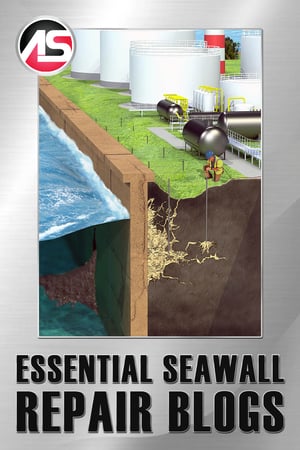 This article features intros and links to our top 5 most popular seawall repair blogs:

 Whether it’s your first time or you’re a seasoned veteran, this guide can serve as a simple checklist to keep your equipment and 16-20 foot trailer safe as you travel to your next project.



 Episode 11 of
  Translate