

 Waterproofing is a broad term in the construction world. The distinctions of above-grade and below-grade pretty well sum up the offerings out there. But when considering chemical grout’s place in the waterproofing world, we primarily stick to below-grade applications.
An understanding of what chemical grouts can and can’t do is a very valuable tool for any waterproofing or concrete repair contractor. On many job sites, several systems are being applied across a variety of trades against costly and ambitious deadlines. Most well-established manufacturers have all of the physical property testing, warranties, case studies, and approved applicator programs to get the job done. Unfortunately, no manufacturer warrants against human error.
What happens when an HVAC contractor or an electrician takes it upon themselves to drill a “little” hole for their penetration? What happens when backfill operators “barely touch” an installed membrane system? Or what happens when another contractor just “pushes or pulls a bit” to make a penetration detail work? What often happens is very costly to the client and/or general contractor in both time and money. Enter chemical grouts.
In a hydrostatic condition, the smallest of failures can cause huge water infiltration issues. Chemical grouts can be utilized in below-grade hydrostatic conditions, while providing a positive side repair applied from the negative side. In all estimations, these conditions can be a nightmare for even the best waterproofing contractors. As localized repair of the compromised membrane is achieved, often the hydrostatic pressures relocate, causing seemingly new leaks in other areas (when in actuality, it is the same small failure causing the bigger problem).
Some advanced below-grade manufacturers are going the route of specifying pre-installed injection tube systems such as the Spetec ITS Kit in which leaks can be quarantined to specific areas of repair. Chemical grouts such as Spetec AG200, Spetec PUR H100, Spetec PUR F400, and Spetec PUR H40 can then be injected into cracks, cold joints, and through injection tube systems.
So, although some contractors may not associate chemical grouts with new construction waterproofing, these solutions definitely have their place to be at the pre-bid and design tables when discussing the waterproofing design. To schedule an experienced technician for your next design meeting, please contact us today.
Want more information on Alchemy-Spetec Waterstop products?


 I’m a big proponent of using chemical grout to fix all sorts if issues, be they geotechnical or waterproofing related. Most contractors and distributors that offer chemical grouts fall into one or more of the following categories: Residential Slab Lifting and Foundation, DOT Infrastructure and Roads, and Municipal Storm and Wastewater. Certainly, there are some others, but these are the main ones we see.



 Product


 There are many ways to seal leaks in concrete structures. One of the oldest methods uses water to activate polyurethane chemical grout to either bond to the concrete to form a watertight seal or to fill voids, and stabilize concrete.


 If you are a concrete repair contractor, you may at some point want to make cold calls to gain new business. Calling on new prospects can be very frustrating if you are not used to it. Cold calling can be done by phone or in person. Before you even contact your prospect, make sure to do as much research on them as possible. Once you’ve thoroughly researched your prospect, you can make an initial contact.


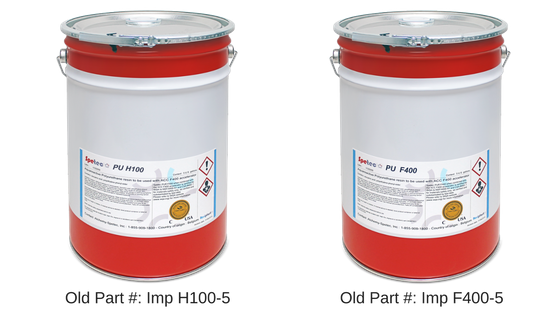 Old Packaging


 Perhaps even more eloquent than e=mc2 is Isaac Newton’s Second Law of motion, F=ma. For all of those fellow physics enthusiasts out there, we all know how F=ma is the flathead screwdriver in the formula toolbox; and for good reason. The amount of Force generated by any individual object being equal to the object’s mass multiplied by the acceleration of that object has profound proofs across the universe that can also be observed in our everyday partnerships.

 In 1927, a German physicist, Werner Heisenberg, introduced what would become the Heisenberg Uncertainty Principle. In short, his theory maintained that two very distinctive properties when examining any particle, location and momentum, could not be accurately measured at the same time. The more one knows about one value, the less it knows about the other. So how does this relate to business?
 The physical world around us is made up of particles. You, me, the buildings we work in, and the computer screen you’re looking at; all made up of particles. So, let’s be careful on the amount of granularity that we all aim to achieve in decision making processes. The often-quoted phenomenon of analysis paralysis lies in the Uncertainty Principle. The more you examine one aspect of any given part of the physical world, products and opportunities included, the less you know about another aspect. There’s no way around this.

 When you set out to work on a leak seal injection project, it's important to be prepared.


 Translate
