Looking for a Contractor?

Alchatek Blog

Case Study - Stabilizing a 5.75 Million Pound Space Launch System!

Posted by Andy Powell on Apr 1, 2026 10:00:02 AM

Banner -- Stabilizing a 5.75 Million Pound Space Launch System

Body - Stabilizing a 5.75 Million Pound Space Launch System

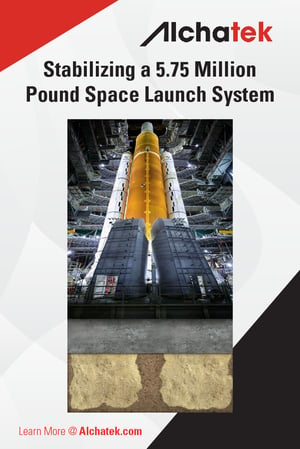
In Cape Canaveral, Florida, a heavily loaded slap stand structure was planned for construction along a transfer aisle in the Vehicle Assembly Building (VAB). This slap stand would be critical in servicing the proposed Space Launch System vehicle (SLS). However, the project faced a significant challenge when it was discovered that the near-surface subsoils consisted of loose fill materials susceptible to further densification and volume loss due to vibrations and water infiltration. With the slap stand tentatively designed to bear directly upon the ground-level floor slab of the VAB, the degree of subsoil support beneath the floor slab section became a critical concern.

Powerful Polymers

To address this issue, the geotechnical engineer of record recommended a ground improvement solution using permeation grout. Helicon, a leading soil stabilization contractor, worked alongside the geotechnical design team to develop a permeation grout program that would meet the building code load criteria. AP Soil 600, a high-strength, hydro-insensitive structural polyurethane foam, was selected as the ideal product for this project due to its exceptional ability to support heavy structures.

Painless Procedure

Helicon’s technicians installed permeation grout injection pipes on a center-to-center spacing of approximately 2 feet across each of the slap stand areas. The injection points were driven to a depth of at least 5 feet below the floor slab grade. Grout was injected at a relatively low pressure (less than 50 psi), and grout needles were slowly withdrawn during pumping to ensure a uniform distribution of grout to about 3 feet below the bottom of the slab level. The amount of grout used was carefully controlled, with less than 15 gallons per foot per injection point.

Rapid Result

The permeation grout project was a resounding success, effectively improving the load-bearing capacity of the existing soils at the site. The precise application of AP Soil 600 ensured that the slap stand structure would have a stable and reliable foundation, allowing for the safe and efficient servicing of the Space Launch System vehicle. Thanks to Helicon’s expertise and the power AP Soil 600, this piece of critical infrastructure in Cape Canaveral was reinforced and readied for countless future space exploration missions.

Want more information on stabilizing soil with polyurethane?

Download an Info-Packed Soil Stabilization Brochure!

Topics: All Posts, Stabilize Soil

Case Study - CVS Pharmacy Soil Stabilization

Posted by Landon Feese on Mar 25, 2026 10:00:01 AM

Banner - CVS Pharmacy Soil Stabilization

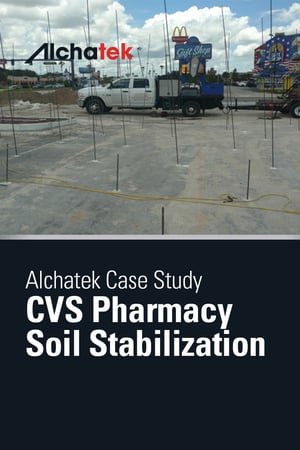
Body - CVS Pharmacy Soil StabilizationDevelopers working on a new CVS Pharmacy in Orlando, Florida, encountered critical soil stability issues during the construction process. The project managers faced a significant challenge when geotechnical testing revealed unsuitable soil conditions between 5 and 10 feet below the surface, posing a threat to the structural integrity of the planned parking lot. This issue was discovered after site preparation had already begun, adding urgency to finding an effective solution that would allow construction to proceed on schedule.

Initial Assessment

A geotechnical analysis revealed that although the upper soil layers had been replaced, a layer of muck remained at depth, posing significant risks of settlement and potential structural failure in the parking lot. The site required comprehensive soil stabilization to proceed with construction. Traditional methods of excavation and replacement were deemed too time-consuming and costly, necessitating an alternative approach.

Proposed Solution

A comprehensive soil stabilization plan utilizing AP Lift 475, a two-component polyurethane foam, was proposed. This solution was chosen for its ability to:

  • Consolidate soil throughout the parking lot area.
  • Provide a stable foundation for the structure.
  • Avoid extensive excavation and soil replacement.

AP Lift 475 was selected for its high strength and excellent expansion properties, which would allow it to effectively fill voids and stabilize the muck layer without adding significant weight to the unstable soil.

Procedures

  1. Establish a 5-foot grid pattern across the entire parking lot area.
  2. At each grid point, inject 25 pounds of AP Lift 475 at a depth of 10 feet.
  3. Inject an additional 25 pounds at a depth of 5 feet at each point.
  4. Monitor soil consolidation and adjust injection amounts as needed.
  5. Perform post-injection testing to confirm soil stability.

Results

The polyurethane injection solution proved highly effective, successfully stabilizing the soil without the need for extensive excavation. This approach allowed the construction schedule to be maintained, avoiding costly delays that would have been incurred with traditional soil replacement methods. Post-injection testing confirmed that the treated area passed all required stability tests, demonstrating the effectiveness of polyurethane injection for large-scale soil stabilization projects in commercial construction.

Want more information on stabilizing soil with polyurethane?

Download an Info-Packed Soil Stabilization Brochure!

Topics: All Posts, Stabilize Soil

Case Study - Waterfront Staircase Stabilization

Posted by Landon Feese on Mar 4, 2026 10:00:01 AM

Banner - Waterfront Staircase Stabilization

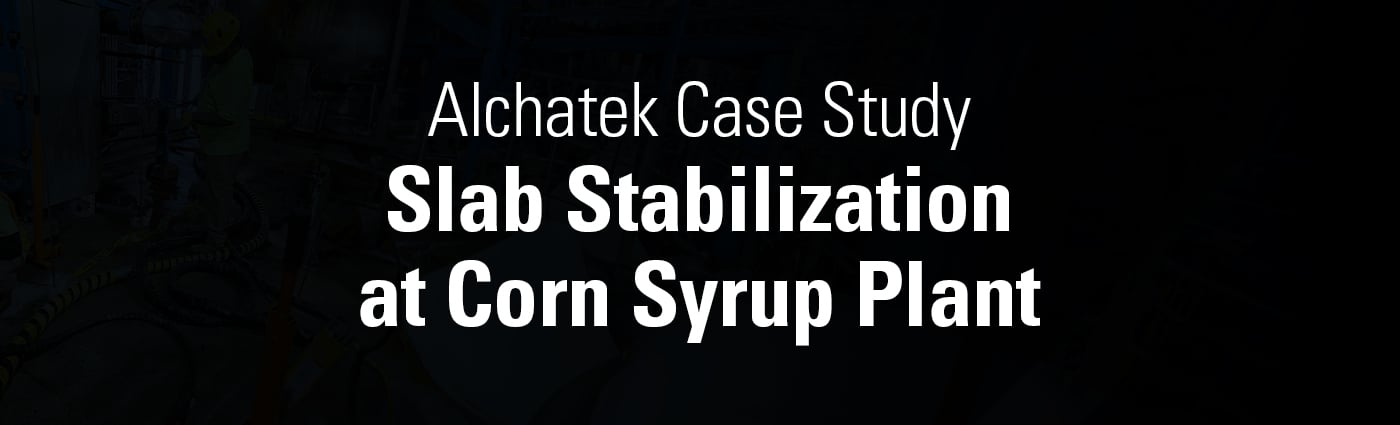
Body - Waterfront Staircase StabilizationA public park in New York had critical erosion issues at its waterfront staircase and adjacent beach, which were built over a landfill. Over the years, natural erosion pulled back sand, exposing uneven foundation areas and creating safety hazards for visitors. The partially buried concrete staircase exhibited significant subsidence and shifting soil, posing a threat to structural collapse. The New York City Parks Department required a rapid solution to stabilize the site before further degradation occurred.
Initial Assessment

The staircase and surrounding sand exhibited signs of differential settlement, likely due to uneven soil compaction and erosion. Technicians identified voids beneath the stairs and along the beachfront, with sand migration exacerbating instability. Traditional excavation or pier-and-casing methods were impractical due to limited access and the need to avoid displacing adjacent structures.

Proposed Solution

The team selected AP Fill 720 (a single-component polyurethane) for soil compaction/stabilization and AP 430 (a two-component foam) for structural void filling. AP Fill 720 addressed loose sand through permeation and consolidation, while AP Lift 430 filled critical voids beneath the staircase, providing lift and support.

Procedures

  1. Stabilization Pattern: Injected AP Fill 720 every 4 feet at 6–8 feet depth to bond sand particles and prevent further migration.
  2. Structural Foam Injection: Applied AP Lift 430 directly beneath the staircase’s granite slabs through strategic ports, filling void spaces with approximately 1 gallon per linear foot.
  3. Final Treatment: Reserved excess AP Fill 720 to seal surface gaps around the staircase, preventing sand washout.

Results

The dual-material injection rapidly stabilized the waterfront staircase, eliminating soil migration and structural risk without closing the park. Compared to traditional heavy reconstruction, the approach cut costs by an estimated 97% and completed the work in under two weeks with minimal marine or community disruption. Post-repair inspections confirmed lasting results with no recurrence of erosion.

Want more information on stabilizing soil with polyurethane?

Download an Info-Packed Soil Stabilization Brochure!

Topics: All Posts, Stabilize Soil

Case Study - Slab Stabilization at Corn Syrup Plant

Posted by Ammad Hashmi on Feb 18, 2026 10:00:02 AM

Banner - Slab Stabilization at Corn Syrup Plant

Body - Slab Stabilization at Corn Syrup PlantInitial Assessment

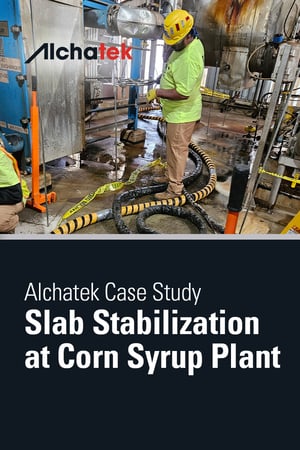
The management team at a corn syrup plant faced significant challenges with sinking concrete slabs supporting critical infrastructure, including water tanks and raw material tanks. The uneven slabs posed risks of tank instability and potential structural failure. A geotech contractor was engaged to perform void filling and stabilize the affected areas, ensuring a solid foundation for plant operations.

Proposed Solution

The technical team recommended using AP Lift 475, a two-component polyurethane foam that is ideal for void filling and slab stabilization. This material was selected for its high compressive strength, controlled expansion, and ability to effectively fill voids while providing robust support for heavy loads. The approach ensured minimal disruption, as it required no extensive excavation.

Procedures

  1. Established a grid pattern to guide the placement of injection points in the affected areas beneath and around the water and raw material tanks.
  2. Drilled holes through the concrete slabs at predetermined injection points to access the voids beneath.
  3. Injected AP Lift 475 polyurethane foam into the drilled holes to fill voids and stabilize the soil beneath the slabs, ensuring comprehensive void coverage.
  4. Patched drilled holes to restore the surface integrity of the concrete slabs.

Results

The void-filling project at the corn syrup plant was a success. The application of AP Lift 475 effectively filled all identified voids, stabilizing the concrete slabs and restoring a solid foundation. The stabilized areas now securely support the water and raw material tanks, eliminating concerns about sinking or tipping. The facility can resume full operations with confidence in the structural integrity of the tank foundations.

Want more information on geotech products?

Download the Info-Packed Geotech Product Catalog!

Topics: All Posts, Stabilize Soil

Interview with Stephen Barton and Andy Powell

Posted by Kreg Thornley on Jan 14, 2026 10:00:09 AM

Banner - Interview with Stephen Barton and Andy Powell

In this episode of Groundworks' Stability Matters podcast, host Justin Bryant sits down with Alchatek CEO Stephen Barton and VP of Sales Andy Powell in Atlanta to discuss polyurethane solutions for geotechnical and leak seal issues. Stephen shares his journey from young concrete repair worker to industry leader, while Andy recounts the story of his career pivot to polyurethane expertise. They cover Alchatek’s product evolution, significant projects, and the importance of engineer outreach - offering insights on many industry challenges and key topics.

Want more information on Alchatek products?

Download the Info-Packed Geotech Product Catalog!

Download the Info-Packed Leak Seal Product Catalog!

Topics: All Posts, Lift Slabs, Seal Leaks, Stabilize Soil

Case Study - Rapid Condo Foundation Lift with AP Lift 440

Posted by Landon Feese on Oct 29, 2025 9:59:59 AM

Banner---Rapid-Condo-Foundation-Lift-with-AP-Lift-440

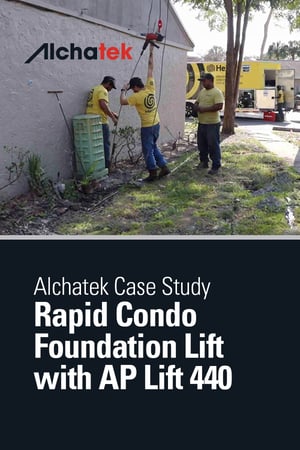
Body---Rapid-Condo-Foundation-Lift-with-AP-Lift-440Fifteen, two‑unit condominium buildings exhibited differential settlement and interior slab movement from loose organics and voiding, risking structural performance and livability. Continuous occupancy required a rapid, low‑disruption remediation strategy that delivered durable lift and stabilization. The job was completed by foundation repair specialists at Helicon.

Initial Assessment

Investigations confirmed loose to very loose near‑surface soils, voids at 3–8 ft below the surface, and active settlement beneath slabs and footings under service loads; full replacement was not viable due to resident displacement, extended schedules, and higher cost risk.

Proposed Solution

The experts at Helicon selected AP Lift 440 for its hydro‑insensitivity, rapid reaction, and ~80 psi compressive strength to permeate, densify, and lift with minimal downtime.

Procedures

  1. Grid the interiors; mark piles, grout points, and quality control benchmarks.
  2. Inject low‑mobility compaction grout to seal limestone and pre‑densify.
  3. Install underpinning to ~36 ft, using predrill/sleeves to bypass clays.
  4. Inject AP Lift 440 at 8/5/3 ft below land surface to lift slabs and encapsulate organics.
  5. Monitor elevations/pressures; proof‑load and video‑verify.

Results

  • Restored slab elevations and footing support with no resident displacement.
  • Completion in days to weeks vs months for replacement.
  • Approximately 80-90% cost savings versus full demolition/rebuild approaches.
  • Durable, closed‑cell, water‑resistant stabilization for long‑term performance.

Want more information on polyurethane slab lifting?

Download an Info-Packed Slab Lift Brochure!

Topics: All Posts, Lift Slabs, Stabilize Soil

Join Alchatek at DFI 50 in Nashville

Posted by Kreg Thornley on Oct 13, 2025 9:59:59 AM

Banner - Join Alchatek at DFI 50 in Nashville v2

Body - Join Alchatek at DFI 50 in Nashville v2Attention Geotech Professionals!

Alchatek is exhibiting at the DFI 50 conference in Nashville.

Where: Gaylord Opryland Resort & Convention Center

When: October 20-23, 2025

Click Here for Registration Info

Visit us at Booth 227 to explore our advanced polymer solutions, including single and two-component polyurethanes for soil stabilization, groundwater control, and deep foundation support, addressing challenges like unstable slopes, soft ground, and deep excavation shoring for geotechnical projects.

Learn How Alchatek Helps You

At Booth 227, you can meet with our experts to learn how Alchatek empowers your geotechnical projects with cutting-edge technologies.

We support geotech professionals in three key ways:

  • Innovative Polymer Solutions: Our advanced polyurethane grouts and foams provide robust solutions for curtain grouting, point grouting, and ground improvement, ensuring stability for slopes, excavations, and deep foundations.
  • Expert Technical Support: We offer comprehensive training and ongoing assistance, leveraging our proven track record with industry leaders to optimize your project outcomes.
  • Environmentally Safe Materials: Our NSF/ANSI/CAN 61-certified, chemically inert polymers ensure safety and compliance in sensitive environmental areas.

Want more information on Alchatek products?

Download the Info-Packed Geotech Product Catalog!

Download the Info-Packed Leak Seal Product Catalog!

Topics: All Posts, Seal Leaks, Stabilize Soil, Deep Lock

Case Study - Preventing Tripping Hazards in a Parking Garage Entrance

Posted by Landon Feese on Sep 10, 2025 10:00:00 AM

Banner - Preventing Tripping Hazards in a Parking Garage Entrance

Body - Preventing Tripping Hazards in a Parking Garage EntranceOne Atlanta Plaza experienced significant settling of sidewalks and approach slabs around the perimeter of the building, creating safety hazards for pedestrians and visitors. The multi-story structure includes underground parking levels supported by piles, which remained stable, but the transition areas connecting to surrounding sidewalks were built on compacted fill. Over time, differential settlement occurred between the pile-supported structure and the soil-supported approach slabs, with some areas dropping approximately half an inch. Building management had previously attempted fixes by creating concrete "ramps" at transition points, but these temporary solutions continued to deteriorate as settlement progressed.

Initial Assessment

Engineers inspected the site and identified that the compaction difference between the soil immediately adjacent to the building foundation and the surrounding area was causing uneven settlement. This resulted in cracking of curbs, trip hazards at entrance points, and visibly sagging pavement sections, particularly noticeable at the approach to the parking garage. The most affected areas showed clear separation between the stable pile-supported structures and the settling exterior slabs. Entrance points where the differential settlement created ADA (Americans with Disabilities Act) compliance issues, and potential liability for trip-and-fall incidents were of particular concern. This problem stemmed primarily from inadequate soil compaction during the original construction.

Proposed Solution

Alchatek recommended a two-phase approach to address both the underlying soil conditions and the visible settlement. First, AP Soil 600, a single-component polyurethane product designed for soil stabilization and permeation, would be injected to densify the loose soil beneath the affected slabs. Following soil treatment, two-component polyurethane foam, AP Lift 475, would be used to lift the settled concrete sections back to their proper elevation. This non-invasive approach would eliminate the need for demolition and replacement of concrete, allowing for minimal disruption to building operations while providing a long-lasting solution.

Procedures

  1. Technicians established injection points in a grid pattern, spacing them approximately 3-4 feet across the affected areas.
  2. Saw cuts were made at key joints to free slabs from binding against adjacent concrete, allowing for controlled lifting without creating additional stress.
  3. In the initial phase, AP 600 was injected through small drilled holes to stabilize the underlying soil and prevent future settlement.
  4. After the soil stabilization phase, AP 475 was injected in multiple passes, starting from the areas closest to the building and moving outward.
  5. Elevation was carefully monitored throughout the lifting process using zip levels and dial indicators to ensure proper alignment and prevent cracking.

Results

The rehabilitation project restored proper elevations at all transition points around the building, eliminating tripping hazards and improving aesthetics and safety. The lightweight polyurethane material added minimal load to the treated areas while effectively compacting and stabilizing the underlying soil.

From a financial perspective, this approach delivered significant cost savings compared to traditional repair methods. Concrete replacement would have required demolition, disposal, and new concrete installation, which is why the two-phased remediation project resulted in a 90% reduced cost compared to traditional replacement methods.

Want more information on geotech products?

Download the Info-Packed Geotech Product Catalog!

Topics: All Posts, Lift Slabs, Stabilize Soil

Join Alchatek at DFI S3: Slopes, Support and Stabilization

Posted by Kreg Thornley on Jul 22, 2025 10:00:00 AM

Banner - Join Alchatek at DFI S3 - Slopes, Support and Stabilization

Body - Join Alchatek at DFI S3 - Slopes, Support and Stabilization copyAttention Geotech Professionals!

Alchatek is exhibiting at the DFI S3: Slopes, Support and Stabilization Conference.

Where: Madison Marriott West in Madison, Wisconsin

When: August 5–7, 2025

Click Here for Registration Info

Visit us at Booth 302 to explore our advanced polymer solutions, including single and two-component polyurethanes for soil stabilization, groundwater control, and deep foundation support, addressing challenges like unstable slopes, soft ground, and deep excavation shoring for geotechnical projects.

Learn How Alchatek Helps You

At Booth 302, you can meet with our experts to learn how Alchatek empowers your geotechnical projects with cutting-edge technologies.

We support geotech professionals in three key ways:

  • Innovative Polymer Solutions: Our advanced polyurethane grouts and foams provide robust solutions for curtain grouting, point grouting, and ground improvement, ensuring stability for slopes, excavations, and deep foundations.
  • Expert Technical Support: We offer comprehensive training and ongoing assistance, leveraging our proven track record with industry leaders to optimize your project outcomes.
  • Environmentally Safe Materials: Our NSF/ANSI/CAN 61-certified, chemically inert polymers ensure safety and compliance in sensitive environmental areas.

Want more information on Alchatek products?

Download the Info-Packed Geotech Product Catalog!

Download the Info-Packed Leak Seal Product Catalog!

Topics: All Posts, Seal Leaks, Stabilize Soil, Deep Lock

Excavation Assist Using Polyurethane Grout: A Smarter Alternative to Sheet Piles

Posted by Jay Silver on Jul 10, 2025 10:00:00 AM

Banner - Excavation Assist Using Polyurethane Grout

Body - Excavation Assist Using Polyurethane GroutThis post is part of the Alchatek Contractor Lens series, featuring views, news & case studies written by our customers. This article was written by Jay Silver and originally posted on the Helicon blog.

When Excavation Gets Tight, Think Beyond Sheet Piles

Excavating near an existing structure — like a home, commercial building, or utility line — often requires soil support to avoid collapse or damage. For decades, the go-to solution has been sheet piling: driving steel sheets into the ground to create a temporary shoring wall.

But sheet piles come with serious downsides:

  • High cost
  • Vibration risks to nearby structures
  • Heavy equipment needs
  • Limited accessibility in tight areas

Today, there’s a smarter, faster, and more cost-effective alternative for excavation support: polyurethane injection permeation grouting.

What Is Polyurethane Grout Injection for Excavation Assist?

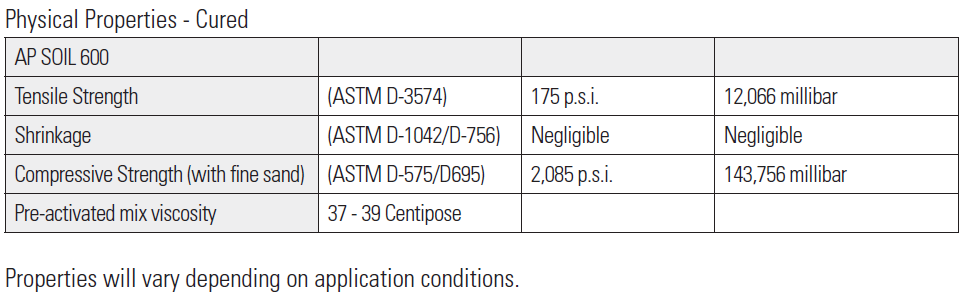
Helicon uses a permeation grout called AP Soil 600, a low-viscosity polyurethane resin, to stabilize soil and build a temporary underground wall. This non-expanding material seeps into fine-grained soils (like sand), then hardens into a concrete-like mass — turning unstable ground into a solid excavation shoring wall.

This “grout curtain” supports the soil adjacent to your dig site, providing excavation assist without the need for steel sheets or heavy machinery.

Common Use Cases for Polyurethane Shoring Walls

Excavations next to homes or commercial buildings

Tight-access job sites where pile driving equipment won’t fit

Urban infill projects with vibration-sensitive neighbors

Value-engineered alternatives to high-cost sheet pile installation

Projects with depth requirements up to ~15 feet

Sheet Piles vs. Polyurethane Injection

Feature Sheet Piles Polyurethane Injection
(AP Soil 600)
Cost High (steel + installation) Significantly lower
Vibration High — risk to nearby buildings Very low — minimal disruption
Access Requirements Requires large equipment Works in tight or restricted areas
Noise Loud during driving Quiet installation
Environmental Impact Steel removal adds cost Grout is inert and stays in place
Max Effective Depth 30–60+ ft Up to 15 ft (ideal range)

How It Works: The Grout Curtain Process

1. Plan and Mark
The contractor provides excavation depth and layout. Helicon’s team maps out injection lines using stakes or string to ensure precision.

2. Drill Injection Holes
Using compact equipment, injection rods are installed at a slight 3–5° angle away from the excavation. Rods are spaced 18″ apart, and for depths >8 feet, a second staggered row is added 18″ behind the first.

3. Inject AP Soil 600 Grout
Each rod is used to inject grout in 1-foot intervals from bottom to top:

  • Start 2 feet below planned excavation depth
  • Inject 1 gallon per vertical foot
  • Grout permeates and hardens in ~2 minutes per foot
  • Stops 1 foot below surface to avoid breakout

The non-expanding grout permeates the soil, turning it into a rigid, cohesive wall capable of holding back earth during excavation.

4. Excavate Safely
Once cured (typically within 24 hours), excavation can begin — but mechanical equipment must stay 2+ feet away from the grout wall. Final trim is done by hand or hydro-vac.

Soil Types That Work Best

AP Soil 600 is designed for permeation, not expansion. It’s ideal for:

✅ Sand
✅ Fine silts
✅ Granular soil types

⚠️ Less effective in:

  • High plasticity clay (which resists permeation and may not need shoring)
  • Organic material or very dense clay (which can fracture or lens)

That’s why soil boring reports or geotechnical testing are important for project design.

Depth Recommendations

Excavation Depth Injection Strategy
≤ 8 ft Single row (18” spacing)
8–15 ft Double staggered row
> 15 ft Sheet piles may be better


Helicon’s polyurethane grout walls are most effective up to 15 feet. Beyond that, multiple injection rows become inefficient, and other structural shoring may be needed.

Cost Savings & ROI

Switching from sheet piles to Helicon’s polyurethane grout method can save:

  • Tens of thousands on residential jobs
  • Up to six figures on larger commercial projects

Savings come from:

  • No need for steel or removal
  • Smaller crews and equipment
  • Shorter install times
  • No costly vibration damage

Combine with Underpinning When Needed

When adjacent structures need more than soil support, Helicon can pair permeation grouting with:

  • Push piers (steel-driven deep supports)
  • Drilled piers (poured concrete or steel)

This hybrid approach is ideal for:

  • Older buildings
  • Structures with active settlement
  • High-load foundations near deep excavation

Real-World Examples

On a commercial project, the contractor and engineer originally planned to use traditional sheet piles for shoring to support the foundation of a commercial building. Helicon collaborated with the engineer to develop a value-engineered alternative: a polyurethane grout curtain combined with steel push piers installed under the building’s foundation. The shoring wall and underpins were completed within five days, excavation proceeded safely, and the client saved over $300,000 compared to the original sheet pile proposal.

On a recent project with access constraints, Helicon installed a polyurethane grout curtain within 2 feet of a residential foundation. Traditional sheet piles weren’t an option due to equipment access and budget. The wall was in place within two days, excavation followed safely, and the client saved over $70,000 compared to a sheet pile proposal.

Safety Guidelines

  • Injection starts 2’ below excavation depth
  • Do not excavate within 24” of cured grout with equipment
  • Always hand dig near the grout wall
  • Excavation limit line should be marked 33” back from rods (accounting for rod angle)

Why Engineers and Contractors Choose Helicon

  • Florida-based foundation experts
  • Proven track record in geotechnical solutions
  • Fast mobilization and project turnaround
  • Seamless integration with GCs, engineers, and owners
  • Full service: injection + underpinning + stabilization

Optimize Your Excavation Support Plan

If you’re a contractor, builder, or geotechnical engineer working on an excavation project in tight quarters, don’t default to sheet piles. Helicon’s polyurethane injection method is often:

  • Faster
  • Cheaper
  • Cleaner
  • More flexible

Helicon specializes in value-engineering shoring solutions that reduce project costs and risks while maintaining structural safety and soil integrity.

Let’s Put Your Excavation Project on Solid Ground

Have a project where you’re excavating near a structure? Let’s collaborate. Helicon offers:

Want more information on Alchatek's geotech solutions?

Download the Info-Packed Geotech Product Catalog!

Topics: All Posts, Stabilize Soil