

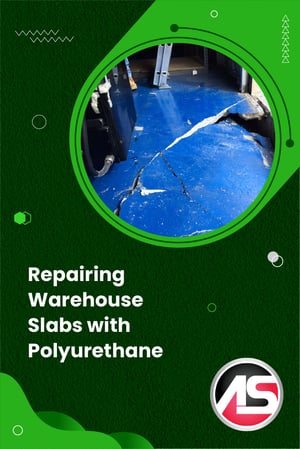
 The warehouse slab/floor repair market can be a goldmine for contractors. Most major metro areas contain endless square miles of warehouse space. That's why we've posted a good number of warehouse floor and slab repair articles on this blog over the years. In this post, we'll introduce and link to the best Alchemy-Spetec warehouse slab repair articles.
Warehouse and Industrial Slab Repair With Polyurethane
One of the hidden dangers a warehouse or industrial property owner and their employees can face is an unstable or sunken slab with a large void underneath. The last thing anyone wants is injury and/or a lawsuit resulting from an un-repaired trip hazard or worse - a complete slab collapse. The video in the Read More link below depicts a real-time example of a warehouse slab with cavernous voids below and heavy equipment resting on top. Next, you'll see the slab repair process in action as the voids are filled and the slabs are restored to a safe, stable state with AP Lift foams that support between 7,200 - 14,000 pounds per square foot (depending on the product selected). Click to Watch the Video and Read More.
Repair Unlevel Warehouse Slabs with AP Lift 475
Voids beneath warehouse floors can be filled with AP Lift 475 foam. This product is great for slabs that rock and warehouse floors that have begun to sink. The video in the Read More link below shows an example of the product in action. Inside this warehouse, the floors have begun to rock and are unleveled - which can speed up the wear and tear on valuable equipment. With this powerful polymer and its painless application procedures, unlevel slabs can be repaired at a rapid pace. Take a look for yourself! Click to Watch the Video and Read More.
Repairing Dangerous Sunken Slabs in Warehouses and Factories
Safety is the number one priority for factory and warehouse managers across the country. Emphasis is most often placed on training employees to wear the right personal protective equipment and observe safety procedures when operating machinery - and rightly so! In addition, it's also important for management to consider the state of the concrete slab floors. Click to Read More.
Case Study: Waterproofing Warehouse Slabs
In this case study, Charlie "The Grout Geek" Lerman shares a story about waterproofing warehouse slabs. There was a distribution center in North Carolina sitting on land that had a high water table. Eventually, the slabs in this 100,000 square foot building began to accumulate moisture. There were offices next to the warehouse area. The moisture that was seeping through the concrete slabs was first noticed as the carpet in the office area began to get damp. Click to Read More.
Stabilizing Slabs in an Omaha Warehouse with the PolyBadger
Not too long ago, Alchemy-Spetec customer Sudbeck Construction was called in by the property owner because he had noticed four slabs that were shifting up and scraping against a wall when forklifts crossed them. The crew drilled a couple of preliminary holes in the slabs for diagnostic purposes and discovered voids underneath ranging from 12-18 inches in depth. The Sudbeck team injected 35 gallons of AP Lift 430 beneath the slabs to stabilize them. This high-strength polyurethane foam provides a solid, reliable, long-lasting base underneath the concrete to prevent future shifting or sinking. Click to Read More.
Want more information on warehouse floor and slab repair?


 Charlie Lerman, a.k.a. "The Grout Geek", is Alchemy-Spetec's Director of Technical Services - Leak Seal Division. The importance of waterproofing became critical to him while serving on nuclear submarines in the U.S. Navy. With decades of experience in construction and leak seal, Charlie commands unparalleled expertise in grouting techniques and water mitigation.









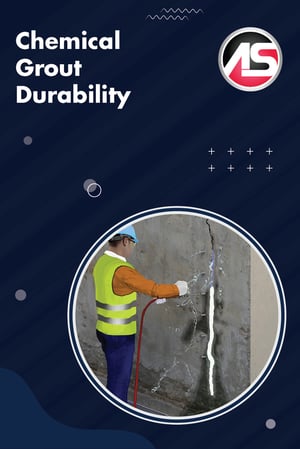 For most of my 36 years in the chemical grout industry, I have listened to people refer to chemical grouts as temporary leak repair in the same manner they mention a band-aid in stopping bleeding. Many of these same persons also say that stopping water leaks with chemical grouts is like “smoke and mirrors”, implying some sort of black magic. I must state that they are wrong on both counts.
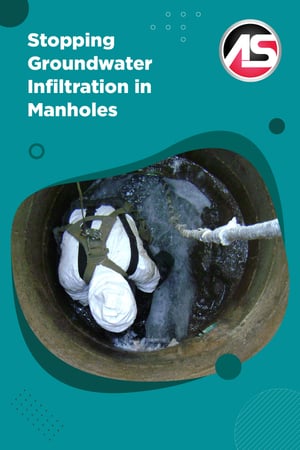 Infiltration is Draining Your Budget

 In the United States,
 Treatment plants undergo massive strain and efficiency issues when groundwater infiltrates city collection systems. These common problems lead to large expenses that can accumulate if left unchecked. Identifying the root causes and creating a plan to minimize the damages will be dependent on the scale of the problems, the age and condition of your overall infrastructure, and your budget. Having a trusted, experienced team of consultants will prove to be invaluable as you navigate these uncharted waters.
 I&I is a major issue that plagues all collection systems. What can be done about it? There are a number of large-scale and costly ways to address it but often these are overwhelming projects to start. So, let’s take a step back and start small with the manholes. A quick review of rain event data will help pinpoint problem areas. There may be numerous issues in a line, but remember we are going for easy manhole infiltration. Start popping manhole covers. We don’t need to look for every minor leak and the large leaks are easy to identify. Obliviously, flowing water is easy to spot but even if a large leak is not active there are normally clear signs of its existence. These signs include staining, native soils being washed in, or joints with bulging ramnecks.

 Concrete is the most common building material in the world. While it has high compressive strength, it does not have much tensile strength. It is only since about 1910 that rebar has been specified. Reinforced concrete can and does still crack. So does that matter? Yes, most of the time it does matter.
 Translate