
 Essential Details
Dates/Pricing
Slab Lifting Masterclass: April 15th & 16th, 2024 – $685.00
Public Works Infrastructure Repair: April 18th & 19th, 2024 – $685.00
Location
Spray Foam Systems
1502 Airport Rd.
Greensboro, GA 30642
Click Here for Directions
Discount
Register for both classes and get a 25% discount
Slab Lifting Masterclass: April 15th & 16th, 2024 – $685.00
The concrete lifting master is an intensive opportunity to learn what it takes to start a concrete lifting business and then take it to the next level. The training you will receive will include Safety, Site Evaluation, Estimating, Product Selection, Sales, Equipment, Concrete Lifting Techniques, and Deep Lift / Deep Lock. You will also learn about taking your concrete lifting business to the next level. You will learn about other tools we have to help you land bigger jobs and how to engage the engineering community to gain access to unique markets. Join the industry’s top team of concrete lifting professionals for training, learning, and fun.Public Works: April 18th & 19th, 2024 – $685.00
The public works course is two days dedicated to training and teaching Public Works professionals and specialty grouting contractors. You will learn how to utilize polyurethane technology to solve problems that municipalities and public works departments commonly face and how to do it at a fraction of the cost of traditional methods. There will be a heavy emphasis on sealing underground infrastructure and stabilizing and lifting roads. We will cover the full spectrum of our product line including Leak Seal, Permeation, Soil Stabilization, and Slab Lifting. Join the industry’s top team of infrastructure specialists for training, learning, and fun.

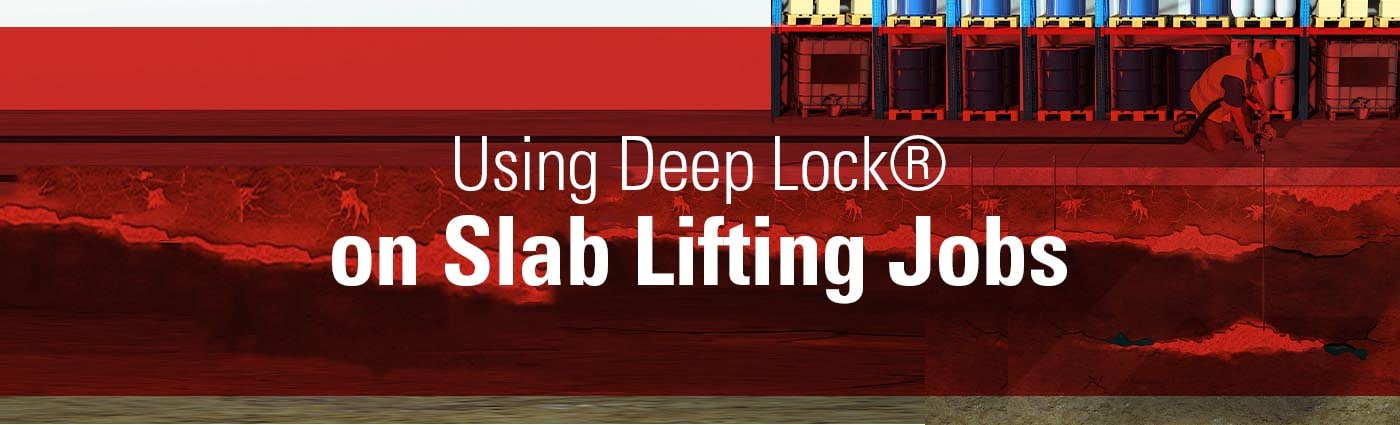
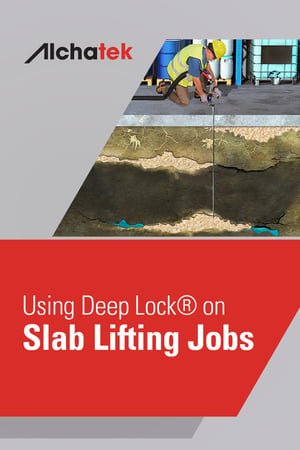 While Alchatek's Deep Lock® process is primarily used on deep soil stabilization jobs, there are specific situations in which deep soil stabilization may be needed to reinforce soil on slab lifting jobs. In cases where slabs are bearing heavy loads, have significantly loose soil underneath, or are located in areas where access is limited, incorporating the Deep Lock® process can help address the underlying soil stability issues. With the addition of the Deep Lock® soil stabilization process, contractors can achieve effective, minimally invasive slab lifting results while simultaneously improving the long-term stability of the foundation.

 Essential Details
 Before embarking on any bird bath repair project using the Deep Lock® process, it's crucial to consult with industry specialists. The Alchatek support team, with extensive experience in advanced pavement repair techniques, offers invaluable insights for assessing site conditions, choosing appropriate materials, and implementing effective repair strategies.
 In the previous post, the causes and consequences of bird baths in road pavement were explored. Now, attention will turn to an innovative solution for repairing these issues: the Deep Lock® process.
 Have you ever noticed shallow, pond-like formations on the surface of roads, particularly in private neighborhoods, subdivisions, or parking lots? These are known as "bird baths" in the road surface, and they're more than just a quirk of the road. They signify deeper issues in road maintenance and safety that are crucial to address.
 If you're a contractor grappling with deep soil stabilization challenges or looking to expand service offerings, Alchatek offers comprehensive support and training to elevate skills and expand business opportunities. Here's how the Alchatek team can assist you in enhancing your Deep Lock® soil stabilization capabilities:
 This post features three case studies that highlight the versatility and effectiveness of the Deep Lock® process across a variety of applications.
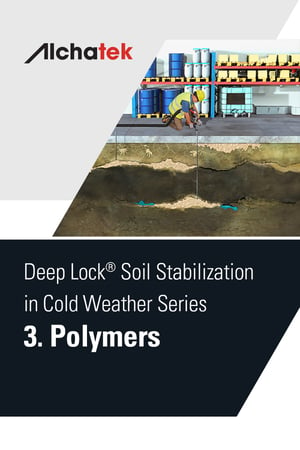 In the world of soil stabilization and concrete leveling, the choice of materials is as important as the technique used. Alchatek's Deep Lock® process utilizes a range of specialized structural polymers, each designed to cater to specific stabilization needs.
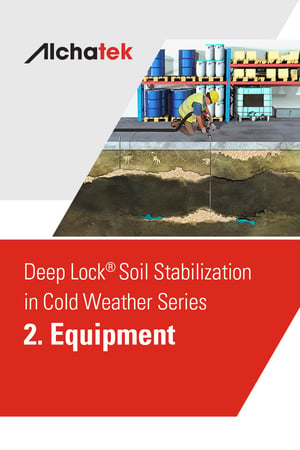 The Deep Lock® process, a robust and effective method for soil stabilization, requires specialized equipment to ensure precision and efficiency. Here's a breakdown of essential equipment for Deep Lock® soil stabilization in cold weather:
 Translate