Looking for a Contractor?

Alchatek Blog

Pressure in Crack Injection

Posted by Charlie "The Grout Geek" Lerman on Jul 13, 2023 10:00:00 AM

Banner - Pressure in Crack Injection

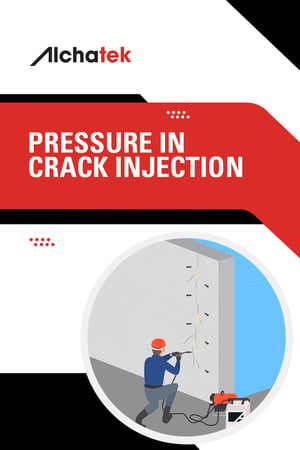
Body - Pressure in Crack Injection“At what pressure am I going to inject the grout?” This question is not only common but also crucial on leak seal jobs, as it directly impacts the quality of your work. The answer, however, is not as straightforward as one might hope. The optimal pressure for injection is as low as possible. However, the exact pressure cannot be determined until the injection process begins.

Hairline Cracks

When dealing with urethane and hairline cracks, the pressure required is generally on the high end. This is where the technical expertise comes into play. If the pressure is too high, there is a risk of spalling the concrete, which can lead to further damage. To mitigate this risk, one might consider switching to an acrylate-type product. Acrylate, being almost as thin as water, penetrates hairline cracks more effectively, thereby reducing the risk of spalling.

Process of Injection

As a rule of thumb, the process begins by connecting to the port, whether for crack injection or curtain grouting. The ball valve is opened while the pump is off. Once the pump is turned on, the pressure is gradually increased until a steady flow rate is achieved. This process requires a keen eye and a steady hand, reinforcing the importance of technical expertise in this field.

The Concept of Exploratory Grouting

The in world of crack injection, there is a concept known as exploratory grouting. This process involves intentionally creating one small crack to understand the wall’s resistance. Typically, walls start cracking around 1500 PSI, although this can vary, with some walls withstanding up to 2200 PSI. This exploratory process is essential for understanding the wall’s capacity and planning the injection process accordingly.

Marking the Pressure

It is recommended to mark the pressure at which the wall cracks using a wax pencil on the pump. This marking serves as a reminder of the wall’s capacity. Remember, you get one free crack for exploratory purposes. Any cracks after that are on you. 

Want more information on crack injection with polyurethane?

Download an Info-Packed Crack Injection Brochure!

Topics: All Posts, Crack Injection

Cartridges vs Pumps for Crack Injection

Posted by Charlie "The Grout Geek" Lerman on Jul 11, 2023 10:00:00 AM

Banner - Cartridges vs Pumps for Crack Injection

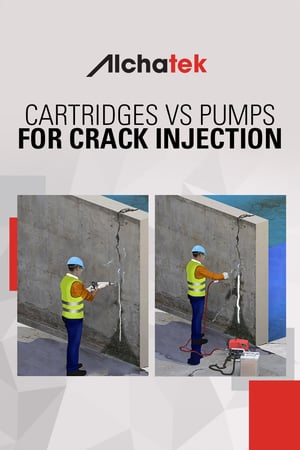
Body - Cartridges vs Pumps for Crack InjectionA question that often comes up in our line of work is whether a cartridge can be used to inject cracks, specifically leaking cracks in concrete. The answer is a resounding yes...depending on the situation. In some cases, an electric injection pump is ideal, and in others, a cartridge is the way to go.

When to Use an Electric Injection Pump

An electric injection pump provides constant pressure and a steady flow making it ideal for treating most concrete cracks. Cartridges and hand pumps on the other hand create uneven pressure with each stroke and are often less effective on tight cracks. And a second pump for your water can be a game changer. Remember, the choice of tools is paramount in this line of work. 

When to Use a Cartridge

So why bother with a cartridge if it is less effective on tight cracks? Often residential basements have wider cracks. On these types of small jobs, not having to mobilize and then clean up a pump can be more efficient. In precast manholes, cartridges are often used on precast joints for the same reasons. Like most things, there is no one fix-all for every situation.

Want more information on leak seal products and equipment?

Download the Info-Packed Leak Seal Product Catalog!

Topics: All Posts, Seal Leaks, Crack Injection

Polyurethane Concrete Repair Videos

Posted by Kreg Thornley on May 25, 2023 9:06:00 AM

Banner - Polyurethane Concrete Repair Videos

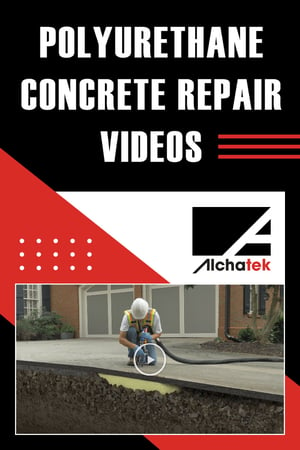
Body - Polyurethane Concrete Repair VideosAlchatek offers a series of short educational videos covering a variety of polyurethane concrete repair applications. Each video is described below, followed by a viewing link.

Slab Lifting with Polyurethane Foam

This live-action video depicts a typical residential driveway slab lifting job, including a simple overview of the causes of settled slabs, the alternatives to polyurethane slab lifting, and the polyurethane slab lifting process itself. The slab lifting sequence features added 3D animation to show the foam expansion process underground during the slab lifting process. Click here to watch the video.

The Polyurethane Slab Lift Process Explained

This animated video explains the polyurethane slab lift process in detail, primarily in the context of commercial/industrial applications. Sunken concrete slabs can be lifted back into place with two-component polymer foam designed to work in wet or dry conditions. The expansion force of the concrete leveling foam coupled with the pressure of a specialized pump generate enough controlled force to lift virtually any structure back into position with 1/8” precision.  Click here to watch the video.

The Polyurethane Soil Stabilization Process Explained

This animated video explains the most common infrastructure and concrete issues requiring polyurethane soil stabilization, as well as the application process itself. Unstable, eroded, or loose soil around infrastructure can result in settlement and damage to the structure. Voids can be filled, soil consolidated, and water migration halted by permeating the soil with one of the AP Soil series of polyurethane resins. Click here to watch the video.

The Deep Lock® Process Explained

This animated video explains deep soil stabilization in great detail. Alchatek offers a unique combination of high-quality structural polymers along with the equipment and training needed to address deep soil issues. Contractors trained in The Deep Lock® process can stabilize soil at all levels and accomplish this with minimal imposition to or downtime for the property owner. Click here to watch the video.

The Polyurethane Leak Seal Process Explained

This animated video explains the most common infrastructure and concrete issues requiring polyurethane leak seal solutions, as well as the various application processes. Leaking concrete can be detrimental to safety and property values. Leaks in concrete structures can be permanently repaired with water-activated polyurethane and a few assorted leak seal accessories. Click here to watch the video.

Alchatek - A Supplier You Can Trust

This video provides a quick overview of Alchatek, an international leader in the manufacture and supply of chemical grouts and construction products for Geotechnical, Leak Seal, and Seawall Repair applications. Providing solutions from its headquarters in Tucker, Georgia, and its manufacturing facility in Reno, Nevada, Alchatek specializes in advanced construction technologies for sealing leaks, stabilizing soils, lifting concrete, and protecting infrastructure and seawall structures. Click here to watch the video.

Want more information on geotech and leak seal products and equipment?

Download the Info-Packed Geotech Product Catalog!

Download the Info-Packed Leak Seal Product Catalog!

Topics: All Posts, Lift Slabs, Seal Leaks, Stabilize Soil, Deep Lock, Crack Injection