
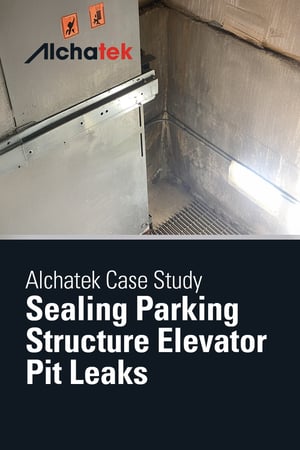
 The property manager for a multi-level parking garage contacted Pavecon regarding persistent water infiltration in an elevator pit. The facility engaged Allana Buick & Bers, Inc. to develop a remediation strategy. Water leakage in elevator pits poses risks to equipment, safety, and can lead to service disruptions.
Initial Assessment
Inspection revealed multiple water entry points in the concrete walls of the elevator pit. The recurring water infiltration threatened the elevator system's integrity and created potential safety issues. Traditional repair methods would require extensive excavation and significantly disrupt parking facility operations, making them impractical and costly. The assessment determined that an effective solution was needed to address active leaks and provide long-term waterproofing without frequent maintenance.
Proposed Solution
The team selected a specialized polyurethane injection system (Spetec PUR F400) for the elevator pit leakage. This product effectively seals active water leaks in concrete structures by creating a waterproof barrier without extensive excavation. The method required only brief elevator shutdown periods rather than extended facility closures and could be applied even with active water infiltration.
Procedures
- Thoroughly cleaned repair areas to remove dirt, debris, and loose concrete that could compromise adhesion.
- Drilled through the concrete wall at strategic locations to access water infiltration pathways.
- Installed injection ports (zerk fittings) into each drilled hole to facilitate polymer application.
- Injected water when necessary to properly activate the polyurethane foam reaction.
- Polyurethane injection material was applied through installed ports, allowing it to expand and fill voids.
- Performed sequential injection following a pattern to ensure complete coverage of affected areas.
- Removed injection ports and patched drill holes with hydraulic cement after the injection process.
- Performed final inspection to verify cessation of all leaks.
Results
The polyurethane injection process successfully sealed all water infiltration points in the elevator pit, creating a waterproof barrier. The repair was completed within the scheduled timeframe, minimizing elevator system downtime. The project addressed approximately 17 linear feet of repair work.
After several substantial rain events, the elevator pit remained completely dry, confirming the solution's effectiveness. The property manager expressed satisfaction with the results, subsequently requesting additional services at other facilities and providing positive recommendations.
This solution demonstrated significant cost advantages over traditional methods, saving an estimated 60-70% compared to conventional waterproofing approaches while preventing potential damage to electrical and mechanical components.
Want more information on leak seal material and equipment?

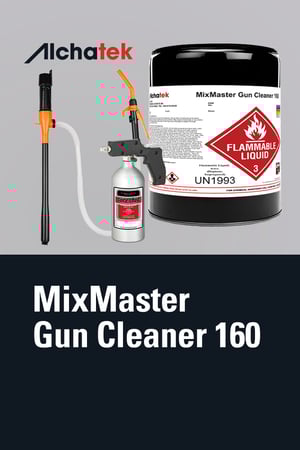 MixMaster Gun Cleaner 160 is the latest innovation designed to streamline maintenance for contractors using the
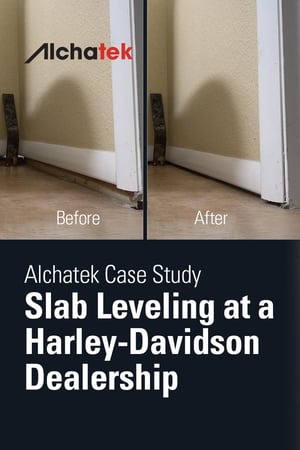
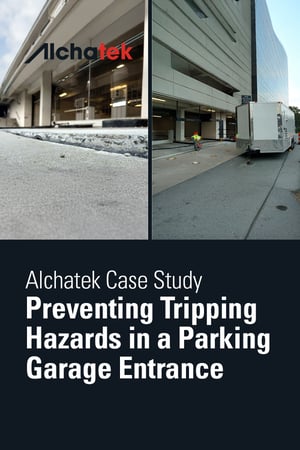 One Atlanta Plaza experienced significant settling of sidewalks and approach slabs around the perimeter of the building, creating safety hazards for pedestrians and visitors. The multi-story structure includes underground parking levels supported by piles, which remained stable, but the transition areas connecting to surrounding sidewalks were built on compacted fill. Over time, differential settlement occurred between the pile-supported structure and the soil-supported approach slabs, with some areas dropping approximately half an inch. Building management had previously attempted fixes by creating concrete "ramps" at transition points, but these temporary solutions continued to deteriorate as settlement progressed.
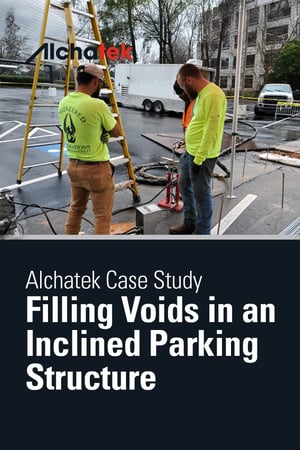 A property in Atlanta featured a multi-level parking structure with a split-level design. The upper-level parking area began showing signs of significant distress, with visible cracking and pavement deterioration. Investigation revealed that soil was actively migrating through a lower retaining wall of the parking structure, creating voids behind the wall and compromising support for the pavement above. The color change in the asphalt surface clearly marked the affected area, and the problem was getting progressively worse, posing both functional and safety concerns for vehicles using the facility.
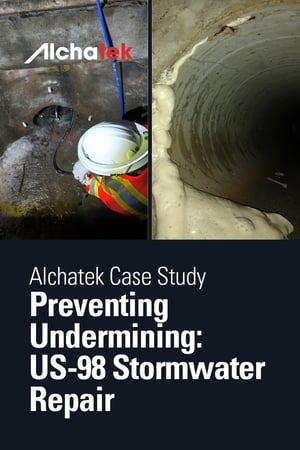 US Highway 98 is the main coastal route along Florida’s panhandle, connecting Panama City Beach, Destin, and Fort Walton Beach. Over time, the
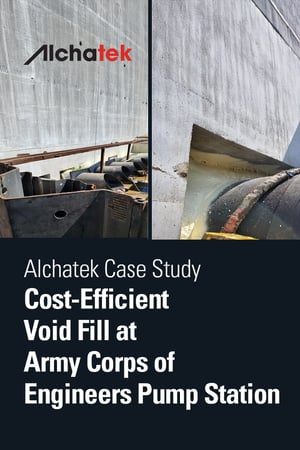 The
The 
 Alchatek proudly supports the

 Alchatek is pleased to announce the promotion of Andrew D. Powell to the role of Vice President of Sales. Previously, Business Development Manager, we congratulate Andy on his new executive position in recognition of his extensive experience and contributions to the company's growth since joining us.
 Initial Assessment


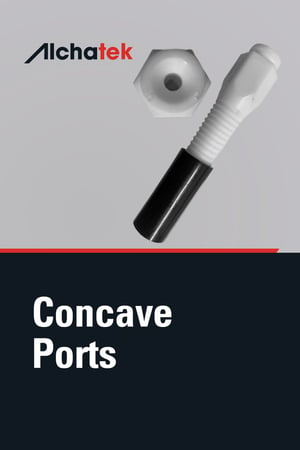 Concave ports, for use with PX-7 Slab Lifting Guns, offer enhanced performance for concrete lifting with their unique dimple top and black sealing sleeve for a secure fit. Their durable design ensures reliability under tough conditions, while the sleeve's ability to seal directly to concrete minimizes leaks and boosts efficiency, reducing the need for frequent port replacement due to leakage.
  Translate