
 As the Inside Sales Manager for Alchemy-Spetec, I am responsible for keeping our lead, customer, and project data in order. Our busy sales and marketing team needs to access this information quickly and accurately. Precise, contextual, and quick accessibility of these systems gives our team a powerful, painless, and rapid advantage over our competitors that are stuck using outdated technology and processes.
We can organize all of our leads, customers, and potential projects by using some type of Customer Relationship Management software. In fact, we are currently using two separate CRM software programs for our sales department. Our main customer database is stored in Salesforce. The entire team has access to this platform and can log in regularly for up-to-date customer information, sales numbers, etc.
In order to keep our Salesforce database lean and relevant, our inside sales efforts are conducted within the fast and efficient Salesmate CRM to track opportunities as they develop. Salesforce can be extremely powerful for larger organizations who require limitless customization and reporting, while Salesmate is an excellent intuitive and lightweight CRM for organizations with a smaller budget. Contractors looking for a CRM may also want to consider the Alchemy-Spetec custom version of Estimate Rocket. Estimate Rocket is a multi-purpose tool for creating job estimates, calculating material needs, generating financial reports, tracking customers/projects, and more! The Alchemy-Spetec customized version of Estimate Rocket features our geotech material estimation calculators built in. Read more here.
These are just a few of the many CRMs on the market. We strongly encourage you to do your own research and choose the CRM that best suits your business needs. If you have any further questions on the subject, feel free to call Alchemy-Spetec at 404-618-0438 and ask for the Inside Sales Manager, David Park. We offer a unique understanding of proven and innovative CRM solutions that can optimize your sales efforts moving forward.
Want information on Alchemy-Spetec products?




 Unfortunately, the Covid-19 pandemic is intensifying again. Please consider protecting yourself on the job and in your daily life with a steady supply of hand sanitizer. Alchemy-Spetec Hand Sanitizer is manufactured in accordance with an isopropyl-based WHO-formula. It's Made in the USA, here at our Tucker, GA headquarters. We are fully registered with the FDA as a manufacturer with a National Drug Code (NDC) of 74826-812. It is also important to note that this formula does not include gel thickening agents. It can be used with a small amount applied to the palm, or as a spray or wipe.

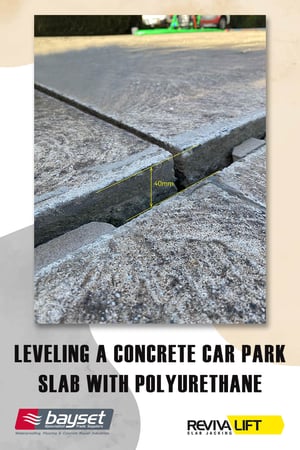 This article, written by guest blogger Mic Ewart (Geotech Go-To and Victorian State Manager of


 On this episode of
 High-performance polyurethane concrete repair equipment is essential to the success of any contractor in this industry. For that reason, I'd like to bring the Section 179 tax break to your attention. According the
 This article is an excerpt from
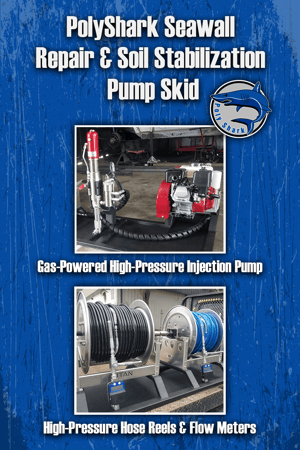 Single-Component Geotech Pump Skid

 This post is part of the Alchemy-Spetec
 This article is an excerpt from
 We understand that chemical grouting is often not the primary focus of a construction or repair job, but a water leak can often bring the rest of the job to a screeching halt until it is sealed. Job costs then start to pile up, production or facility services stay shut down as time drags on, sometimes tempers begin to flare. Sound familiar?
 Translate