

 In the realm of municipal budgeting, the approach of year-end spending often prompts considerations about where to direct the remaining funds. While the temptation might be to disperse these resources broadly across different areas, it's vital to stress the importance of prioritizing infrastructure projects, specifically those related to sealing leaks.
The Financial Incentive of Leak Seal Repair
Before delving into strategic allocation, let's consider the financial incentives at play. To illustrate, we'll examine the cost implications of untreated leaks in wastewater systems. According to an article in Water Technology Magazine, the average cost to treat 1000 gallons of wastewater is approximately $2.06. Now, imagine a scenario where a manhole has a 10-gallon-per-minute leak, resulting in 5,256,000 gallons of water leaking annually. This leakage alone incurs a wastewater treatment cost of $10,827.36 per year or $902.28 per month.
In contrast, the average one-time cost to seal all the leaks in a 4-foot diameter by 8-foot-tall manhole with polyurethane grout is approximately $3,000, depending on local labor rates. This relatively low repair cost can be recouped in less than four months, considering the monthly wastewater treatment cost. Subsequently, municipalities save the full $10,827.36 each year. When multiplied across all manholes with similar issues, the potential savings become truly staggering.
Mitigating Infiltration for Cost Savings and Public Health
The financial benefits of leak seal repairs extend beyond cost avoidance; they also address critical public health concerns. Inflow and infiltration (I & I) pose widespread challenges to municipalities, leading to sanitary sewer overflows (SSOs). These overflows, as reported by the EPA, are not only common but also dangerous to public health due to the presence of bacteria, viruses, parasites, and more.
A Simple Yet Effective Plan
To maximize the potential available funds, municipalities can adopt a straightforward yet highly effective plan for mitigating infiltration:
- Inspect and Identify: Begin by inspecting manholes and lift stations for leaks. Identify large, obvious leaks that are contributing to infiltration problems.
- Repair with Polyurethane: Use polyurethane leak seal grout to repair the identified leaks. This process is efficient and cost-effective, with a two-person crew often mitigating substantial leaks in less than a day.
- Realize Significant Savings: The savings realized from this repair work can be substantial, often equating to tens of thousands of dollars in annual funds, depending on the scale of the issue and local conditions.
By following this plan, municipalities can allocate surplus budgets wisely, addressing critical infrastructure needs, saving significant costs, and safeguarding public health.
Want more information on sealing leaks in municipal infrastructure?



 In the world of municipal finance, the phrase "use it or lose it" carries significant weight. This concept revolves around the annual budgeting process, where funds allocated to a municipality must be spent within a specific fiscal year, or they risk being forfeited.
 After identifying the presence of water leaks and exploring various sealing methods, the next aspect to consider is the financial implications. Managing tunnel leaks is both a technical challenge and a financial one. It’s critical to understand the direct and indirect costs associated with different sealing methods, along with strategies for effective resource allocation. This information is invaluable for civil engineers, tunnel maintenance teams, and infrastructure managers responsible for making budgetary decisions.
 After identifying tunnel leaks, the next step is exploring sealing methods. While crack/joint injection and curtain grouting are common solutions, they are not one-size-fits-all. By understanding the range of options and their pros and cons, engineers, maintenance teams, and infrastructure managers can make informed decisions tailored to each leak's unique circumstances.
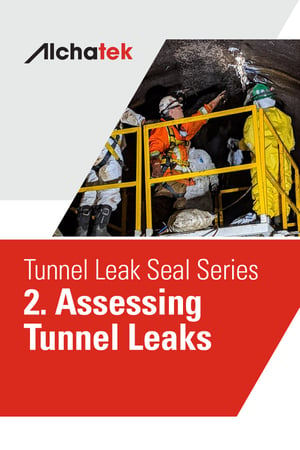 The first step in addressing the issue of water leaks in tunnels is accurate diagnosis. Without a proper understanding of the problem's scope and severity, any intervention risks being ineffective or even counterproductive. By focusing on the common signs of water leaks in tunnels as well as the tools and techniques available for leak detection, civil engineers, tunnel maintenance teams, and infrastructure managers can make informed decisions about how to proceed. Armed with knowledge of the signs of leaks and detection methods, they can determine the size and location of leaks and decide on appropriate repair strategies. Careful diagnosis allows infrastructure caretakers to tackle water infiltration in a strategic, cost-effective manner.
 Water leaks in tunnels pose a significant challenge that demands immediate attention from civil engineers, tunnel maintenance teams, and infrastructure managers. Ignoring this issue can lead to severe consequences, affecting both the structural integrity of the tunnel and the safety of its users.
 The Significance of Forward-Thinking Maintenance
 Preparing for the Unpredictable: The Role of Maintenance in Disaster Readiness
 In the world of grain storage, the focus often falls on the towering structures that dominate the landscape. However, what lies beneath these silos—the concrete slabs—plays an equally critical role in ensuring the safety and efficiency of grain storage operations. Sunken slabs can compromise the structural integrity of the entire silo, posing safety risks and operational challenges. Here, the importance of maintaining stable and level slabs, the role they play in structural integrity, and the use of polyurethane for slab leveling are explored.

 Grain silos serve as the backbone of agricultural storage and supply chains. They hold not just grain but also the trust of farmers, suppliers, and consumers. One of the most critical yet often overlooked aspects of maintaining a grain silo is the integrity of its elevator pits. Leaks in these pits can lead to a cascade of problems, from grain contamination to equipment malfunction. Understanding the importance of sealing leaks in elevator pits, the risks of water ingress, and the role of polyurethane provides actionable knowledge for effective grain silo management.
  Translate