
 The role of bridge approach slabs in vehicle safety and infrastructure integrity is critical but often underestimated. When these slabs begin to sink, the consequences can be dire, ranging from vehicular damage to potential accidents. Such sinking typically originates from imbalances and instability in the underlying soil. It's not just an issue to be patched; it's about stabilizing the ground itself to ensure long-term durability and safety.
Understanding the "Bump" Problem
When bridge approach slabs become uneven or sink, they cause a height difference with the adjacent road or bridge deck. This manifests as bumps that are more than mere inconveniences; they are safety hazards. A minor elevation difference can create significant stress concentrations, leading to damaging impacts on vehicle suspensions and road infrastructure, particularly at high speeds.
Strategies to Alleviate Risks
Quick fixes like asphalt wedging may offer temporary relief but are not durable, leading to repeated maintenance cycles and increased costs. Polyurethane foam has emerged as a lasting solution, offering excellent compressive strength for soil stabilization beneath the slabs. Once cured, this foam provides strong and stable support, drastically reducing future sinking risks.
Quick Cure, Less Disruption
One advantage of polyurethane foam is its quick curing time. Traditional methods may necessitate extended lane closures, but polyurethane foam sets within minutes, allowing for quicker repairs. This minimizes traffic disruption, an often overlooked but significant concern for maintenance managers.
Polyurethane Foam's Versatility
Polyurethane foam is adaptable to various soil types and slab materials, coming in formulations customizable for specific project needs. Regardless of whether the soil is sandy, clayey, or loamy, the foam can be modified to provide optimal adhesion and compressive strength, mitigating the risks of slab sinking due to soil instability. Additionally, the foam has excellent water resistance. Hydrophobic formulations repel water, preserving the soil integrity underneath the slab—a vital feature in regions with high precipitation or prone to flooding.
Engineering Principles for Durability
The application of polyurethane foam is grounded in sound engineering. When injected, the foam expands, stabilizing the soil, leveling the concrete, and distributing the slab's load more evenly. This reduces point loads and stress concentrations, extending the slab's longevity and the overall durability of the bridge-to-road transition. The foam's adhesive qualities create a monolithic structure between the slab and soil, rendering it resistant to future shifts. This quality is invaluable in seismic-prone areas where ground movements can compromise infrastructure.
Cost-Efficiency
While polyurethane foam has slightly higher upfront costs compared to traditional methods like mudjacking, its durability makes it cost-effective in the long run. Reduced maintenance cycles and the speed of application minimize both direct and indirect costs, making polyurethane foam an economically sound choice.
Safety Protocols in Application
Safety is paramount during the foam's application. Engineers and crews must wear appropriate Personal Protective Equipment, including gloves and eye protection. Specialized equipment must be used for the foam injection, and staff should be well-trained to prevent over-injection, which could lead to additional stresses and imbalance.
Ensuring Vehicle Safety
Addressing the challenges of sinking or unstable bridge approach slabs significantly enhances vehicle safety. Polyurethane foam emerges as a multi-faceted solution that not only mitigates immediate risks but offers long-term durability. Its quick curing time, adaptability, and engineering advantages make it an essential tool for infrastructure teams committed to the highest safety standards.
Want more information on geotech polyurethane grout applications?


 Your home is more than just a structure; it's a sanctuary, a place where memories are made and cherished. Ensuring its stability and safety is paramount. If you've noticed cracks, unevenness, or other signs of instability in your basement floor, it's time to take action.
 Your home's basement floor serves as an integral component of the structure, playing a pivotal role in maintaining the overall stability and integrity of the house. However, like all parts of a home, it's subject to wear and tear, and there are times when it might need professional attention. Recognizing these moments is crucial not just for the health of the structure but also for the safety of its inhabitants.
 Ensuring the stability of your basement floor is an imperative task for every homeowner. Yet, in our pursuit of a sturdy home, it is crucial not to overlook the environmental ramifications of repair materials and methods. Balancing these dual responsibilities can be challenging, but with informed choices, homeowners can achieve both goals seamlessly.
 The basement, being one of the most vital components of a home, requires solutions that are both efficient and long-lasting when it comes to addressing unstable floor slab issues. Traditional methods of repair, although effective, can often be invasive, time-consuming, and expensive. Enter polyurethane foam—a revolutionary solution to basement floor slab stability issues.
 For many homeowners, a basement represents more than just a foundation—it's an extension of their living space, a storage haven, or even a cozy retreat. Ensuring the structural integrity and safety of your basement is paramount, not just for the sake of the basement itself but for the overall health and well-being of your home and its inhabitants. The basement floor is a critical component that plays a significant role in ensuring your basement is dry, stable, and safe.
 In the world of warehouse and distribution center management, the condition of your concrete slabs is not a minor detail—it's a critical component that impacts safety, equipment longevity, and operational efficiency.
 Choosing the right contractor for slab stabilization and leveling work in a warehouse or distribution center is a decision that carries significant weight. The quality of the repair work not only affects the immediate operational efficiency but also has long-term implications for safety, equipment longevity, and overall maintenance costs. A poor choice can lead to subpar work, requiring additional repairs and causing more operational disruptions. On the other hand, a skilled contractor can efficiently resolve floor issues, minimizing downtime and maximizing the lifespan of the repair.
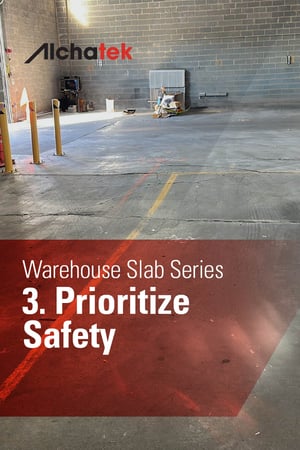 In the fast-paced environment of a warehouse or distribution center, safety is a paramount concern. One often overlooked factor that can significantly impact safety is the condition of the floor. Uneven or unstable floors can create hazards that put employees at risk. Tripping, slipping, and falling are just a few of the accidents that can occur when floors are in poor condition. Additionally, material-handling equipment like forklifts can tip over or lose control, leading to more severe accidents or even fatalities.
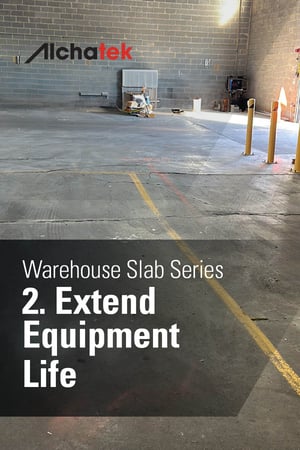 In a warehouse or distribution center, the condition of the floor can have a direct impact on the lifespan of material-handling equipment like forklifts, pallet jacks, and conveyors. Uneven or unstable floors can cause excessive wear and tear on these machines, leading to frequent breakdowns and increased maintenance costs. Over time, this can significantly reduce the lifespan of expensive equipment, necessitating premature replacements and adding to operational costs.
 Translate