
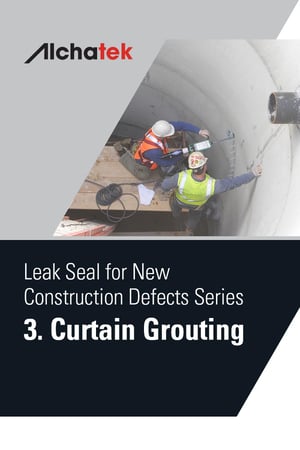
 Curtain grouting is primarily employed to address multiple leaks at once. This technique originated in the 1960s. It was initially used to remedy water intrusion issues in sewer systems. Over time, its application expanded to a wide range of structures, driven by its efficacy in creating a barrier against water penetration. Curtain grouting involves injecting an expansive polyurethane grout through a wall or floor, into the soil on the other side. The grout then spreads out and expands, forming a 'curtain' that seals many leaks and cracks at once.
A Brief Overview of the Curtain Grouting Process
- Drill injection holes in a diamond grid pattern.
- Begin grout injection at the bottom of the wall.
- Inject grout a little higher, so that any excess grout flows down over the previous injection area. This creates a lapping effect, like shingles on a roof.
- Continue injection to the top of the wall.
Managing Multiple Leaks
Curtain grouting is particularly valuable in scenarios where multiple leaks are present or when the source of water intrusion is indeterminate. This method provides a comprehensive solution, sealing numerous potential entry points for water and thus is more efficient and cost-effective than attempting to address multiple leaks individually.
Hypothetical Examples
One notable application could involve an existing multi-story building with an underground parking garage, which has water intrusion issues. In another hypothetical example, a new modern high-rise building with below-grade levels planned could utilize curtain grouting during construction, resolving waterproofing concerns without needing extensive excavation or costly, long-term dewatering.
Curtain Grouting in a Nutshell
Curtain grouting is a technique that involves injecting an expansive polyurethane grout through a wall or floor and into the soil behind it. As the grout spreads out and hardens, it forms a "curtain" that seals multiple leaks and cracks at once. This barrier can prevent water from intruding into a structure that has existing issues or be installed proactively in new construction to waterproof below-grade spaces like underground garages. Curtain grouting is often a more efficient and cost-effective solution compared to addressing multiple leaks individually.
Want more information on sealing leaks with polyurethane grout?


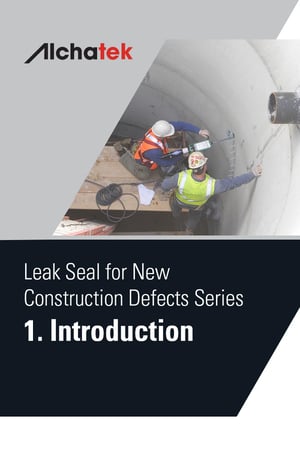
 Water intrusion in new construction, a significant issue, often leads to costly defects. Crucial to this challenge are waterproofing membranes, which can be damaged during construction or compromised by cost-cutting measures. Similarly, inadequately sealed pipe and conduit penetrations can lead to leaks and electrical damage. A comprehensive approach, including proper installation of waterproofing and sealing penetrations, is vital. Polyurethane leak seal grouts are a key solution, effectively sealing against moisture intrusion and ensuring the durability of new buildings. This approach is essential for maintaining the integrity of construction projects against water damage. Crack injection with polyurethane grout is often employed in specific circumstances.
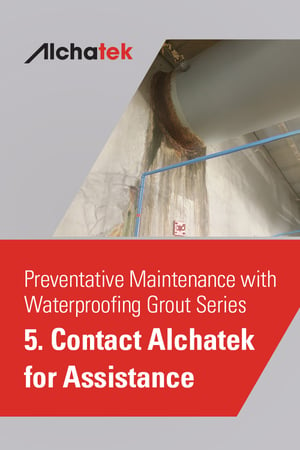
 In the complex landscape of new construction, water intrusion stands as a formidable challenge, often leading to costly defects and prolonged maintenance issues. While waterproofing membranes play a crucial role in maintaining the integrity of the building envelope, there are other critical areas prone to leaks, such as pipe and conduit penetrations.
 Alchatek's role in the fight against water damage is defined by expert technical guidance and specialized contractor referrals.
 Water infiltration, even in its smallest form, can be a harbinger of more significant issues. The key is not to wait until the problem becomes extensive or recurrent but to seek professional assessment and intervention at the first indication of water presence.
 Polyurethane waterproofing grout is a type of sealant used extensively in construction and maintenance for its exceptional ability to prevent water ingress. It is a liquid polymer that, once applied, solidifies into a durable, water-resistant barrier. This grout is particularly effective in sealing cracks, joints, and other potential points of water entry in structures.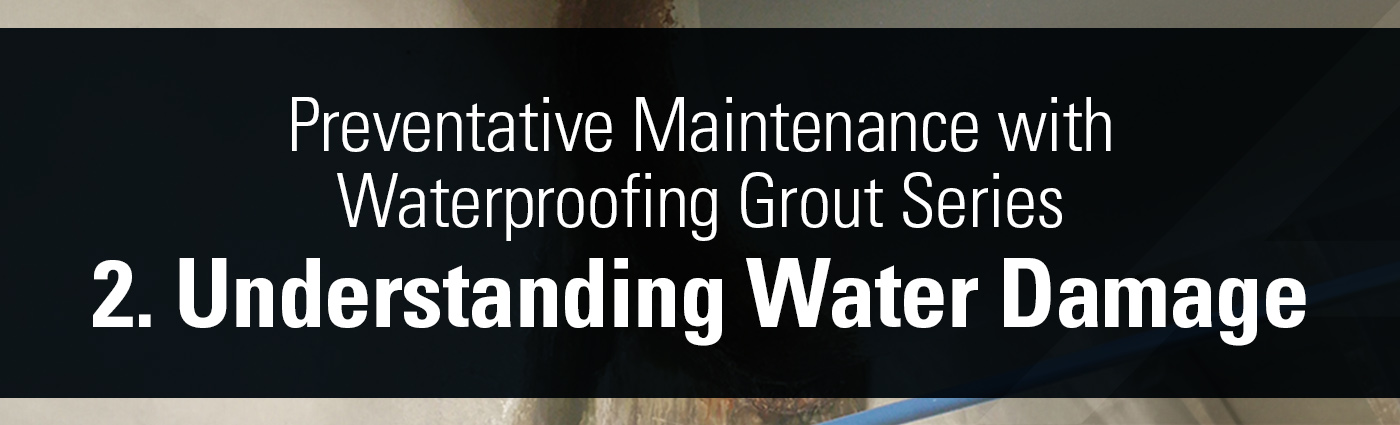
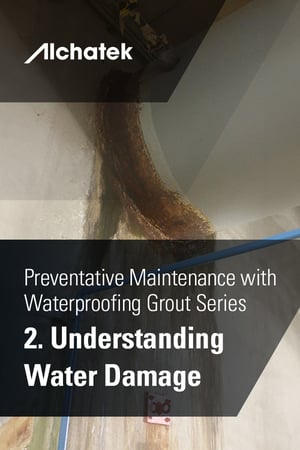 Water's destructive capacity stems from its ability to penetrate and alter the very materials that buildings are made of. Here are some key ways in which water inflicts damage:
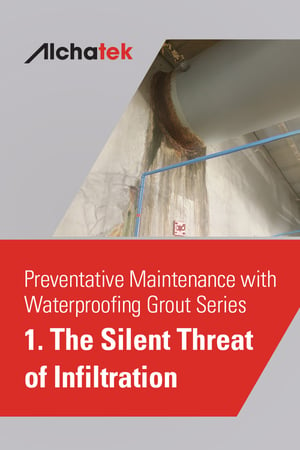 In the realm of property management and building maintenance, certain risks lurk unseen, often underestimated in their potential for destruction. Among these, water infiltration stands as a silent, insidious threat. Its capacity for causing extensive, sometimes catastrophic damage is not to be overlooked.
 As we conclude our series on preserving historical buildings, the overriding message is clear: the importance of professional expertise in leak sealing cannot be overstated. Historical structures, with their unique architectural features and materials, demand a level of care and knowledge that goes beyond ordinary repair work. Professionals in this field bring not only the necessary technical skills but also an understanding of historical preservation principles, ensuring that repairs enhance rather than detract from the building's historical value.
 In the delicate task of preserving historical structures, probe grouting with polyurethane grout has emerged as a critical technique. Probe grouting involves injecting grout into the ground around a structure to seal leaks and fill voids next to the walls of below-grade areas. This method is uniquely beneficial for addressing sub-surface issues like water intrusion, without disturbing the structure itself or the interior surfaces.
 Translate