
 Regarding water infiltration in utility vaults, precast joints often serve as weak links. Conventional methods like cementitious grouting offer temporary solutions but often fail to withstand structural movements or shifting over time, resulting in a reoccurrence of leaks.
Repairing Precast Joint Leaks with Spetec PUR GT350
Utility vaults are constructed from precast concrete sections that are joined together. The connections between these concrete sections are called precast joints. Over time, precast joints may develop small gaps caused by things like soil movement or temperature changes. These gaps allow water to leak into the utility vault.
An effective solution is using a combination of Spetec PUR GT350 and Spetec Oakum. Spetec PUR GT350 is a flexible polyurethane grout that can accommodate movements between sections of precast concrete. Spetec Oakum is an oil-free dry jute rope that, when used in conjunction with the grout, helps seal large and irregular-shaped defects.
Installation Steps
- Clean the surfaces where you plan to apply the Oakum. Moistening the surfaces can enhance the reaction with the resin.
- Cut the Oakum into appropriate lengths.
- Saturate the Oakum with Spetec PUR GT380 resin in a clean container, allowing time for the resin to soak in.
- Using gloves, pull a section of the saturated Oakum through a loose set to remove excess resin.
- Dip the Oakum in a pail of water to initiate the resin's expansion.
- Tightly pack the Oakum into the leaking precast joint using an appropriate tool, such as a screwdriver or wooden dowel.
- If needed, inject additional resin directly through the Oakum via a grout needle or by drilling holes into the concrete behind it.
- Allow the material to cure overnight before trimming any excess foam.
Repairing Pipe Penetration Leaks with Spetec PUR F400
Pipes for utility lines pass through openings in the walls of utility vaults. These openings are called pipe penetrations. Concrete and/or sealant around the pipe penetrations can break down over time. The vault walls may also shift a little bit. Both of these issues can lead to gaps around the pipe penetrations, allowing water to leak into the vault.
Qualified contractors can use Spetec PUR F400 combined with Spetec Oakum to achieve long-lasting results.
Installation Steps
- Soak Spetec Oakum in Spetec PUR F400 polyurethane grout, and then quickly submerge it in water.
- Immediately pack the soaked Oakum around the pipe sitting in the sleeve, allowing it to harden into a tightly sealed gasket.
- If further sealing is required, use an injection needle to fill the area behind the Oakum with more chemical grout.
The longevity of this approach is remarkable, offering durability that could last up to 50 years.
Key Takeaways
- Polyurethane grouts like Spetec PUR GT350 and Spetec PUR F400 offer superior performance and durability for sealing leaks in utility vaults.
- When used in conjunction with Oakum, these grouts provide effective solutions for addressing leaks at precast joints and pipe penetrations.
- Following the appropriate installation or repair steps ensures that the leak-sealing measures will be long-lasting, potentially offering up to 50 years of durability.
Want more information on sealing leaks with polyurethane grout?



 Utility vaults are critical components of modern infrastructure, providing secure containment for electrical, telecommunications, or other equipment. They are designed to be robust and durable. However, one common but often overlooked issue is the occurrence of leaks, most commonly found in precast joints and pipe penetrations.
 Managing stormwater infrastructure comes with unique challenges. At Alchatek, we want to help. Our team has extensive knowledge of innovative solutions for stormwater system repair and waterproofing.
 Managing a diverse array of stormwater system components can be a daunting task. Maintenance managers must juggle curb inlets, drop inlets, manholes, and culverts, each with its unique set of issues and repair needs. Toss in a wide geographic coverage area, and the complexity escalates. Faced with limited resources and pressing timelines, how should a maintenance team prioritize which repairs to tackle first?
 When it comes to sealing leaks in stormwater systems, one size does not fit all. Whether dealing with curb inlets, drop inlets, manholes, or culverts, the choice of sealing material plays a pivotal role in the success and longevity of the repair. Cementitious grouts and polyurethane grouts represent the main contenders in the field. Knowing when and where to use each is crucial for a sustainable solution.
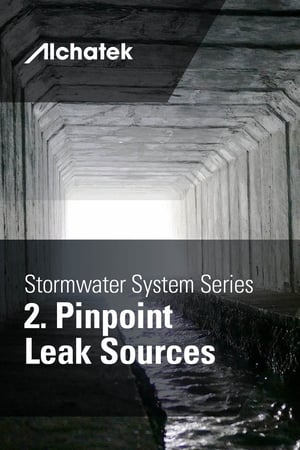 Leaks in stormwater systems can be elusive, often manifesting their symptoms far from the actual point of origin. This is especially true for interconnected systems like manholes or box culverts, where water can travel significant distances before showing visible signs of a leak. Accurate identification of the leak source is crucial for any effective repair operation. Failure to correctly locate the leak can result in wasted time, resources, and ultimately, unsuccessful repair.
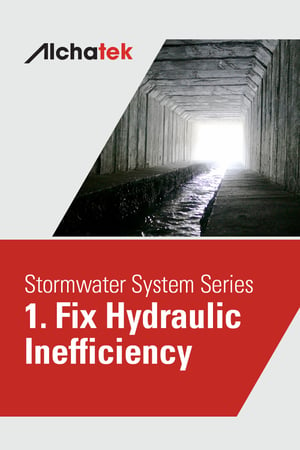 Hydraulic inefficiency in stormwater systems can wreak havoc in urban settings, especially during times of heavy rainfall or storms. When stormwater systems become less effective in draining water, it increases the risk of localized flooding and may even contribute to infrastructure failure. The problem often boils down to leaks and cracks in crucial components like curb inlets, drop inlets, manholes, and culverts.
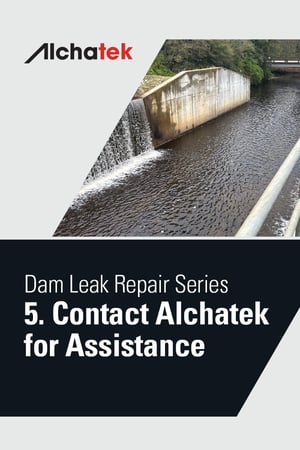 Effectively repairing and sealing leaks in dams requires specialized expertise and high-quality materials. At Alchatek, we have spent decades developing and manufacturing premium polyurethane grouts designed specifically for waterproofing and protecting critical infrastructure like dams.
 When it comes to dam management, the focus often rests on structural integrity and operational efficiency. However, the environmental implications of dam leaks are equally critical. Leaks can lead to a range of downstream consequences, affecting not just human communities but also aquatic life and entire ecosystems.
 In the realm of dam management, energy efficiency often stands as a cornerstone of operational success. While dams serve a variety of functions, from water storage to flood control, the optimization of energy production remains a critical concern. Structural weaknesses, such as leaks and cracks, can significantly hamper a dam's ability to generate power, leading to increased operational costs and reduced effectiveness.
 Translate