

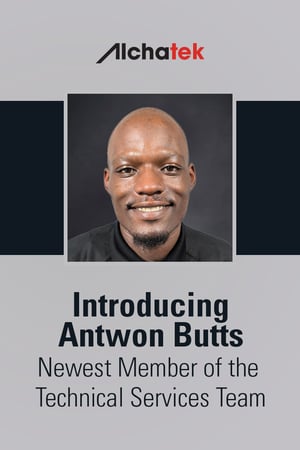
 In the fast-paced world of geotechnical contracting, having a team member who truly understands the grind of the field can make all the difference. That's why we're thrilled to introduce Antwon Butts, our newest Tech Support Technician on the Technical Services team. With a career built on the front lines, Antwon steps into this role ready to bridge the gap between product innovation and real-world application, helping contractors like you tackle everything from soil stabilization to complex grouting challenges with confidence.
Antwon's journey in the industry is a testament to his dedication and versatility. He most recently served as Production Manager here at Alchatek, where he honed his skills in manufacturing and quality control for polyurethane-based solutions—ensuring every batch meets the high standards demanded by demanding jobsites. Prior to that, as Lead Technician at Ground Consolidation Services, he led on-site operations for soil consolidation and injection projects, managing teams through high-stakes scenarios that required quick thinking and precise execution. Over more than a decade, these roles have equipped him with a deep well of practical knowledge, from equipment troubleshooting to optimizing workflows under pressure.
What sets Antwon apart is his ability to translate that hard-earned experience into actionable support for you. Whether you're dealing with void filling, concrete lifting, or emergency repairs, his expertise in a broad spectrum of tools, products, and techniques means faster resolutions and fewer headaches. As any seasoned contractor will tell you, field proficiency isn't just valuable—it's irreplaceable. With Antwon on board, our Technical Services team is even better positioned to be your go-to partner, turning potential pitfalls into seamless successes.
Antwon can be reached via phone at 470-925-1303.
Want more information about Alchatek products?



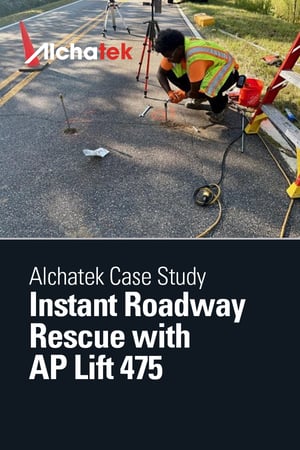 A south Georgia roadway developed a sinkhole over a double 48-inch RCP storm line about 10 feet deep, threatening lane safety and mobility. Replacement costs were prohibitive and would require extended closure and excavation.
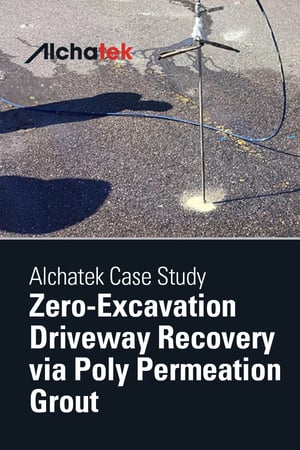 A fire station access roadway developed cracking from subsurface voids caused by storm drain seam gaps that washed out soil during heavy rain, threatening daily emergency operations and pavement integrity. Geotech specialists from
 Attention Geotech Professionals!
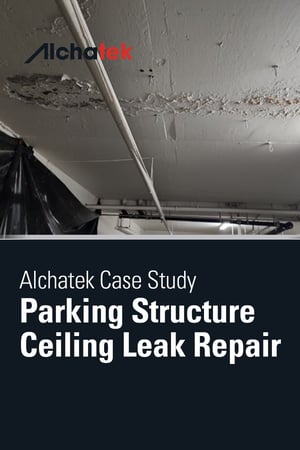 A multi-level parking facility in downtown Los Angeles was experiencing significant water infiltration through its concrete ceiling. Building management had noticed increasing water staining and active leakage, particularly following rain events. The water migration around electrical conduits and light fixtures was most concerning, creating potential safety hazards with the electrical systems. Previous attempts to seal the ceiling using conventional surface treatments had failed to resolve the issue. With the structure serving high-end retail clients, the property management company required a solution to effectively stop the leaks while minimizing disruption to the facility's daily operations.
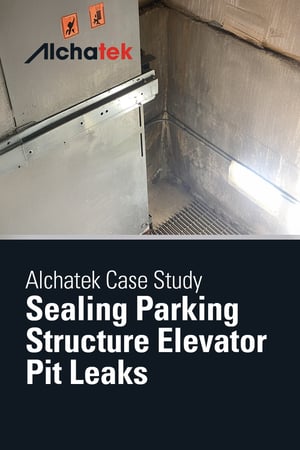 The property manager for a multi-level parking garage contacted
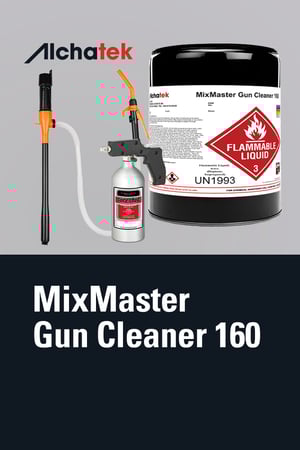 MixMaster Gun Cleaner 160 is the latest innovation designed to streamline maintenance for contractors using the
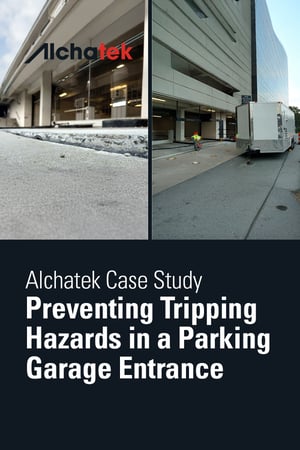 One Atlanta Plaza experienced significant settling of sidewalks and approach slabs around the perimeter of the building, creating safety hazards for pedestrians and visitors. The multi-story structure includes underground parking levels supported by piles, which remained stable, but the transition areas connecting to surrounding sidewalks were built on compacted fill. Over time, differential settlement occurred between the pile-supported structure and the soil-supported approach slabs, with some areas dropping approximately half an inch. Building management had previously attempted fixes by creating concrete "ramps" at transition points, but these temporary solutions continued to deteriorate as settlement progressed.
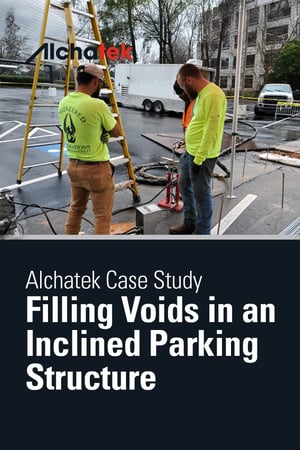 A property in Atlanta featured a multi-level parking structure with a split-level design. The upper-level parking area began showing signs of significant distress, with visible cracking and pavement deterioration. Investigation revealed that soil was actively migrating through a lower retaining wall of the parking structure, creating voids behind the wall and compromising support for the pavement above. The color change in the asphalt surface clearly marked the affected area, and the problem was getting progressively worse, posing both functional and safety concerns for vehicles using the facility.
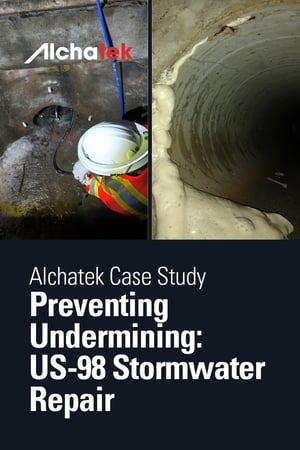 US Highway 98 is the main coastal route along Florida’s panhandle, connecting Panama City Beach, Destin, and Fort Walton Beach. Over time, the
  Translate