
 A critical downtown Houston pedestrian tunnel had persistent water infiltration affecting the ceiling, walls, and floor throughout the structure. The tunnel serves as vital underground infrastructure in Houston's urban core, where any significant disruption would impact pedestrian traffic and building access. Initial observations revealed widespread moisture intrusion, but the full extent of the problem remained unclear until interior finishes could be removed for proper assessment. The facility required a rapid, effective solution that would minimize downtime and restore the tunnel's watertight integrity.
Initial Assessment
Once sheetrock was removed from affected areas, engineers discovered extensive water infiltration through multiple pathways in the concrete structure. Moisture intrusion was occurring through joints, cracks, and penetrations, creating a complex leak pattern that compromised the tunnel's structural integrity and usability. Traditional repair methods would have required extensive excavation from above or complete tunnel closure for membrane installation - both prohibitively disruptive options in Houston's dense downtown corridor. The assessment revealed that targeted injection could address the root cause of infiltration without major structural modifications.
Proposed Solution
Alchatek recommended using Spetec PUR GT350, a hydrophilic polyurethane grout specifically designed for active leak sealing in underground structures. This single-component material was selected for its ability to react with water to form an expanding, flexible foam that creates a permanent, waterproof barrier. The injection approach would allow precise targeting of leak sources while maintaining tunnel accessibility throughout the repair process. The polyurethane's expansion properties would ensure complete void filling and crack sealing, even in areas with irregular geometries or active water flow.
Procedures
- Mapped all visible leak points and moisture intrusion areas throughout the tunnel structure.
- Drilled strategic injection ports at locations determined to intercept water infiltration pathways.
- Injected polyurethane grout through ports using positive displacement pumps, monitoring for material refusal and leak cessation.
- Conducted systematic injections across all identified problem areas, adjusting techniques based on local conditions.
- Verified complete sealing through visual inspection and moisture monitoring following cure completion.
Results
The polyurethane injection process successfully eliminated water infiltration throughout the tunnel structure, restoring its watertight integrity without requiring facility closure or major structural modifications. Post-treatment inspections confirmed the complete cessation of leaks, with the tunnel remaining dry even during subsequent heavy rain events. The minimally invasive approach allowed the tunnel to remain operational throughout the repair process, avoiding costly service interruptions. For a typical tunnel section, this represents over 95% cost savings compared to traditional methods. Additionally, avoiding tunnel closure prevented an estimated $10,000 to $ 25,000 in daily economic losses due to disrupted pedestrian traffic and building access, further amplifying the financial benefits of this innovative approach.
Want more information about polyurethane crack injection?





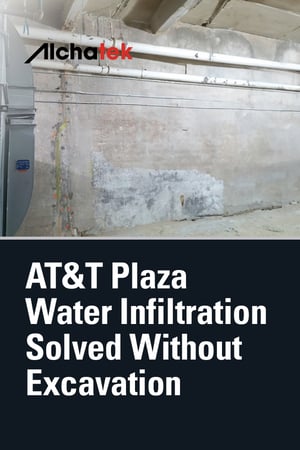 AT&T Plaza in downtown Dallas had persistent water infiltration issues in its basement and sub-basement levels, resulting in structural concerns and operational disruptions. The building's below-grade concrete walls developed multiple active leaks, allowing groundwater to penetrate the structure and causing dampness at wall-floor transitions, which raised concerns about potential corrosion of the reinforcing steel. Building management required an immediate solution that would effectively seal the leaks while minimizing disruption to commercial operations.


 A persistent water infiltration was observed in a below-grade tunnel in Houston, TX. Staining on the sheetrock ceiling indicated the leak originated at the joint between the tunnel shell and the building wall, specifically at the interface with the flashing. The tunnel was situated on the negative pressure side of the structure, resulting in recurring water intrusion issues. The property management team sought technical advice to resolve the leak without extensive demolition or disruption to the building’s operations.
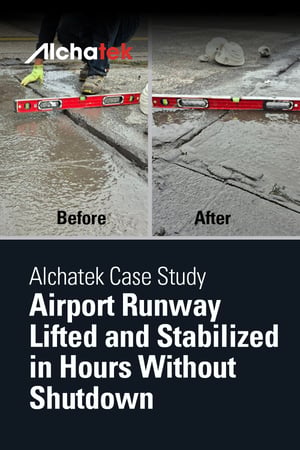 At Antwerp Airport, a section of the runway slab had settled by 1–2 inches, creating a hazardous rocking effect that endangered aircraft landing gear and led to grounded flights. Aircraft wheels hitting the depressed area like a pothole generated dangerous jolts. Although the settlement had persisted for years, mounting operational demands finally compelled immediate action.

 A single-story office building settled over organic soils beneath its post-tensioned slab. With access restricted to the interior, a fast and clean repair was essential. Geotech experts from
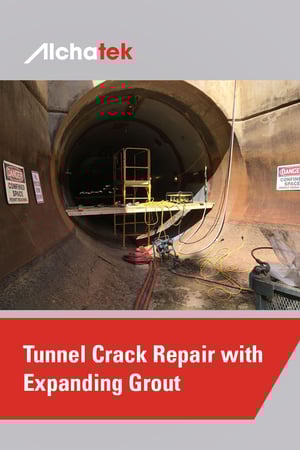 A tunnel structure in the Mobile, Alabama area had persistent water infiltration at the interface between concrete and metal components. The leak was traced to a tight crack at the joint, allowing water to migrate into the tunnel and cause visible staining, as well as potential long-term deterioration. The client sought a solution that would seal the leak without requiring major demolition or extended tunnel closure.
 Translate