
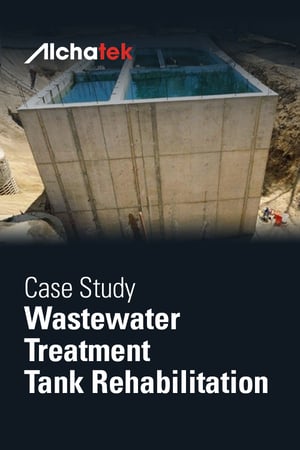
 A municipal wastewater treatment facility in New York had catastrophic water loss in five interconnected tanks, including two Sequencing Batch Reactors (SBR) and a digester. One SBR alone lost 20–22 inches of water daily, threatening its compliance with environmental regulations and risking $25,000/day in regulatory fines. The facility’s partially buried concrete structure was built just five years prior, with cracks linked to defective cold joints and curing errors. Traditional demolition/replacement was estimated at $1.5M, but the client sought a less expensive and minimally invasive solution to avoid shutdowns. All County Spray Foam Solutions was brought in to do the job.
Initial Assessment
Technicians documented dozens of active leaks through crack networks at tank walls and floor transitions. Water migrated horizontally across tanks due to cold-joint defects in the buried structure. Larger cracks (up to ⅛") required stabilization to prevent material blowout during injection. A structural inspection confirmed no risk of wall collapse but highlighted the urgent need for crack sealing.
Proposed Solution
The engineering team selected Spetec AG200, an ultra-low-viscosity (3–4 cP) acrylic resin with NSF 61 certification for use in contact with potable water. Key advantages:
- Microscopic penetration: Fluid enough to fill hairline cracks without high-pressure injection.
- Flexible sealing: Creates elastic barriers tolerant of concrete movement.
- Cold operation: Reacts fully at substrate temperatures of 30–35°F.
The method avoided:
- Tank evacuation/excavation beneath the structure.
- Long-term downtime for concrete replacement.
Procedures
- Crack Identification: Mapped moisture patterns and active leaks using towels/paper.
- Port Drilling: Drilled 45° angles to intersect cracks, avoiding direct surface drilling.
- Crack Stabilization: Used hydraulic cement to plug larger cracks, retaining oakum-soaked material.
- Material Application:
- Injected Spetec AG200 at 1:12 to 3:00-minute gel times with accelerators.
- Monitored breakthrough (material appearing at adjacent ports).
- Verification: Confirmed leaks reduced to “moist areas” post-injection.
Results
The injection process, which used approximately 20 gallons of resin, sealed all major leaks within under a week. Post-repair inspections confirmed dry conditions. The approach averted months of tank shutdown, $1.5 million in replacement costs, and thousands more in potential fines.
Want more information on crack injection with polyurethane?

 Translate