
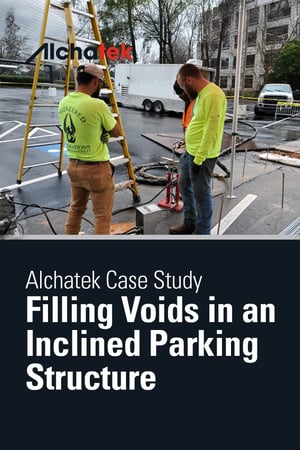
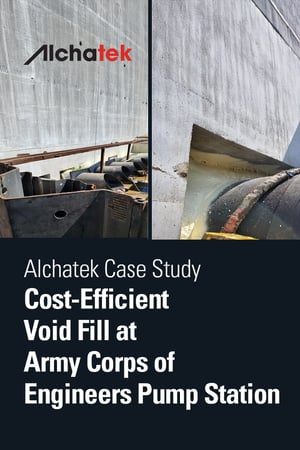
 A property in Atlanta featured a multi-level parking structure with a split-level design. The upper-level parking area began showing signs of significant distress, with visible cracking and pavement deterioration. Investigation revealed that soil was actively migrating through a lower retaining wall of the parking structure, creating voids behind the wall and compromising support for the pavement above. The color change in the asphalt surface clearly marked the affected area, and the problem was getting progressively worse, posing both functional and safety concerns for vehicles using the facility.
Initial Assessment
Engineers determined that soil was passing through the precast concrete retaining wall that separated the lower parking level from the surrounding earth. Testing revealed substantial voids had formed behind the wall, primarily involving clay soils that had become soft and unstable. While the wall itself remained structurally sound, the continued migration of soil threatened to create more significant issues if left untreated. Traditional repair methods would have required extensive excavation and potential wall replacement, a prohibitively disruptive and expensive approach for an active parking facility. The challenge was stabilizing the soil and filling the voids without impeding parking operations.
Proposed Solution
Alchatek recommended using two-component polyurethane foam (AP Lift 475) to stabilize the soil and fill the voids behind the wall. This material was selected specifically because of its high compressive strength and ability to effectively fill large voids in clay soil conditions. Since the wall was precast concrete and structurally sound, there was no concern about the polyurethane's strength pushing or damaging the wall. The expansive properties of the material would ensure complete penetration into irregular void spaces, while its closed-cell structure would prevent future water migration that could cause additional soil loss. This approach would stabilize the subsurface conditions without requiring excavation or disrupting the facility's operations.
Procedures
- Established a precise injection grid with tighter three-foot spacing in the first row close to the wall and slightly wider spacing in the second row.
- Drove injection pipes through the soil to reach the void areas behind the wall.
- Injected approximately 15 pounds of two-component polyurethane every 1.5 feet vertically, ensuring complete filling from bottom to top.
- A hydraulic pipe puller was used to extract injection pipes during material placement for controlled distribution.
- Monitored for any structural movement throughout the process using zip levels and dial indicators to prevent over-pressurization.
- Injected material systematically across the affected area, adjusting quantities based on observed soil conditions.
Results
The project successfully halted soil migration through the retaining wall and stabilized the pavement above. The two-component polyurethane effectively filled all voids while creating a waterproof barrier to prevent future erosion. Most importantly, the solution eliminated the need for disruptive and costly excavation, allowing the parking structure to remain operational throughout the repair process. Post-treatment monitoring showed complete stabilization with no further signs of settlement or cracking in the pavement. The property owner avoided significant reconstruction costs that would have been incurred with traditional methods, while also preventing potential revenue loss from parking facility closure. This case demonstrates how polymer injection technology can provide effective structural solutions with minimal operational impact, a key consideration for commercial property remediation.

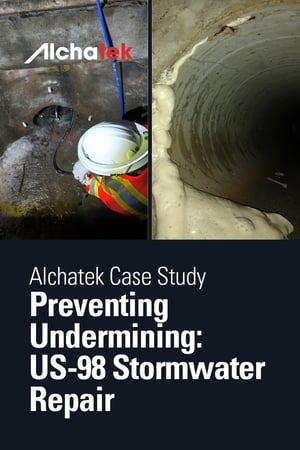 US Highway 98 is the main coastal route along Florida’s panhandle, connecting Panama City Beach, Destin, and Fort Walton Beach. Over time, the
 The
The 
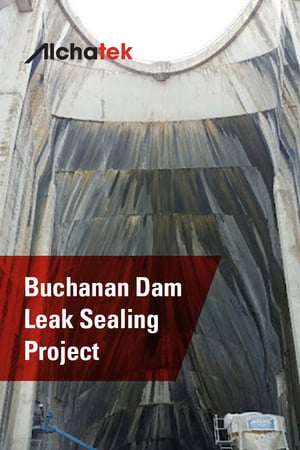 Buchanan Dam, located on the Colorado River in Texas, is a critical infrastructure built in 1937 to form Lake Buchanan. The dam is one of the longest multiple-arch dams in the world and serves as a vital resource for hydropower generation and flood control. Over time, the dam developed high-pressure water leaks in its concrete arches, particularly in Arch 47. These leaks were exacerbated by seasonal temperature fluctuations, which caused thermal expansion and contraction, leading to recurring cracks and water infiltration. Restek, Inc., a contractor specializing in structural repairs, collaborated with Alchatek to implement a polyurethane grouting solution to address these issues.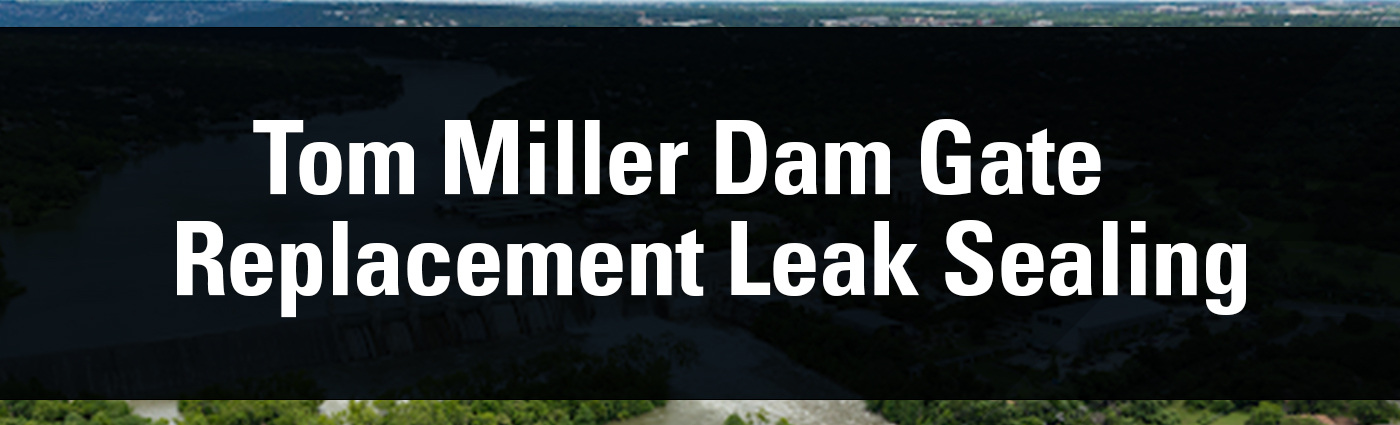
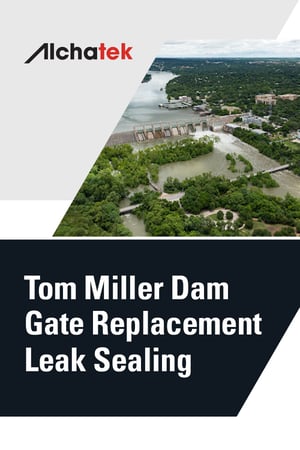 Gerace Construction undertook a gate replacement project at the Tom Miller Dam in Austin, Texas. While working on Large Gate #6, and after installing a needle beam cofferdam system to lower the water level, a continuous wet spot was discovered under the metal gate sill. This indicated a crack in the concrete extending under the sill plate. Sealing the leak was necessary to prepare and coat the steel sill plate, which was crucial for the overall gate replacement.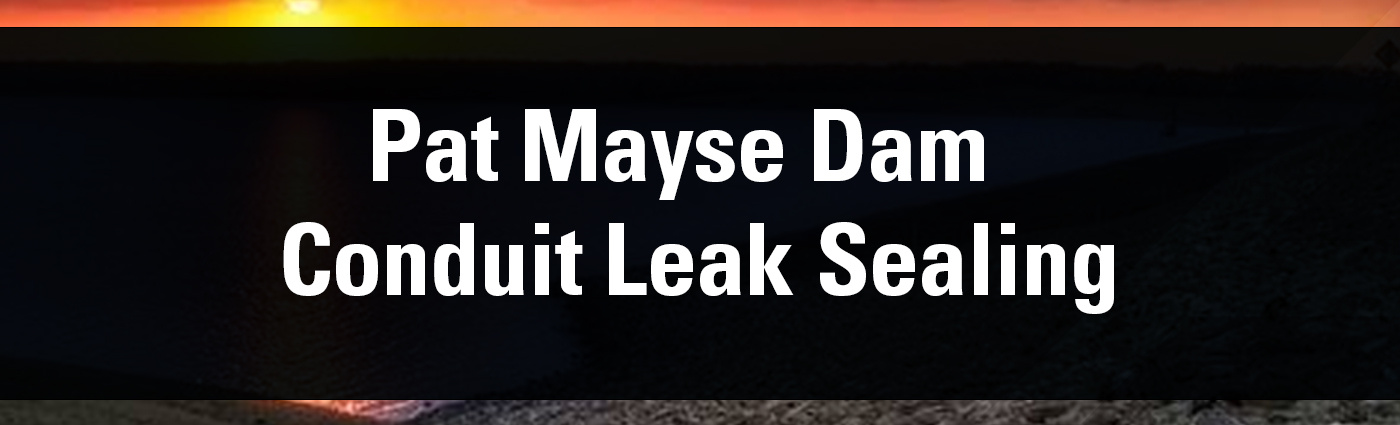
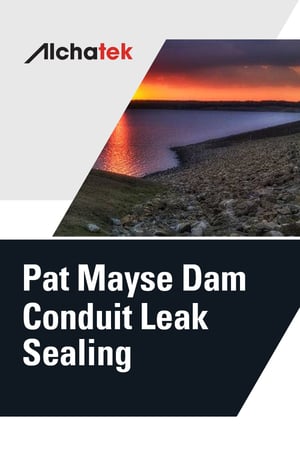 Gerace Construction was contracted for a project at the Pat Mayse Dam in Paris, Texas, to repair and seal leaks in the discharge conduit. The project involved addressing cracks and weeps within a concrete pipe structure. The United States Army Corps of Engineers (USACE) was overseeing the project, requiring strict adherence to specifications, including the presence of a manufacturer’s representative on-site during the grout injection process.
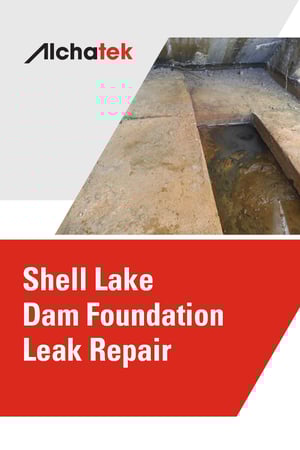 The City of Sand Springs, Oklahoma, identified a foundation leak in Bay 10 of the Shell Lake Dam, necessitating repairs to ensure the dam’s structural integrity. The city’s Public Works Department contracted with a qualified firm to address the issue, and Keithline Engineering Group was retained to provide engineering design and oversight for the project.
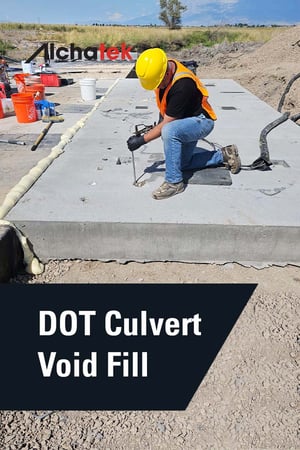 A Utah-based geotech specialist partnered with a general contractor to address a critical DOT infrastructure challenge involving the replacement of an existing culvert on a major roadway in Utah. The project involved the installation of precast concrete slabs on both sides of the box culvert, designed to create a seamless transition from the culvert to the compacted road base.

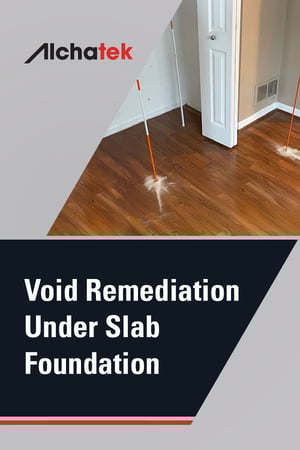 Suburban Basement
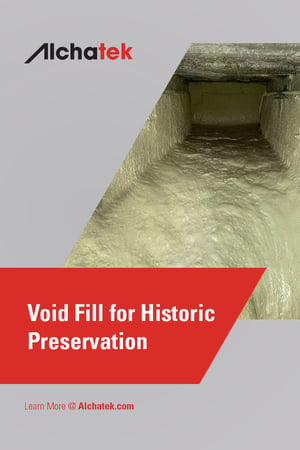 An old farmhouse with a wrap-around porch in Lake Orion, Michigan, presented a unique challenge. Beneath the porch lay an old cellar, initially used for coal storage but now serving only as a conduit for a well line into the residence. The primary concern was the inward buckling of the cellar walls, which posed a significant safety hazard. Many contractors suggested demolishing the porch and excavating the cellar, a solution that would have incurred substantial costs for both demolition and reconstruction.
 Translate